The road from certificate to first client or job isn't a straight line, and almost nobody experiences it that way, even though course marketing sometimes makes it sound simple. There's a real gap between finishing a training program and actually landing paid work, and that gap is exactly where most of the useful, unglamorous effort happens — building proof, applying strategically, interviewing well, and staying steady through the inevitable slow stretches.
Is a Certificate Enough to Get Hired?
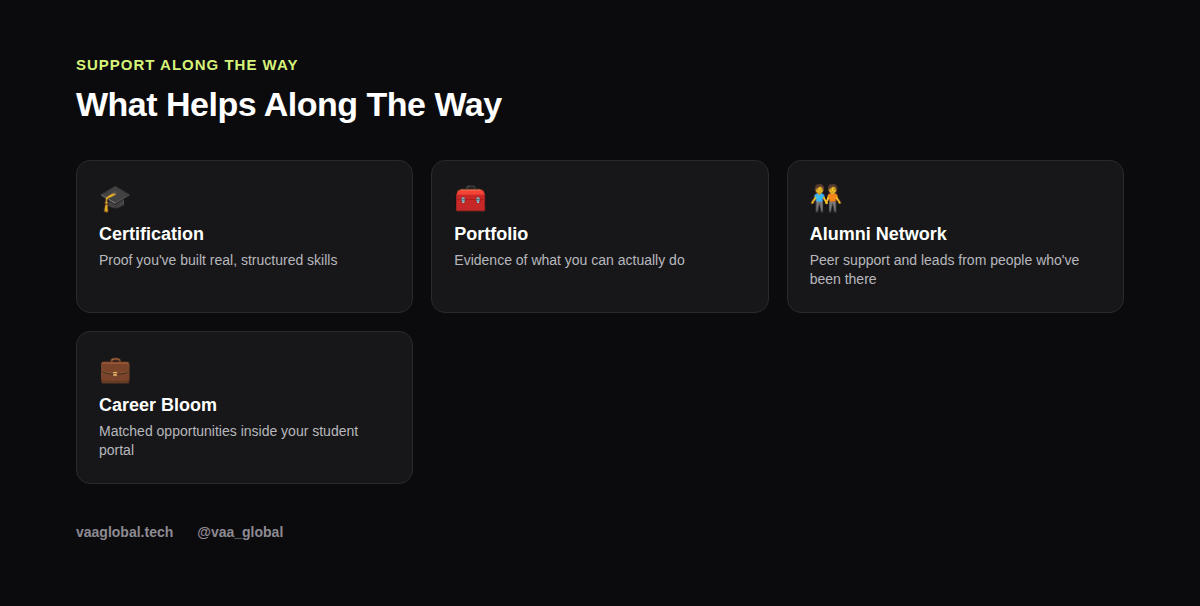
On its own, usually not — and that's worth saying honestly. A certificate proves you've built structured knowledge, but employers and clients also want evidence you can apply it: a portfolio, a sample project, or a reference. This is explored in more depth in is a VAA Global certificate enough without a job search strategy, and the honest answer is that the certificate is a foundation, not the whole building.
What Should I Do Right After Finishing a Course?
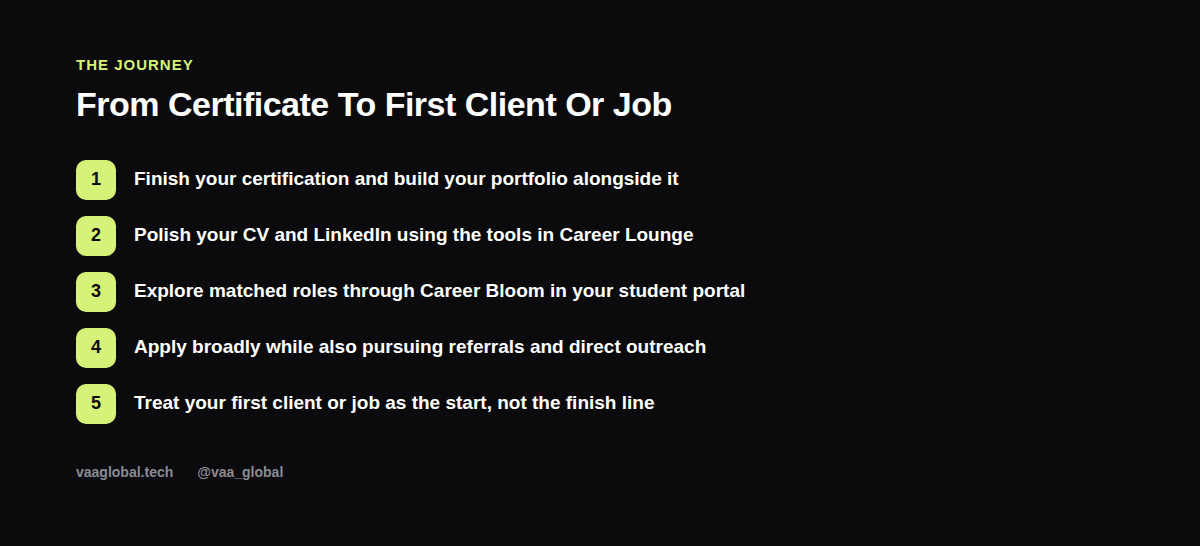
Don't wait until you feel “fully ready” to start building proof of your skills — start immediately, while the material is fresh. Put together two or three portfolio pieces that demonstrate what you learned in practice, not just in theory. Update your CV and LinkedIn to reflect the new skill set clearly, and start researching the specific roles or client types you're aiming for.
Building Your Proof of Skill
Whether you're pursuing a remote job or freelance clients, the principle is the same: show, don't just tell. A portfolio doesn't need to be elaborate — a few genuinely well-done sample projects are more convincing than a long list of claimed skills with nothing to back them up. If you're a VAA Global student, tools like the VAA Global Portfolio Builder and the CV and LinkedIn Review Tool are built specifically to help with this stage.
How Long Does It Take to Get a Job After a Certificate?
This varies widely depending on the field, how much effort goes into portfolio-building and applying, and overall market conditions — there's no single honest number that applies to everyone, and broader labor-market commentary from sources like the International Labour Organization reflects just how much timelines vary across regions and industries. What's realistic to expect is that it takes sustained, consistent effort over weeks to a few months for most people, not days, and progress often feels slow right up until it suddenly isn't. For a clearer sense of what a realistic timeline actually looks like, see the realistic timeline from enrolling to getting a remote job.
Searching Through Multiple Channels at Once
Don't rely on a single method. Apply directly to postings on remote job boards, reach out for referrals through your network, and if you're a VAA Global student, explore the career tools and resources available in your student portal, which include Career Bloom job matching — verified opportunities matched to your skill set. It's worth being clear-eyed here: these opportunities and support do not guarantee employment, but they do widen the range of leads you're working from alongside your own direct search.
Interviewing and Handling the Inevitable Rejections
You will likely face rejection before you land something, and that's a normal part of the process, not a sign you're doing something wrong. Treat each interview as practice, however it ends, and keep refining your approach — our guides on mock interview practice and building confidence after rejection are both useful here, especially during a stretch where nothing seems to be landing.
Landing Your First Client or Job
Whether it's your first employer or your first freelance client, the goal at this stage shifts from getting hired to delivering well enough to build a track record. Our guide on how to get your first client as a new freelancer covers this transition in more detail if freelancing is your path, while a first remote job follows a similar logic: do good, reliable work and let that become the foundation for what comes next.
Using Your Alumni Network and Peer Support
Staying connected to classmates and graduates from your program gives you an ongoing source of leads, encouragement, and perspective, through the alumni network for support and job leads that comes with completing a structured program. People who've recently gone through the exact same search understand the specific challenges in a way that's hard to replicate elsewhere.
What Comes After Getting Certified Isn't the End
Your first client or job is a milestone, not a finish line. Skills keep developing, references keep building, and each project adds to a track record that makes the next opportunity easier to land. The certificate opened the door; everything after it, including the job search itself, is what actually builds the career. Many graduates also stay connected to their training program's internship pathway or ongoing community well after they've landed their first role, because the support doesn't stop the moment you're hired.
The Bottom Line
The path from certificate to first client is rarely fast or linear, but it is predictable in its shape: build proof, search through multiple channels, interview and learn from rejection, and deliver well once you land something. Stay consistent through the slow stretches, and what feels like a long search in the moment usually looks, in hindsight, like exactly the right amount of time it took to get ready.