

The usual networking advice — attend events, work the room, strike up conversations with strangers — sounds exhausting if you're not wired for it, and plenty of genuinely effective people just aren't. Networking for introverts doesn't mean forcing yourself into extroverted behavior; it means finding approaches that play to different strengths, like writing, depth over breadth, and one-on-one focus, which often work just as well for building real professional relationships.
Why Traditional Networking Advice Falls Short
Most networking advice assumes everyone recharges through social interaction and thinks best out loud, in real time, in a room full of strangers. That's simply not true for a large share of people. Quiet networking strategies built around writing and smaller, deeper interactions aren't a workaround for introverts — they're a legitimate, often more effective approach in their own right.
Lead With Writing, Not Talking
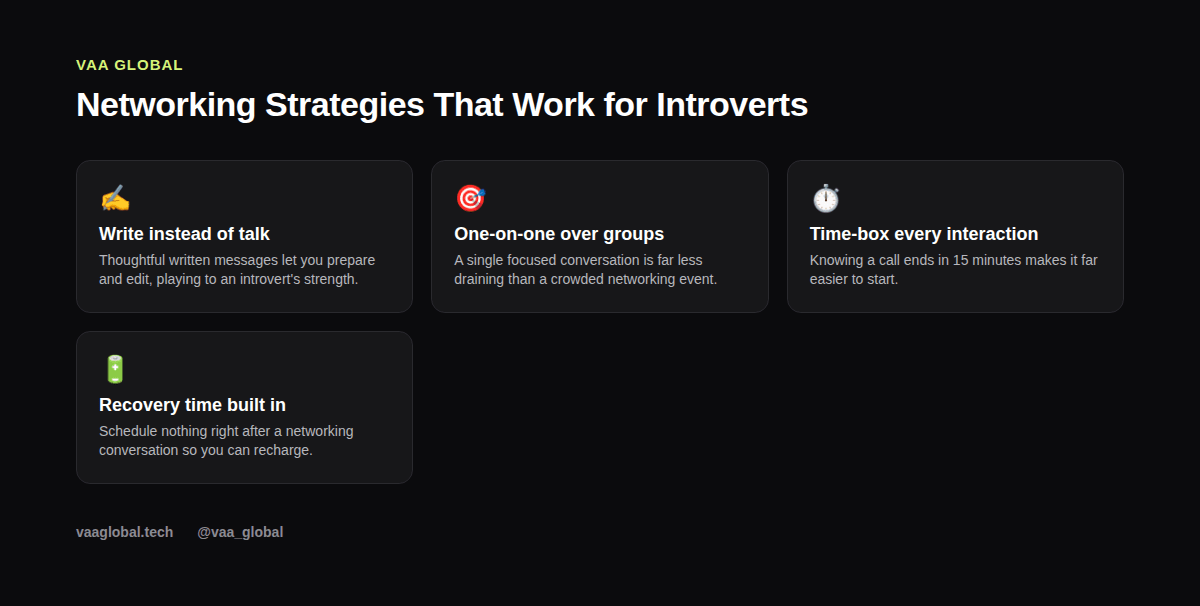
A well-crafted message lets you think, draft, and revise before you send it — a real advantage if you process best in writing rather than live conversation. Use cold outreach email templates as your primary networking tool, and save live calls for after a written exchange has already warmed things up.
Choose One-on-One Over Groups
A networking event with fifty strangers is a worst-case scenario for most introverts: high stimulation, constant small talk, no depth. A single, focused conversation with one person is a completely different experience — more manageable, and often more useful, since it lets you actually build a real connection instead of collecting business cards.
Time-Box Every Conversation
Open-ended conversations can feel daunting if you don't know when they'll end. Propose a clear length upfront — fifteen or twenty minutes — the same approach covered in how to request an informational interview. Knowing exactly how long a call will run makes it dramatically easier to start.
Prepare Questions and Talking Points in Advance
Spontaneous small talk is draining for a lot of introverts, but prepared conversation is a different story. Write down three or four questions or talking points before any call so you're never scrambling for what to say next. This single habit removes most of the anxiety around “what if I run out of things to say.”
Build in Recovery Time
Social interaction, even a good one, uses energy that needs replacing. Schedule nothing demanding immediately after a networking call, so you have room to recharge rather than running straight into the next task depleted. This is one of the most overlooked low-energy networking habits, and it makes repeated networking sustainable instead of something you dread each time.
Use Text-Based Platforms to Your Advantage
LinkedIn messaging, email, and even thoughtful comments on posts are all forms of networking that don't require real-time social performance. Lean into these channels as your primary method, and treat live calls as a secondary step reserved for once a written connection is already established.
Remember That Depth Counts More Than Volume
You don't need fifty shallow connections — ten or fifteen genuine ones, built through a handful of real conversations, will serve a job search far better. If comparing yourself to more outgoing peers is adding pressure, it's worth reading about overcoming imposter syndrome, since a lot of that comparison comes from the same place.
Do You Have to Attend Networking Events to Find a Job?
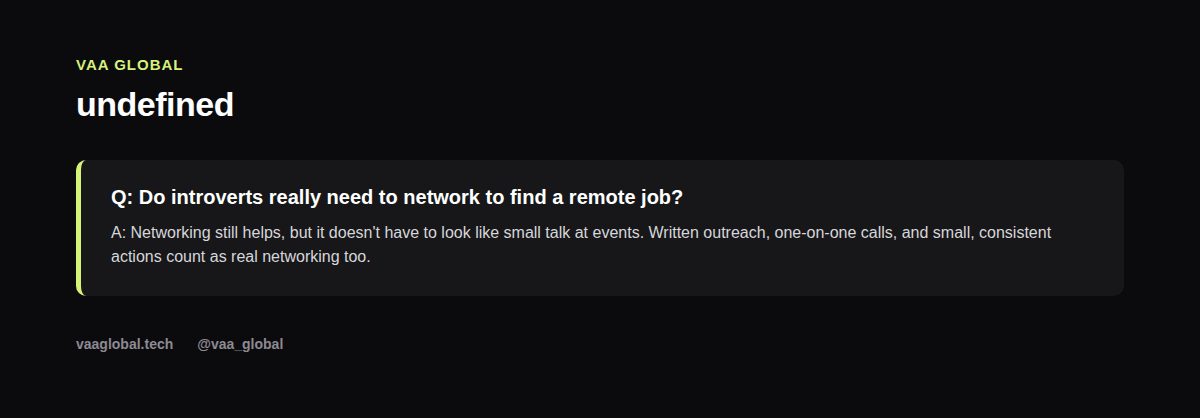
No. Do I have to attend networking events to find a job is a common worry, and the honest answer is that plenty of people build strong professional networks entirely through writing and one-on-one conversations, without ever setting foot in a crowded room. If a particular event genuinely interests you, go — but treat it as optional, not a required box to check.
How Shy People Can Network for Remote Roles Specifically
How can shy people network for a remote job often comes down to using the format remote work already favors: async messages, scheduled video calls instead of surprise encounters, and written follow-ups that don't demand an instant response. Remote work's natural communication style already overlaps heavily with how introverts prefer to interact, which is a genuine advantage worth leaning into rather than fighting.
How Do Introverts Network Effectively Over Time?
How do introverts network effectively long-term usually comes down to consistency over intensity: a few thoughtful messages a week, sustained over months, beats a single burst of exhausting effort followed by weeks of avoidance. Small, repeatable actions protect your energy while still building a real network steadily in the background of your search.
The Bottom Line
Networking for introverts works best when it stops trying to imitate extroverted habits and instead leans into writing, depth, structure, and recovery time. Use outreach templates as your starting point, keep conversations one-on-one and time-boxed, and give yourself room to recharge afterward. For the broader digital-networking picture beyond calls and messages, how to network online as a remote professional is a solid next read, and Harvard Business Review's piece on networking without the torture covers more of the psychology behind why this approach works.