An informational interview is a short, low-pressure conversation with someone working in a role, company, or field you're curious about — not a job interview, and not a disguised pitch for a referral. It's one of the most underused tools in a job search, mostly because people assume asking for one is awkward or imposing. In reality, most professionals remember being new and are happy to spend fifteen minutes helping someone figure out their path, as long as you ask clearly and respect their time.
What an Informational Interview Actually Is
It's a conversation where you're the one asking the questions — about someone's day-to-day work, how they got there, what they wish they'd known earlier, or what skills matter most in their field. It is not a backdoor way to ask for a job, and treating it that way is the fastest way to make the other person uncomfortable and unlikely to help again.
Who to Ask
Start with people one or two steps removed from a cold stranger: alumni from your course or school, people in your extended network, or connections of connections. If you've been through a program with an alumni network, that's often the easiest place to start, since there's already a shared starting point for the conversation. From there, you can branch out to people you've never met who work in roles you're exploring.
Writing the Request
Keep it short. A message that reads like an essay gets skipped; a message that respects someone's time gets a reply. Here's a template you can adapt:
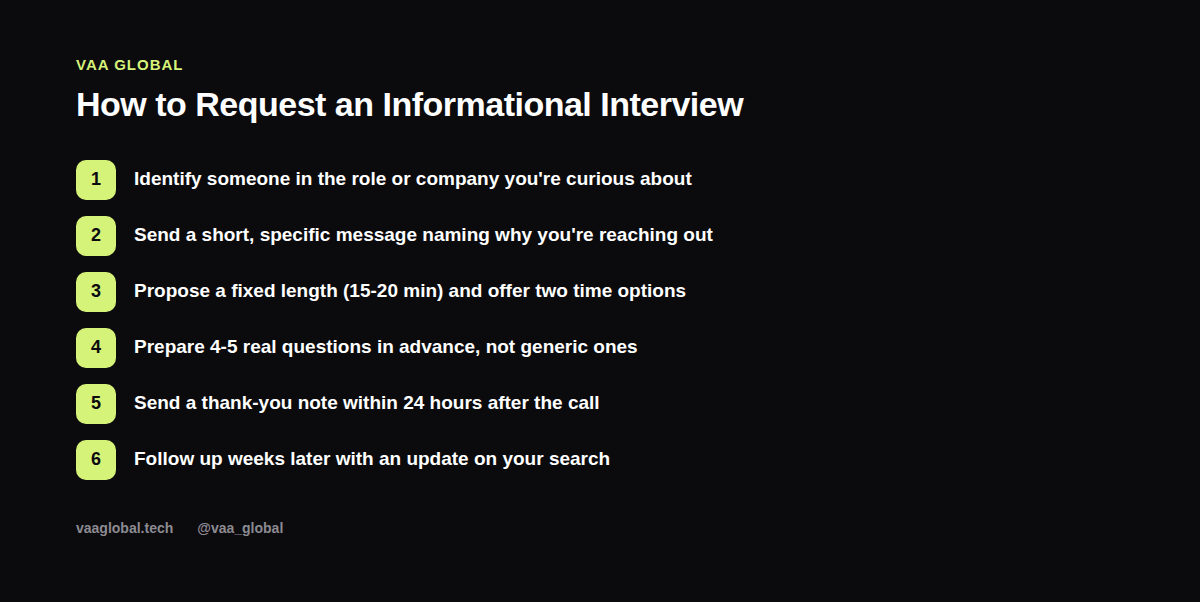
“Hi [Name], I came across your profile while researching [role/field] and I'm exploring a move into this space myself. Would you be open to a 15-minute call sometime in the next couple of weeks? I'd love to hear how you got into [role] and what the day-to-day actually looks like. Happy to work around your schedule — Tuesday or Thursday afternoon both work for me if either suits you.”
Propose a Fixed, Short Length
Open-ended requests like “can I pick your brain sometime” are easy to postpone indefinitely because they have no clear shape. Naming a specific length — fifteen or twenty minutes — makes the ask feel manageable and signals that you respect their calendar. Most people will actually give you a bit more time once the conversation is flowing, but starting small gets you the yes.
Preparing Good Questions
Generic questions get generic answers. Instead of “what's it like working there,” try: “What surprised you most in your first six months in this role?” or “What skills do you see separating people who grow quickly from people who plateau?” Prepare four or five real informational interview questions ahead of time so you're not scrambling mid-call, but stay flexible enough to follow an interesting thread if one comes up.
During the Call
Show up a couple of minutes early, state again how much time you have, and let them talk more than you do. Take notes, but don't bury your face in them the whole time. Near the end, if it feels natural, you can ask a light version of a referral question — something like “is there anyone else you'd suggest I talk to” — but never make this the main point of the call.
After the Call: Thank Them Properly
Send a short thank-you message within 24 hours referencing something specific they said. This is also a good moment to add them to your job search tracker spreadsheet so you remember the conversation and can follow up naturally months later with an update, rather than letting a useful connection quietly go cold.
Is It Okay to Ask a Stranger?
Yes — this is one of the most common worries people have, and it's almost always overblown. Professionals get these requests regularly and most are flattered rather than annoyed, provided the ask is specific, respectful of their time, and clearly not a job pitch in disguise. The worst realistic outcome is no reply at all, which costs you nothing.
Starting With Your Own Network First
Before reaching out to strangers, look at who's already in your corner. If you studied with VAA Global, the alumni network after graduation is a natural, low-pressure place to practice this exact skill, since there's already shared context to open the conversation. Once you're comfortable asking people you have something in common with, reaching out to complete strangers in your target field feels far less intimidating.
The Bottom Line
An informational interview works because it's low-stakes for everyone involved: no résumé review, no evaluation, just a short, genuine conversation. Ask clearly, keep it to the time you promised, come with real questions, and follow up with thanks. Do this consistently alongside your other networking as a remote professional efforts, and these small conversations often turn into the referrals and leads that a cold application never would. Harvard Business Review's guide on getting the most out of an informational interview is a solid next read if you want more on handling trickier conversations.