

Week four feels manageable. Week twelve, with a string of rejections or silence behind you, is a different story. Learning how to stay motivated during a long job search matters because motivation naturally dips the longer a process drags on without a clear finish line, and the habits that work for a short search often stop working once months have passed.
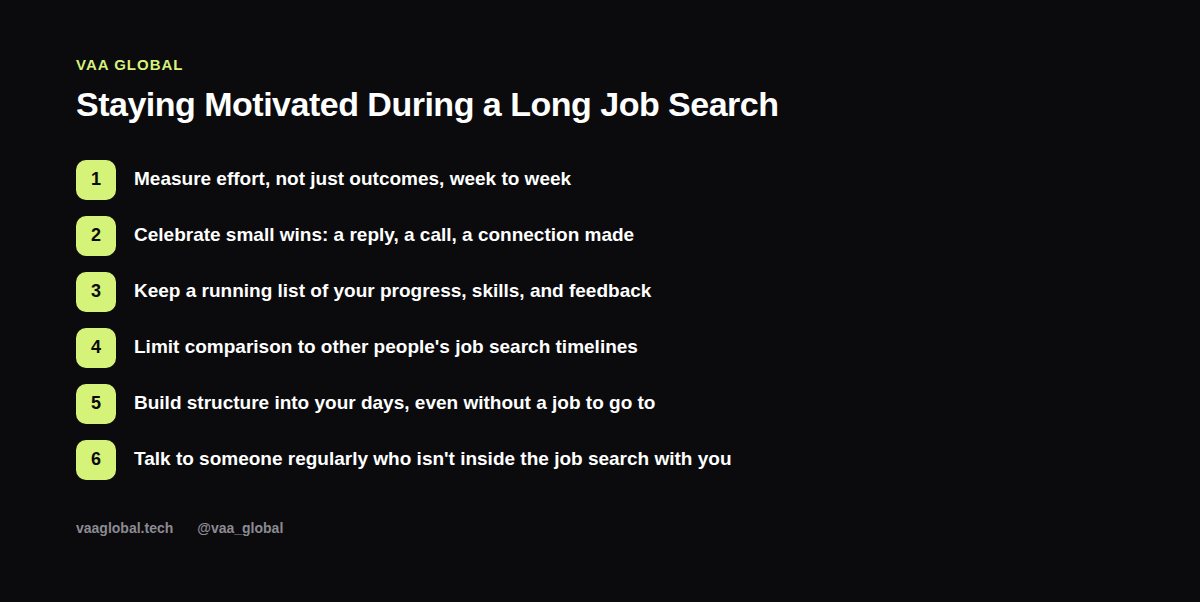
Measure Effort, Not Just Outcomes
Outcomes — interviews, offers — are mostly outside your direct control, and tying your motivation entirely to them sets you up for a rough few months. Effort, on the other hand, is fully within your control: applications sent, messages drafted, skills practiced. Judging your week by effort rather than outcome keeps job search motivation from collapsing every time a result doesn't land.
Celebrate Small Wins on the Way
A reply from a recruiter, a scheduled call, even a solid connection made on LinkedIn — these are real progress, even when none of them is a job offer yet. Notice them deliberately instead of only registering the final result. Small wins add up to the momentum that carries you through the stretches with no wins at all.
Keep a Running Record
It's easy to forget, three months in, how much you've actually learned, improved, or built since you started. Keep notes — in your job search tracker spreadsheet or a separate journal — on new skills picked up, feedback received, and interviews that went well even if they didn't convert. Rereading this on a rough day is often enough to shift your mood.
Limit Comparison to Other People's Timelines
Hearing that an acquaintance landed a job in three weeks while you're at month four can feel discouraging, but timelines vary enormously by field, experience, market conditions, and plain luck. Someone else's faster timeline says very little about your own prospects, so treat those comparisons as noise rather than a real measure of how you're doing.
Build Structure Into Your Days
Without a job to anchor your schedule, days can blur together in a way that quietly erodes motivation. Keep a loose daily structure — set hours for applications and outreach, breaks, and time for skill-building — even without an employer requiring it. Structure on its own does a surprising amount to protect long job search motivation.
Talk to Someone Outside the Search
Spending all your conversations about the job search with other job seekers can amplify anxiety rather than ease it. Make sure you're also talking regularly with people who aren't inside this process — friends, family, people from unrelated parts of your life — so you get perspective beyond the search itself.
Is It Normal for This to Take a Long Time?
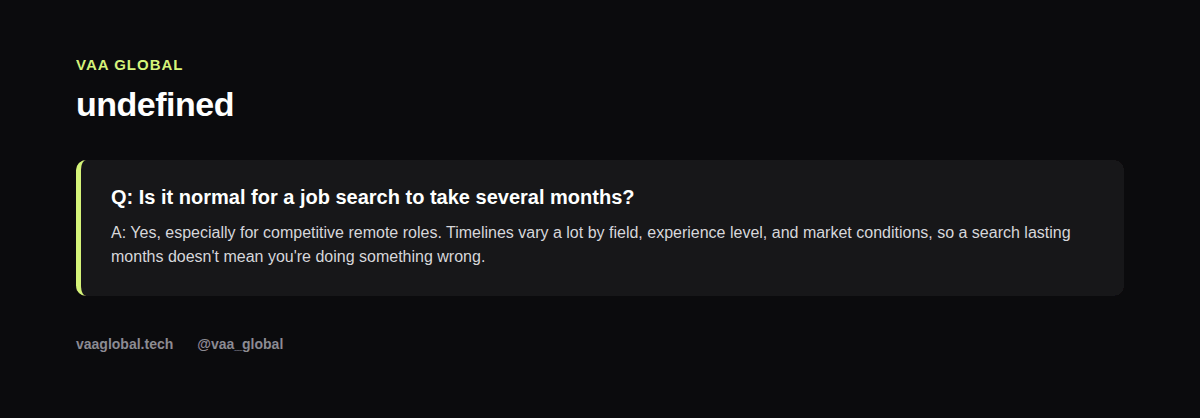
Yes. Is it normal for a job search to take a long time is one of the most common worries people have, and the honest answer is that several months is common, especially for competitive remote roles with applicants from many countries. A long timeline reflects market reality more often than it reflects anything wrong with you or your approach.
Revisit Your Goals, Not Just Your Mood
If motivation keeps dipping at the same point every week, it might be your weekly job search goals that need adjusting, not just your mindset. A target that's consistently too ambitious drains motivation just as surely as a long search does, so check whether the structure itself needs a tweak before assuming the problem is purely emotional.
Staying Positive Without Faking It
Staying positive while job hunting doesn't mean forcing cheerfulness you don't feel. It means noticing genuine progress alongside the frustration, rather than only noticing one or the other. Job search motivation holds up better when it's realistic — some days will be hard, and that's fine, as long as the hard days don't erase the real progress happening underneath them.
A Few Long Job Search Tips Worth Repeating
Among the most useful long job search tips: keep your routine consistent even when results are inconsistent, revisit your materials every few weeks rather than never touching them again, and remind yourself that motivation during unemployment naturally comes in waves rather than a steady line. Expecting the dips in advance makes them far less destabilizing when they arrive. A resource like MindTools' guide to staying motivated has a few more general techniques that apply well here too.
The Bottom Line
Staying motivated during a long job search comes down to changing what you measure and who you compare yourself to, not forcing positivity through sheer willpower. Track effort and small wins, keep a daily structure, and stay connected to people outside the search. If low motivation starts tipping into something heavier — numbness, dread, exhaustion that rest doesn't fix — it's worth reading about job search burnout and how to recover as a next step. Similarly, if confidence is the deeper issue, building career confidence with no formal experience tackles that angle directly.