Somewhere around week six or eight of sending applications into what feels like silence, the exhaustion stops being just tiredness and starts being something heavier. Job search burnout is real, it's common, and it doesn't mean you're doing anything wrong — it means the process has gone on long enough, with little enough feedback, that your mind and body are asking for a different approach.
Why Job Search Burnout Happens
A job search combines several things that are individually draining: constant self-presentation, frequent rejection, uncertainty about timing, and no guaranteed payoff for the effort you put in. Unlike a regular job, there's no paycheck or steady feedback loop telling you the work is paying off, which makes it easy to burn out from job hunting even if you're technically doing everything “right.”
Sign 1: Numbness to Rejection
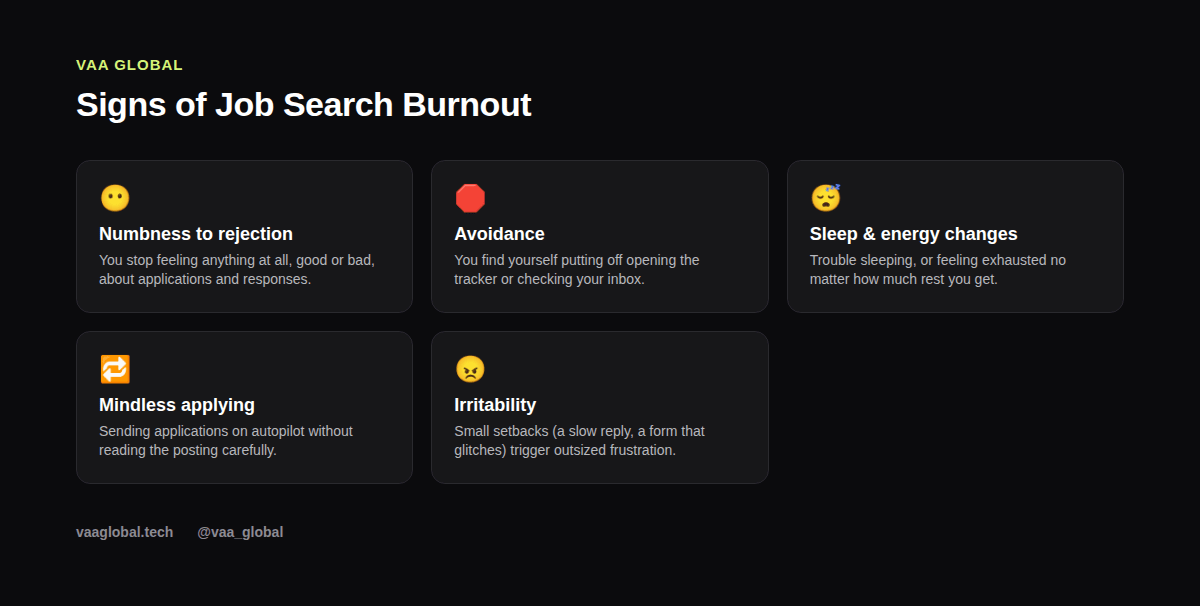
Early on, a rejection stings. Later, you might notice you feel almost nothing reading one — not relief, not disappointment, just flatness. That emotional flattening is one of the clearer signs of burnout job search veterans describe, and it's worth paying attention to rather than treating it as progress or toughness.
Sign 2: Avoiding Your Own Process
If you find yourself putting off opening your tracker, delaying checking your inbox, or feeling a flicker of dread before logging into LinkedIn, that avoidance is a signal, not laziness. It usually means the activity itself has become associated with stress rather than progress.
Sign 3: Sleep, Energy, and Mood Changes
Trouble falling asleep, waking up exhausted regardless of hours slept, or feeling irritable over things that wouldn't normally bother you are physical and emotional signs that stress has built up past what you're processing day to day. If this is happening alongside your search, that's how long you should take a break seriously, not push through it on willpower alone.
Sign 4: Mindless Applying
When you start applying to roles without really reading the posting, or sending the same generic cover letter everywhere just to hit a number, that's job search fatigue showing up in your output. Ironically, this usually hurts your results too, since rushed, untailored applications perform worse than fewer, more careful ones.
How to Actually Recover: Take a Real Break
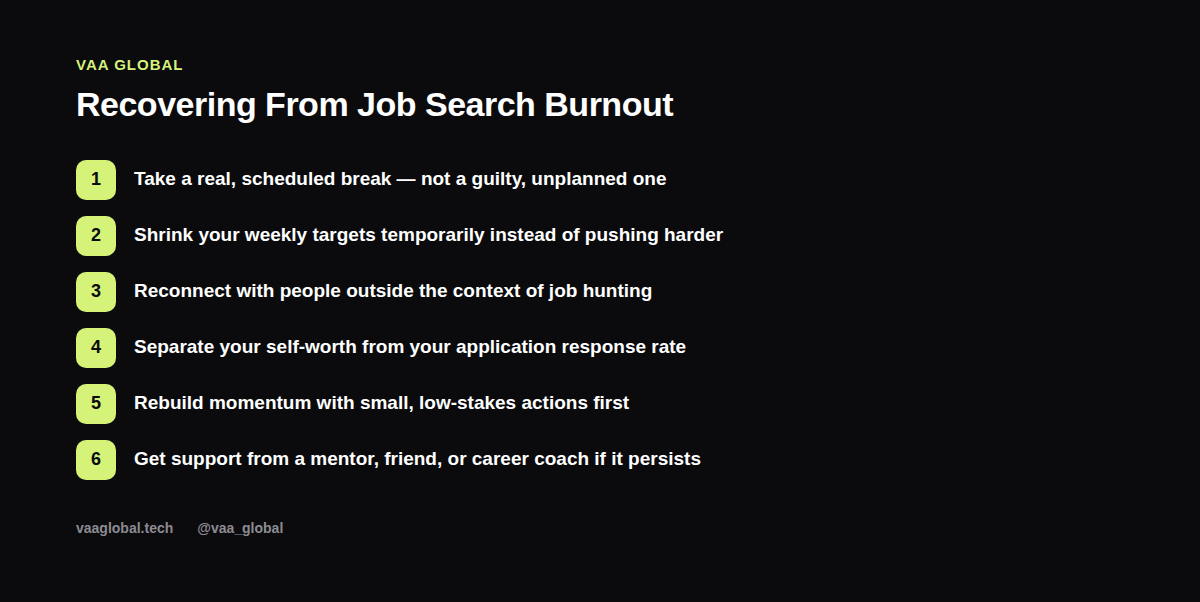
A guilty, half-hearted pause where you still feel like you should be applying doesn't give you real recovery. Decide on a specific length — three days, a week — tell yourself clearly that this time is off, and mean it. This single step is often the start of recovering from job search burnout far more than trying to grind through exhaustion.
Shrink Your Targets Instead of Abandoning Them
Rather than stopping entirely, consider cutting your weekly job search goals in half for a couple of weeks. Lower targets you can actually hit rebuild a sense of competence and momentum, which matters more right now than raw volume.
Reconnect Outside the Job Search Context
Spend time with people and activities that have nothing to do with your search. It sounds small, but remembering that your identity isn't only “person looking for a job” helps separate your sense of self-worth from your application response rate, which is one of the most protective things you can do during a long search.
Get Support If It Persists
If exhaustion, numbness, or dread persist for weeks despite rest and adjusted goals, it's worth talking to a mentor, a trusted friend, or even a counselor. Burnout that doesn't lift with basic recovery steps sometimes needs more support than a solo adjustment can provide, and there's nothing wrong with asking for it. If part of what's draining you is repeated no's, how to handle rejection during a remote job search is worth reading alongside this. Similarly, if restlessness or low motivation is the bigger issue for you right now rather than outright exhaustion, how to prevent burnout as a freelancer covers overlapping ground worth a look.
How Do I Know If I Have Job Search Burnout?
A simple way to check is to ask yourself: how do I know if I have job search burnout versus just an off day? If the exhaustion, numbness, and avoidance have lasted more than a week or two and rest hasn't helped, that's burnout rather than a passing bad mood. Because the signs build gradually, many people only notice the full picture once a friend or partner points out how different they've seemed lately.
How Long Should You Take a Break?
There's no single right answer to how long you should take a break from job hunting, but most people find three days to a full week enough to reset, as long as the break is genuinely off rather than a half-pause where guilt creeps back in by day two. If you're still exhausted after a week off, that's a sign to extend the break rather than force yourself back into full intensity on schedule.
If You're Asking “Why Am I So Tired of Applying to Jobs?”
If you've caught yourself thinking why am I so tired of applying to jobs lately, treat that thought as useful data rather than something to push past. It's often the first honest signal of burnout, arriving well before the more obvious signs like disrupted sleep or outright avoidance. Also, because remote and online searches can blur every time zone and working hour together, pacing yourself matters even more than it would with a traditional, geographically local job hunt.
The Bottom Line
Job search burnout is a predictable response to a genuinely demanding process, not a personal failing. Learn to recognize the early signs — numbness, avoidance, disrupted sleep, mindless applying, irritability — and respond with a real break, smaller temporary targets, and connection outside the search before burnout forces a much longer stop later. The American Psychological Association's resources on burnout are a useful general reference if the exhaustion is spilling well beyond the job search itself.