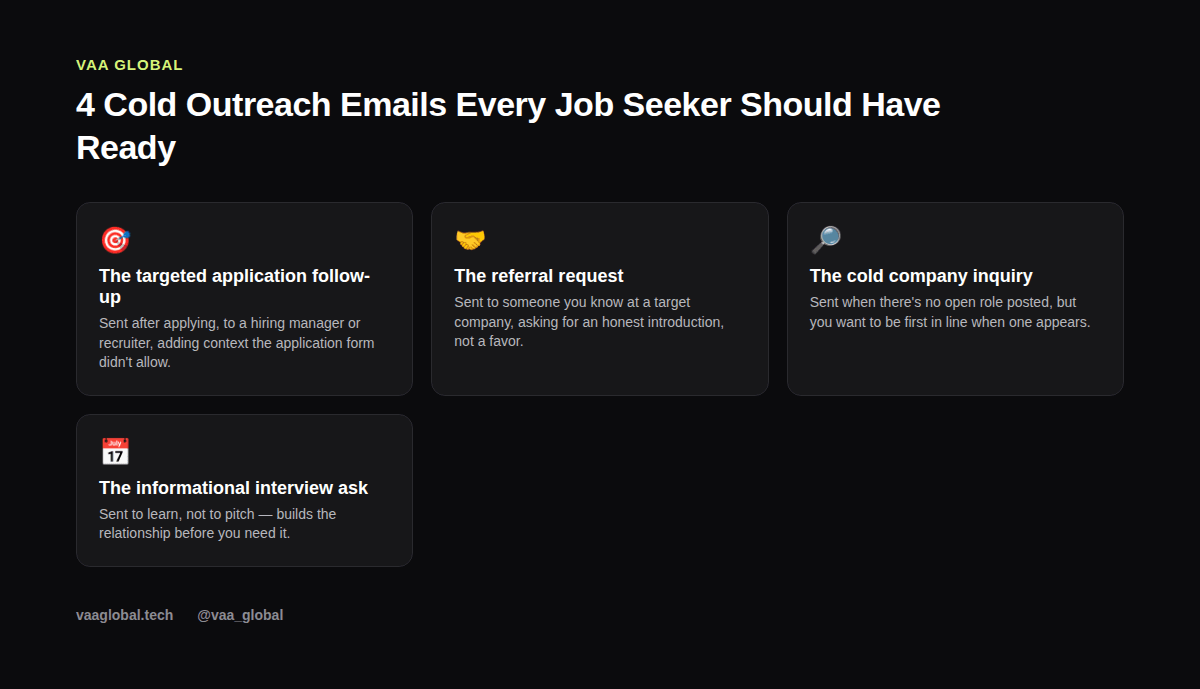
Applying through a job board and waiting is passive. Cold outreach email templates give you a second channel — a direct, personal message to a hiring manager, recruiter, or potential referral — that can move a conversation forward when a form submission alone goes quiet. You don't need to be a natural salesperson to do this well; you need a short, specific message and the confidence to send it even when you're not sure you'll get a reply.
Why Cold Outreach Still Works
Hundreds of applications can pile up for a single posting, and most hiring managers never read past the first screen. A direct, well-written message cuts past that queue — not by skipping the process, but by adding a human layer to it. This is exactly how to write a cold email for a job that doesn't feel desperate: you're adding context, not begging for attention.
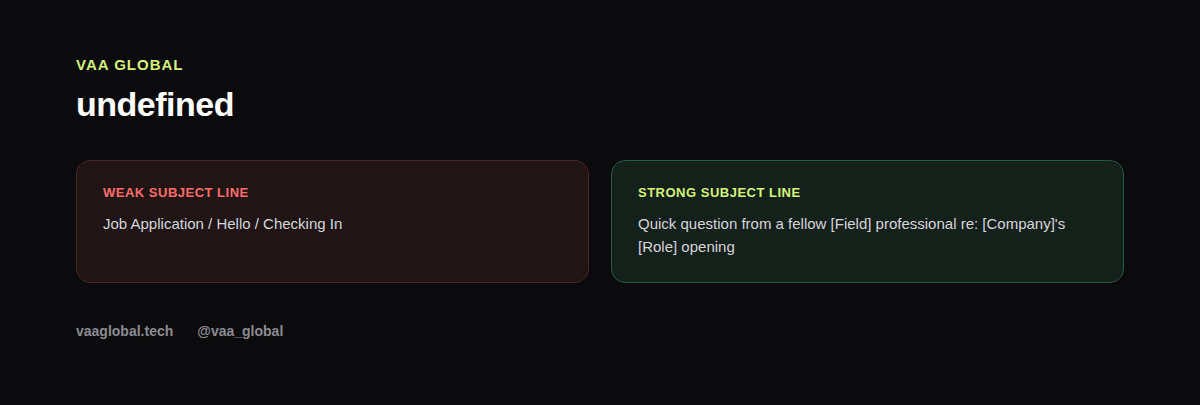
The Subject Line Decides Whether It Gets Opened
“Job Application” or “Hello” gets ignored or buried. A subject line that names who you are and why you're writing gets opened. Something like “Quick question from a fellow [field] professional re: [Company]'s [role] opening” tells the reader exactly what they're about to read before they even click.
Template 1: The Post-Application Follow-Up
“Hi [Name], I applied for the [Role] position earlier this week and wanted to reach out directly. I've spent [X years/time] working on [relevant skill], including [one specific, relevant result]. I'd love the chance to talk more about how I could contribute to [team/company]. Happy to answer any questions in the meantime.”
Template 2: The Referral Request
“Hi [Name], hope you're doing well! I saw [Company] has an opening for [Role] and I'm applying this week. Given your experience there, would you be comfortable passing my resume along or letting me know if there's anything I should highlight? Totally understand if now isn't a good time — no pressure either way.”
Template 3: The Cold Company Inquiry
“Hi [Name], I don't see a current opening that matches, but I've been following [Company]'s work in [area] and would genuinely love to be considered if something opens up in [department/role type]. I've attached my resume in case it's useful to keep on file — happy to stay in touch either way.”
Template 4: The Informational Interview Ask
This one works a little differently, since the goal is a conversation rather than a job. For the full approach and a ready-to-use message, see informational interviews: how to request one, which covers exactly how to ask for a referral by email and how to phrase that specific kind of outreach.
Keep It Short
Every template above fits comfortably under 150 words. Long emails feel like a chore to answer, and busy hiring managers and recruiters skim rather than read closely. If you find yourself writing three paragraphs, cut it down to the single most relevant sentence about your background and one clear ask.
End With One Clear Ask, Not Three
Don't pile on multiple requests — a chat, a referral, feedback on your resume, all in one message. Pick the single most useful ask for this specific email and make it easy to say yes to. If you want more, that's what the follow-up or a second conversation is for.
Following Up Without Being Annoying
If you don't hear back within a week, one polite follow-up is completely reasonable — people miss emails constantly, especially recruiters managing dozens of open roles. After that, let it go and move your energy to a new contact. Note each outreach message and its follow-up date in your job search tracker spreadsheet so nothing slips through unanswered or gets double-messaged by accident.
Personalize Before You Send
Every template above needs a few specifics filled in before it goes out — the company name, a real detail about the role, a genuine reason you're interested. Therefore, never copy-paste the same message to twenty different people without adjusting it; recipients can usually tell, and a generic message undermines the whole point of reaching out directly in the first place. Instead, spend an extra two minutes per email tailoring at least one sentence to the specific person or company.
Timing Matters More Than You'd Think
Emails sent early in the week, during normal business hours, tend to get opened faster than weekend or late-night sends. Similarly, avoid sending right before or during major holidays when inboxes are already overloaded. None of this guarantees a reply, but it does slightly improve your odds, and since cold outreach is already a numbers game, small improvements add up across dozens of messages.
The Bottom Line
Cold outreach email templates work because they're a starting structure, not a script to follow word for word — adjust each one to the real person and situation in front of you. Keep the subject line specific, the body short, and the ask singular, and you'll get meaningfully more replies than silence from job boards alone. For more on the broader strategy behind this kind of networking, how to network online as a remote professional is a useful companion read, and Indeed's guide to writing a cold email for a job has a few more examples if you want additional variations.