
Learning to build confidence after job rejection matters because almost nobody lands their next role without hearing “no” a few times first, and how you respond to those nos shapes how strong you show up for the next interview. Rejection stings, there's no way around that, but it doesn't have to compound into self-doubt that follows you into your next application.
Why Do I Take Job Rejection So Personally?
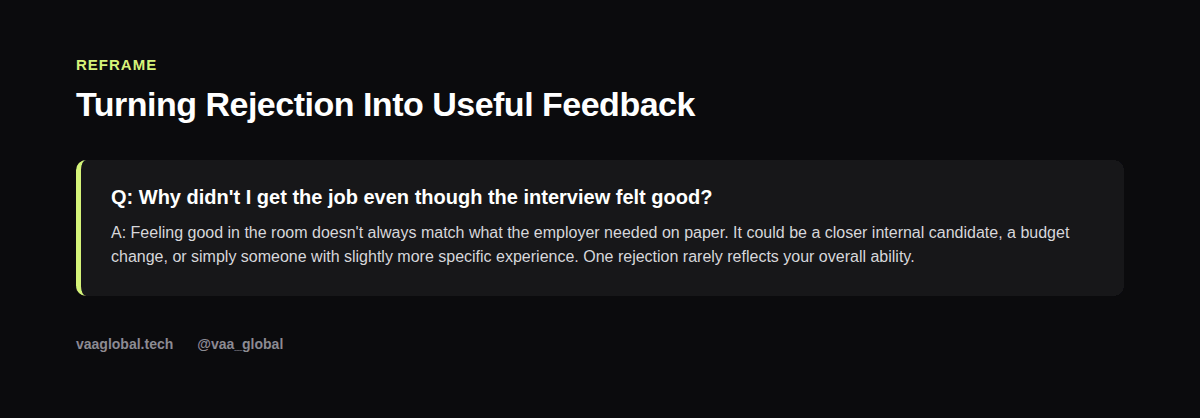
Job rejection feels personal because interviews are inherently personal — you shared your story, your effort, sometimes your hopes for a fresh start. It's natural for a “no” to feel like a judgment on who you are, not just on a hiring decision shaped by dozens of factors you never see: budget constraints, an internal candidate, a slightly different skill match. Recognizing that gap between how it feels and what it actually means is the first real step toward handling rejection better.
Give Yourself Permission to Feel It, Briefly
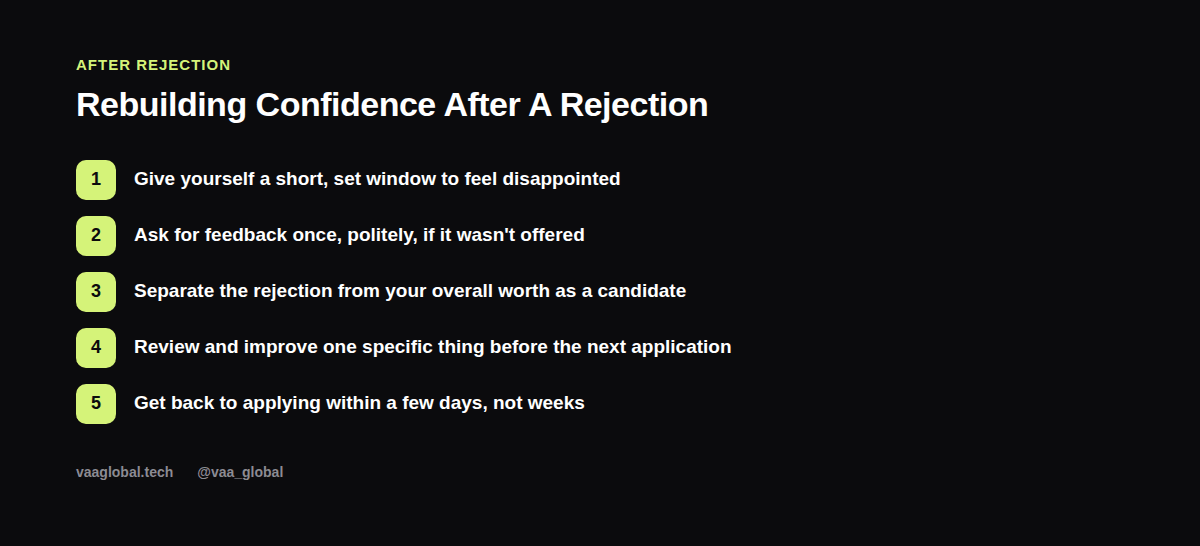
Don't pretend rejection doesn't bother you — bouncing back from rejection isn't about suppressing disappointment, it's about not letting it linger indefinitely. Give yourself a day, or even just an evening, to feel genuinely frustrated or sad about it. Then make a deliberate choice to move forward rather than replaying the interview on a loop for the rest of the week.
Asking for Feedback the Right Way
If feedback wasn't offered, it's reasonable to send one polite, brief message asking if the interviewer would share any insight into the decision. Many won't respond, and that's fine — but when they do, genuine feedback is one of the most useful things you can get from an interview rejection, since it tells you something concrete to work on rather than leaving you guessing.
Is It Normal to Feel Discouraged After Many Rejections?
Completely normal, and extremely common. Job search burnout builds gradually through repeated rejection, especially when applications stretch into weeks or months without a clear end in sight. If you're noticing persistent low motivation, irritability, or a growing urge to stop trying altogether, that's your signal to pause and recalibrate rather than push through on willpower alone.
Separating Rejection From Self-Worth
This is the core mental shift that makes the biggest difference. A rejection reflects a specific decision at a specific company at a specific moment — not a verdict on your overall ability or value as a person. Candidates get passed over for reasons that have nothing to do with their skill: timing, internal politics, budget freezes, or simply someone with slightly more niche experience. Self-doubt in job search tends to grow when people skip this distinction and internalize every no as proof of inadequacy.
Turning Feedback Into One Concrete Improvement
Rather than trying to overhaul everything after a rejection, pick one specific thing to improve before your next application: tighten a weak interview answer, fix a resume formatting issue, or practice a particular question you stumbled on. This feels more manageable than a vague resolution to “do better,” and it gives you visible evidence of progress with each round.
How Long Should I Wait Before Applying Again?
Not long. A few days to process the disappointment is healthy; weeks of avoidance usually just deepens anxiety about the whole process. Momentum matters in a job search — the longer you wait, the harder it can feel to restart. If you need structure, set a specific day to send your next application rather than leaving it open-ended.
How Do I Stay Motivated During a Long Job Search?
Track small wins alongside the big goal: an interview secured, a strong reference lined up, a skill improved. These markers matter even when the final outcome (an offer) hasn't landed yet. It also helps to connect with others going through the same process, whether through networking and referrals or peer support, since isolation tends to make rejection feel heavier than it actually is.
When to Seek More Structured Support
If self-doubt is seriously affecting your day-to-day life, not just your job search, it's worth talking to someone you trust or a professional, rather than trying to push through alone. For a more detailed, practical breakdown of handling individual rejections as they happen, see our companion piece on how to handle rejection during a remote job search.
What Psychology Says About Resilience
Research on resilience, including work summarized by the American Psychological Association, consistently points to the same pattern: people who recover well from setbacks tend to view them as specific and temporary rather than global and permanent. Applying that lens to job rejection means treating one no as information about one application, not as evidence about your entire career trajectory. That mental habit, more than any single tactic, is what separates people who keep applying with energy from people who quietly give up.
Rebuilding Momentum Through Preparation
One of the fastest ways to feel steadier after a rejection is to put energy into something concrete and within your control. Revisiting mock interview practice you can do alone or tightening up your approach to researching a company before an interview gives you a productive outlet for the energy that disappointment creates, instead of letting that energy curdle into rumination.
The Bottom Line
Learning to build confidence after job rejection is less about eliminating disappointment and more about not letting it accumulate into something bigger than it is. Feel it, learn one concrete thing from it, and get back into motion within days — your next application deserves the version of you that's already moving forward, not stuck replaying the last no.