If you want to use referrals to land a remote job, the first thing to accept is that most hiring decisions never go through the cold application pile at all. A referral is simply someone inside or close to a company vouching for you before a recruiter even opens your CV, and it works because it answers the one question every hiring manager quietly asks: can I trust this person's word? For remote roles, where you may never meet your interviewer in person, that trust shortcut matters even more.
Why Referrals Work Better Than Cold Applications
People often ask, do referrals really help you get hired? Research from talent acquisition platforms consistently shows referred candidates are hired faster and stay longer than those who apply cold, largely because an employee referral program gives current staff a direct incentive to vouch for people they trust. Recruiters are flooded with applications for every remote posting, and a referral instantly moves you out of that stack. Many companies also run a formal employee referral program that pays staff a bonus for successful hires, which means current employees often have a direct incentive to recommend good candidates. Even without a formal program, a personal recommendation still carries weight because it reduces the hiring manager's risk. You're no longer an anonymous name; you're someone their colleague already trusts.
Where Remote Job Referrals Actually Come From
Referrals don't require a huge professional network. They usually come from a handful of predictable places.
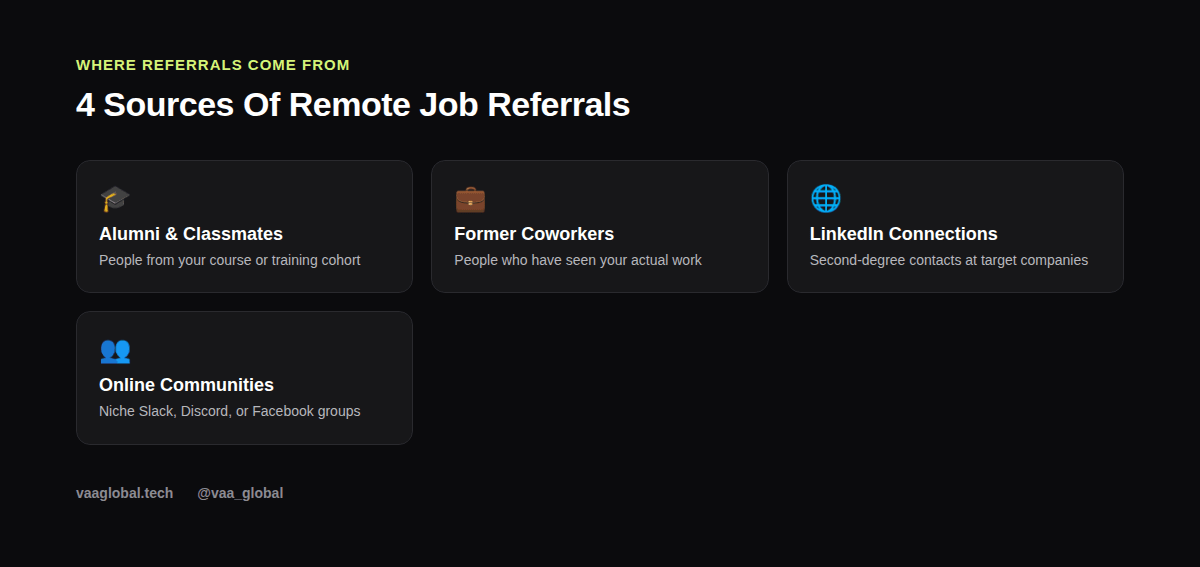
Former classmates from a training program, past coworkers, LinkedIn connections one or two degrees away, and niche online communities (Slack groups, Discord servers, Facebook groups built around a specific skill) are the most reliable sources. If you've completed any structured training, your classmates and alumni contacts are an underused resource — many people in the same cohort are job hunting at the same time and happily share leads with each other.
How to Identify the Right People to Ask
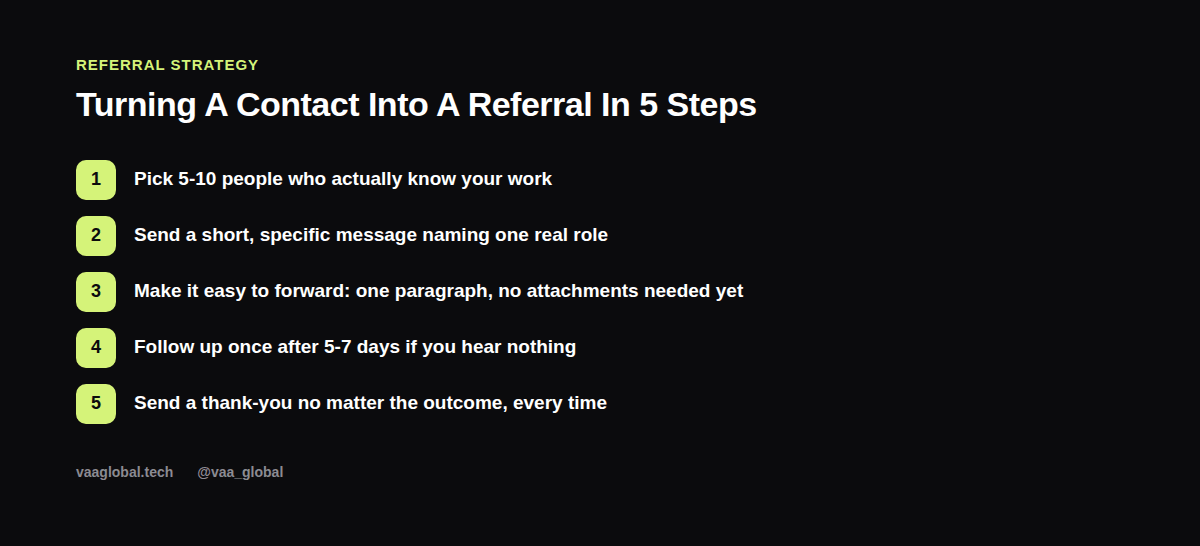
Don't ask everyone you've ever met. Start with people who have actually seen your work in some capacity: a former manager, a project collaborator, a classmate who reviewed your portfolio, or someone you've had a real conversation with online. A referral request lands better when the person can honestly say something specific about you, not just “I think they're nice.” Make a short list of 5-10 names rather than trying to blast dozens of people — quality of the ask matters more than volume.
What to Actually Say When Asking for a Referral
This is where most people freeze, unsure what do I say when asking for a referral. Having a referral message template in mind removes the guesswork. A referral message works best when it's short, specific, and easy to act on. Name the exact role and company, remind them briefly how you know each other, and attach (or link to) your CV so they don't have to go digging for it. Something like: “Hi [Name], I saw [Company] is hiring a [Role] and I noticed you work there. I've been doing [specific relevant work] and would really appreciate it if you'd be open to referring me or passing my CV along. No pressure if it's not a good fit — thanks either way.” That last line matters; it removes the awkwardness and gives them an easy out, which paradoxically makes people more willing to help.
Timing Your Ask Correctly
Reach out as soon as you see a posting that fits, ideally within the first few days. Referrals carry the most weight early in the hiring process, before a recruiter has built a shortlist. If you wait two weeks, the role may already be filled or the hiring manager may already have enough candidates to review.
Following Up Without Being Pushy
If you don't hear back within five to seven days, one polite follow-up is appropriate — people get busy and your message may have been buried. Keep it brief: “Hi again, just following up in case my last message got lost — totally understand if the timing isn't right.” After one follow-up, let it go. Repeated pings can damage the relationship you're trying to build on.
Building Referral-Worthy Relationships Before You Need Them
The strongest referral networks are built before you're job hunting, not during a panic search. Stay in touch with former colleagues and classmates periodically — congratulate people on new roles, comment thoughtfully on their posts, check in without asking for anything. When you eventually do need a referral, you're not reaching out cold; you're reactivating an existing relationship, which is a completely different (and far more comfortable) conversation.
What to Do If You Don't Have Many Contacts Yet
If you're early in your career or new to remote work, your network may feel thin, and that's normal. If you're wondering how do I ask someone for a referral when you barely know anyone, start with networking for remote jobs through small, low-pressure interactions rather than a big ask on day one. Building one takes genuine effort through optimizing your LinkedIn profile and participating in communities tied to your field rather than only applying cold. In the meantime, don't let a small network stop you from applying directly — referrals are a powerful shortcut, not the only path in. Many strong hires still come through well-targeted cold applications, especially when your resume avoids the common mistakes remote job seekers make.
Always Close the Loop
Whether the referral leads to an interview or nothing at all, thank the person who helped you. This isn't just good manners — it's what keeps the relationship open for next time. A quick message like “Thanks again for passing that along, I really appreciate you taking the time” costs you thirty seconds and keeps the door open for future opportunities, referrals, or advice.
The Bottom Line
Learning to use referrals to land a remote job isn't about having hundreds of connections — it's about identifying the right handful of people, asking clearly and respectfully, and following through with gratitude. Combine referral outreach with strong applications and solid interview preparation, and you'll give yourself a real edge in a crowded remote hiring market.