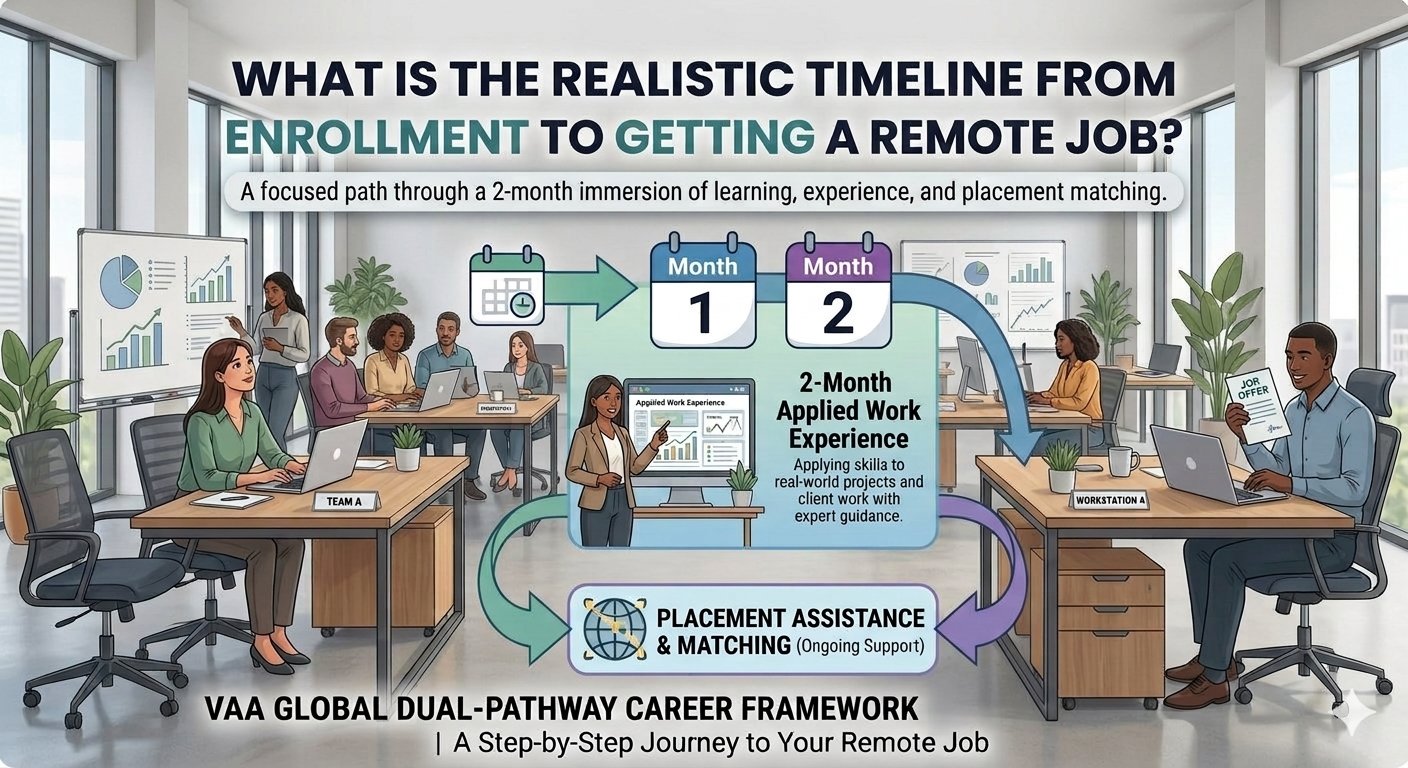
The path from enrolling at VAA Global to actually working a remote job runs through several distinct stages, and each one takes real time. There's the live course itself, then a 2-month internship, then the work of building a portfolio and polishing a CV, and only after all of that does active job searching begin, supported by placement assistance and matching through VAA Global Talent. None of these stages can be skipped, and none of them come with a promised hire-by date, because the final outcome depends on how much effort a graduate puts into their search and what the job market looks like at the time.
Stage One: Enrolling and Completing the Live Course
The first stage is the course itself, delivered live rather than through pre-recorded video. Course length varies depending on the subject, and the specifics for each program are listed on the course catalogue. This stage is where the technical or professional foundation gets built, and it requires consistent attendance since the material builds week over week.
Treating this stage seriously from the first week matters more than students sometimes expect. Falling behind early in a live, cumulative course is harder to recover from than falling behind in a self-paced one, since later modules assume you've absorbed what came before.
Stage Two: The 2-Month Internship
Once the course wraps up, graduates move into a 2-month internship, which is where the shift from learning to doing happens. This is a distinct stage with its own timeline, not an extension of the course, and it's structured to give graduates practical experience they can point to on a CV. What the internship actually covers is detailed on the internship page.
This stage matters for the timeline because it's not optional and it's not shorter for people who feel ready sooner. Two months is the structure, and it exists because real, useful experience takes that long to build properly.
Stage Three: Building a Portfolio and Polishing a CV
After the internship, graduates put together a portfolio using the portfolio builder and refine their CV and LinkedIn profile with the CV review tool. This stage can happen in parallel with the tail end of the internship for graduates who are organized about it, but it still takes deliberate time and effort to do well, it isn't something to rush through in an afternoon.
Graduates who start thinking about their portfolio early, rather than waiting until the internship fully wraps up, tend to move into the job search stage faster. Selecting the strongest examples of your internship work as you go makes this step much quicker once it's time to actually assemble everything.
Stage Four: Active Job Searching With Support
This is the stage where job placement assistance and matching through VAA Global Talent come into play. Placement assistance means help preparing for and pursuing roles, things like interview coaching, while VAA Global Talent connects graduates to specific relevant openings based on their skills and course. Both are real, structured support, but neither one guarantees a hire on a fixed schedule.
Why There's No Guaranteed Timeline for This Final Stage
The job search stage is where individual effort and the external job market matter most. A graduate who applies consistently, follows up, and takes interview coaching seriously moves faster than one who applies sporadically. Similarly, hiring volume in remote roles shifts with the broader market, and that shift is outside anyone's control, VAA Global's or the graduate's. Being upfront about this is more useful than promising a specific number of weeks.
What Actually Speeds Things Up
Graduates who move through this timeline fastest tend to do a few things consistently: they keep their portfolio current rather than treating it as a one-time task, they respond quickly to matches from VAA Global Talent, and they use the CV review tool more than once as their experience grows. None of this changes the structure of the timeline, but it does affect how efficiently someone moves through the job-search stage once they reach it.
It's also worth setting expectations with the people around you, family, a partner, anyone who might be asking how the job search is going, so that the process doesn't feel rushed or mismanaged simply because it's taking the amount of time that real, effortful searching actually takes.
If you're ready to start this sequence, the first step is picking a course from the course catalogue and submitting an application. What happens after that depends on the stages above, and on the effort and consistency you bring to each one, from the first live class through to the job search itself.