Having strong questions to ask at the end of a job interview matters almost as much as your answers earlier in the conversation, yet most candidates treat this moment as an afterthought. When the interviewer asks “do you have any questions for me?”, saying “no, I think you covered it all” quietly signals a lack of genuine interest, even if that's not how you meant it.
Why This Moment Matters More Than It Seems
As Indeed's career advice notes, the questions you ask reveal how you think about the job: are you focused on outcomes, team dynamics, and growth, or just logistics? A well-chosen question for the interviewer can leave a stronger final impression than an entire earlier answer, simply because it's the last thing they'll remember before moving to the next candidate.
What Should I Ask When the Interviewer Asks If I Have Questions?
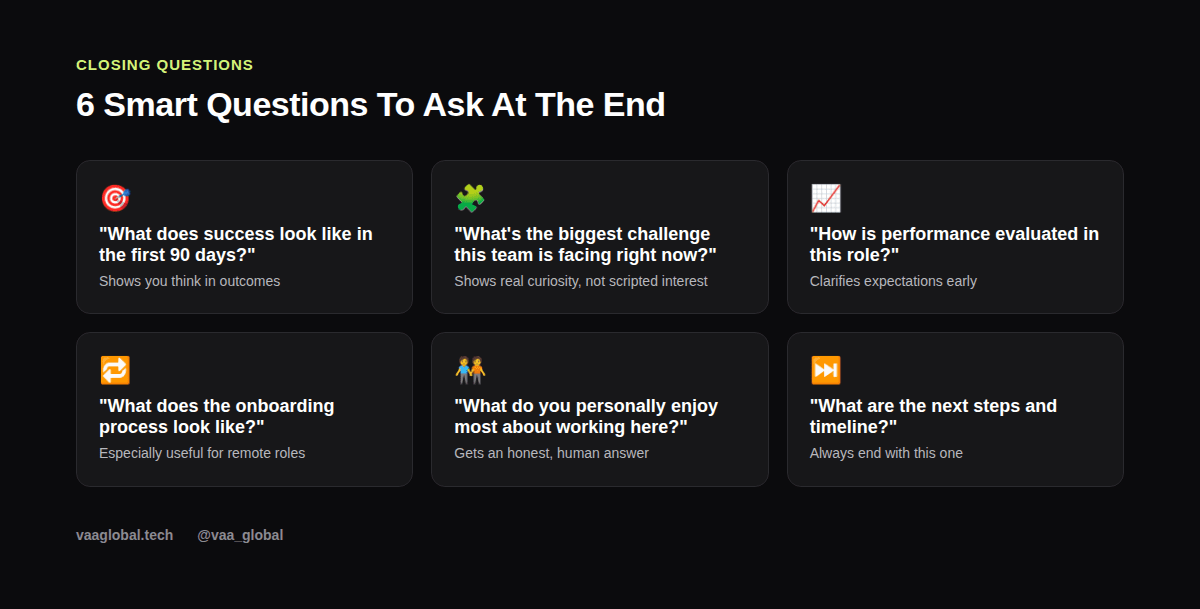
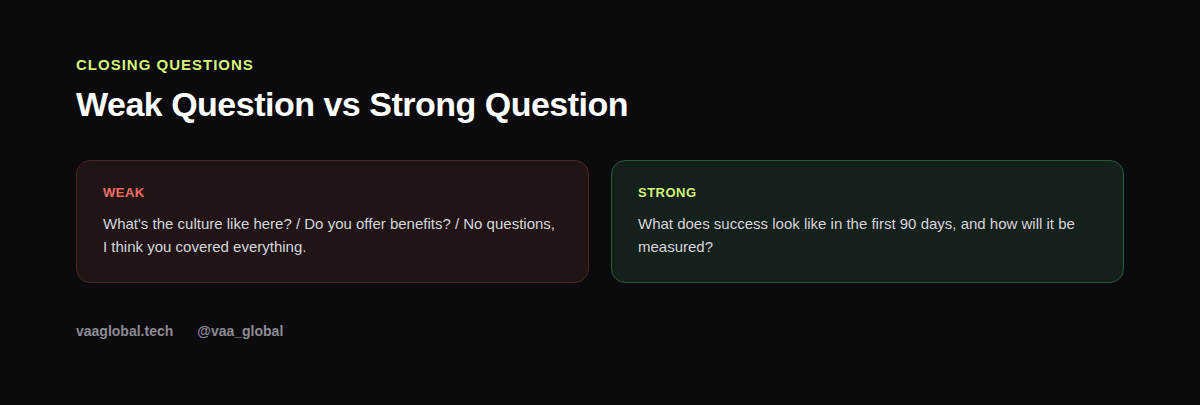
Have two or three questions ready, drawn from genuine curiosity shaped by your earlier research into the company. A strong opener is: “What does success look like in the first 90 days in this role, and how is that measured?” It shows you're already thinking about performing well, not just getting hired.
Ask About Real Challenges, Not Just Highlights
“What's the biggest challenge this team is currently facing?” is a genuinely useful interview closing question because it invites an honest, unscripted answer rather than recruiting-brochure language. The response also tells you something real about what you'd actually be walking into, which protects you from accepting a role based only on the polished version of the pitch.
Ask How Performance Gets Evaluated
“How is performance evaluated in this role?” clarifies expectations before you've even started, and helps you judge whether the company has a structured, fair process or a vague, inconsistent one. For remote roles especially, this question also surfaces how visible your work needs to be and how often you'll get feedback, which matters a lot when you're not in a shared office.
Ask About Onboarding, Especially for Remote Roles
“What does the onboarding process look like?” is particularly important for remote positions, where a poor onboarding experience can leave you feeling isolated and unsure for weeks. A thoughtful answer here (structured training, a buddy system, regular check-ins) is a good sign; a vague “you'll figure it out” answer is worth noting as a potential red flag.
Ask a Human Question
“What do you personally enjoy most about working here?” gets interviewers out of recruiting mode and into an honest, personal answer. It also humanizes the conversation and can reveal genuine culture details that don't show up on the careers page. People tend to light up a little when asked this, and their tone often tells you as much as their words.
Is It Bad to Ask About Salary at the End?
Generally, hold off on salary specifics unless the interviewer brings it up first or you're far along in the process, such as a final-round or offer-stage conversation. Asking too early can read as prioritizing pay over fit, even if that's not your intention. If salary wasn't discussed and you need clarity, a safer framing is asking about the general compensation structure or next steps for discussing an offer.
How Many Questions Should I Ask the Interviewer?
Two to three well-chosen questions is the sweet spot. Asking none signals disengagement, while asking five or six can run the conversation long and feel like you're testing them rather than genuinely curious. If time is short, prioritize the 90-days question and the next-steps question above the rest.
Always Close With Next Steps
Regardless of what else you ask, end with “What are the next steps, and what's the expected timeline?” This shows initiative and gives you a concrete sense of when to follow up, rather than being left wondering whether to wait a week or a month. If you're also managing other pending applications, this answer helps you plan your overall job search timeline more realistically.
What Questions Make a Good Impression
The best closing questions share one trait: they couldn't be answered just by reading the job posting. They show you've thought about the role beyond its bullet points and that you're genuinely evaluating fit in both directions, not just hoping to be picked. That mindset also comes through if you've put real effort into mock interview practice beforehand, since confident delivery makes even a simple question land better.
The Bottom Line
The right questions to ask at the end of a job interview turn a one-sided evaluation into a real two-way conversation, and they often leave the strongest final impression of the entire meeting. Prepare two or three genuine ones in advance, listen closely to the answers, and always close by asking about next steps.