Most people who want to job search while still employed are worried about one thing above all else: getting caught before they're ready to leave. That worry is fair, but it's also very manageable with a bit of discreet job hunting discipline. You don't need to quit first, and in most cases you shouldn't — having income and leverage while you search actually puts you in a stronger negotiating position than searching while unemployed.
Is It Okay to Apply for Jobs While Employed?
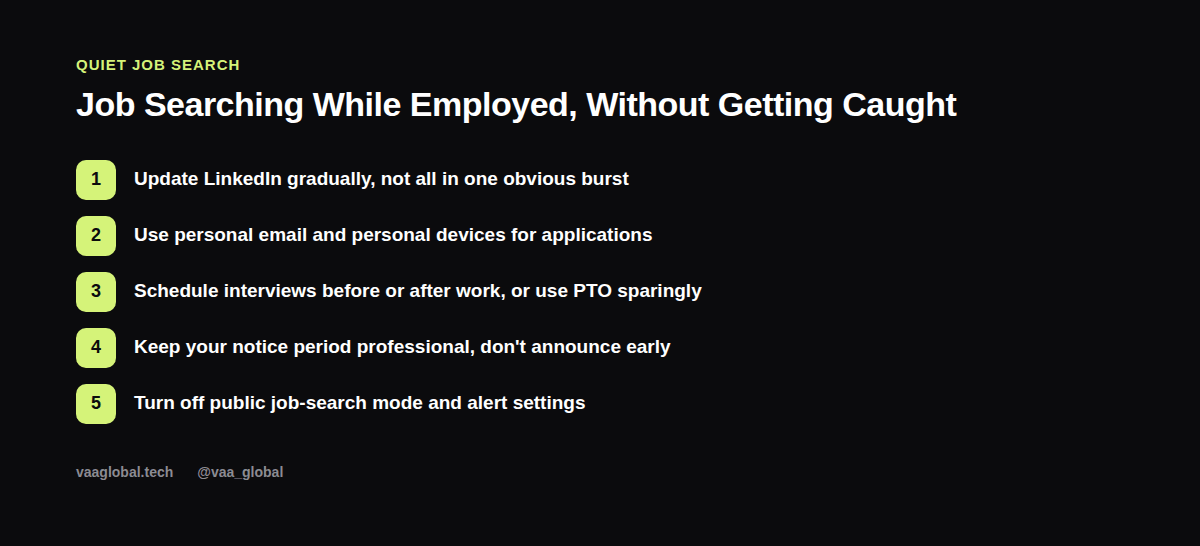
Yes, completely. There's nothing unethical about exploring better opportunities while you still have a job, unless your contract specifically restricts outside employment during active negotiations (which is rare and usually only applies to direct competitors in senior roles). Companies lay off and replace employees without warning all the time; there's no obligation for you to give up your own leverage by waiting until you're desperate.
Keep Devices and Accounts Separate
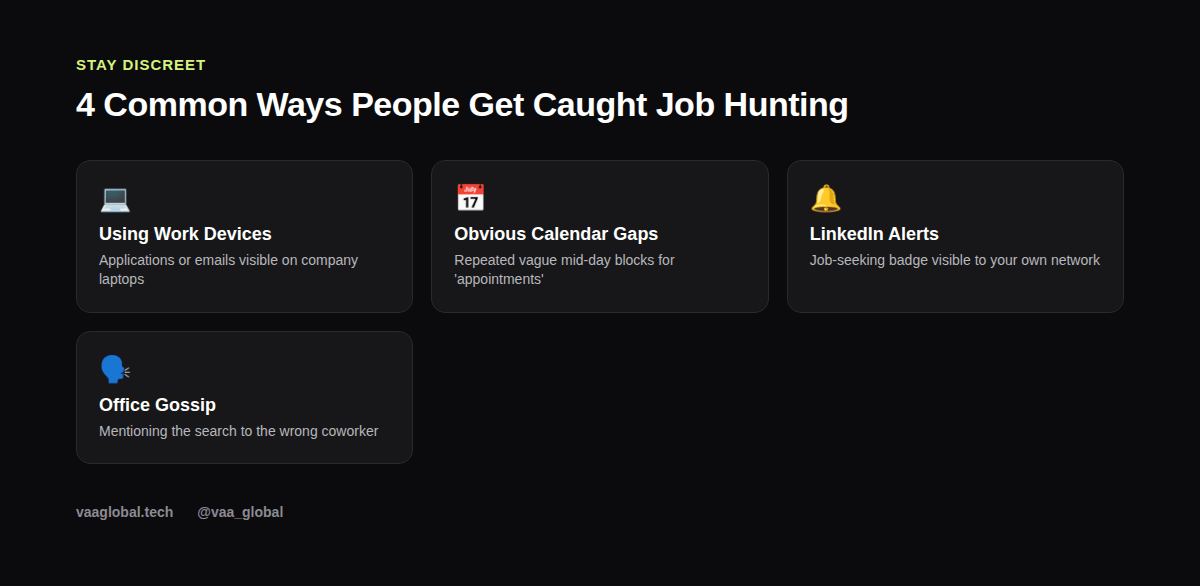
Keeping your interview scheduling and confidentiality intact starts here, and as HR industry guidance consistently notes, this is the single most common way people get caught. Never use a work laptop, work email, or work phone for anything related to your search — not even to quickly check a job board during lunch. Company devices are often monitored, and even innocent browsing history can raise questions. Use your personal email for applications, your personal phone for calls, and your own internet connection rather than company Wi-Fi when possible.
Updating LinkedIn Without Raising Flags
A sudden flood of LinkedIn open to work activity — new profile photo, new headline, several connection requests to recruiters, all in one week — is a common tell. Update your profile gradually over a few weeks instead: refine your summary one week, add a skill the next, reconnect with a few former colleagues the week after. If you use LinkedIn's “open to work” feature, set it to be visible to recruiters only, not your entire network, which keeps your activity private from current coworkers and your manager.
How Do I Schedule Interviews While Working Full Time?
This is often the hardest logistical piece. Early morning (before your shift), lunch breaks, and end-of-day slots work well for phone or video interviews — most hiring teams are used to working around employed candidates and will offer flexibility if you simply ask. For longer interview rounds, using a half or full day of personal time off is reasonable; just avoid using the exact same excuse (a vague “doctor's appointment”) repeatedly, since patterns get noticed.
Should I Tell My Manager I'm Job Hunting?
In almost every case, no — not until you have a signed offer in hand. Telling a manager early, even one you trust, risks changing how they assign projects to you, whether they invest in your development, or whether you're first in line if layoffs come. The exception is a rare, genuinely supportive workplace culture where internal mobility or transparent career conversations are the norm; even then, proceed carefully and read the room before opening up.
Keeping Your Search Confidential With References
If a prospective employer wants to speak with references, choose people outside your current company whenever possible — former managers, clients, or colleagues who've moved on themselves. If your current manager is the only strong reference you have, be upfront with recruiters that you'd prefer they hold off contacting your current employer until after an offer is extended; most hiring teams respect this standard request.
Handling the Interview Itself While Still Employed
Interviewers understand that most strong candidates already have jobs, so there's no need to over-explain your situation. Focus the conversation on what you're looking for next rather than complaints about your current role. If asked why you're looking, keep it forward-focused rather than negative — this is closely related to how to explain career gaps in a remote job interview, where framing matters just as much as content.
Managing the Emotional Load
Interviewing while employed is exhausting in a way people don't talk about enough — you're doing two jobs at once, often in secret, with added stress if a rejection stings right before a normal workday. Build in small recovery habits: don't schedule back-to-back interviews right after a hard day at your current job, and don't check application statuses obsessively during work hours. If signs your remote job search strategy isn't working start showing up, pause and recalibrate rather than grinding through burnout.
Handling Your Notice Period Professionally
Once you accept an offer, give your current employer appropriate notice (typically two weeks, sometimes more depending on your role and local norms) and keep the transition professional. Don't announce your departure before formally resigning, and avoid badmouthing the company on your way out — the professional world, especially within a single industry, is smaller than it looks, and burned bridges have a way of resurfacing years later.
The Bottom Line
Job searching while still employed takes some extra discipline around devices, scheduling, and timing, but it's entirely normal and often the smarter path financially and emotionally. Stay quiet, stay professional, and don't resign until you've got something solid in hand — once you do, exit on good terms and focus your energy on preparing thoroughly for your remote job interviews rather than worrying about who finds out.