Personal branding basics for remote job seekers come down to one idea: when someone searches your name, looks at your LinkedIn, or reads your resume, do they come away with a clear, consistent picture of what you do and who you do it for? If the answer is no, or if every platform tells a slightly different story, that's the gap personal branding closes. It isn't vanity or self-promotion for its own sake; it's simply making sure the right people can tell quickly what you're good at.
What Is Personal Branding, Really
What is personal branding boils down to the reputation you build on purpose instead of by accident. Everyone already has some version of a personal brand, whether they've thought about it or not. That's because people form impressions from whatever they can find: a LinkedIn profile, a resume, a portfolio, even a social media account. Building one intentionally, therefore, just means deciding what that impression should be, and then making sure your materials actually support it.
Is Personal Branding Just Self-Promotion
Is personal branding just self-promotion is a reasonable concern, especially for people who find bragging uncomfortable. The honest answer is that it's closer to clarity than promotion. A strong personal brand isn't about claiming you're the best at something; it's about being specific enough that the right opportunity finds you instead of generic enough to be forgettable. Stating a focus and backing it with real work isn't bragging, it's just information a recruiter needs.
The 4 Pillars Of A Personal Brand For Remote Job Seekers
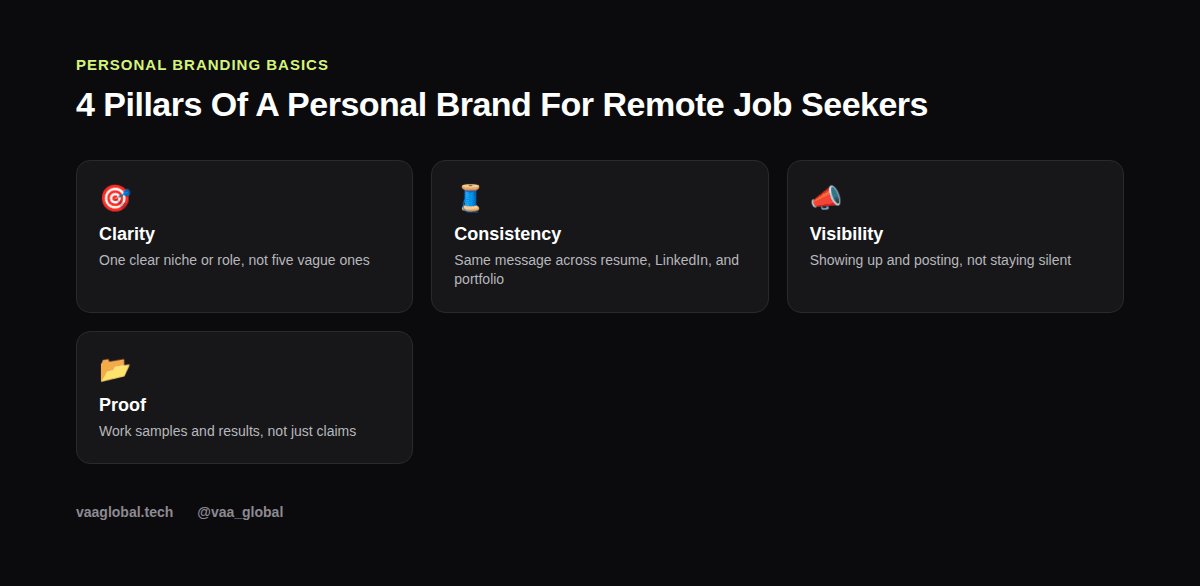
Clarity means picking one role or niche to be known for right now, rather than listing five loosely related skills that dilute your focus. Consistency means your resume, LinkedIn, and any portfolio or profile all tell the same core story using similar language. Visibility means showing up somewhere, whether that's commenting thoughtfully on LinkedIn or sharing a piece of your work, instead of staying completely invisible until you need a job. Proof means backing your claims with something a stranger could actually look at, like a project, a certificate, or a specific result.
Do I Need A Personal Brand To Get A Remote Job
Do I need a personal brand to get a remote job is a fair question, and the honest answer is: not strictly, but it makes everything else easier. Remote hiring often happens with less in-person context than in-office roles. As a result, employers lean more heavily on what they can find about you online. A clear personal brand fills in that missing context before an interview ever happens. In contrast, someone whose online presence says nothing specific starts a step behind, even with similar skills.
How Do I Start A Personal Brand With No Experience
How do I start a personal brand with no experience starts smaller than most people expect. You don't need years of work behind you, just a clear focus and a few honest proof points. Pick the role or skill area you're training in or most drawn to, write a one-line description of who you'd help and how, and make sure that same line shows up in your resume summary and your LinkedIn headline. Our guide on LinkedIn headline examples for remote job seekers has specific wording templates to borrow from.
5 Steps To Start This Week
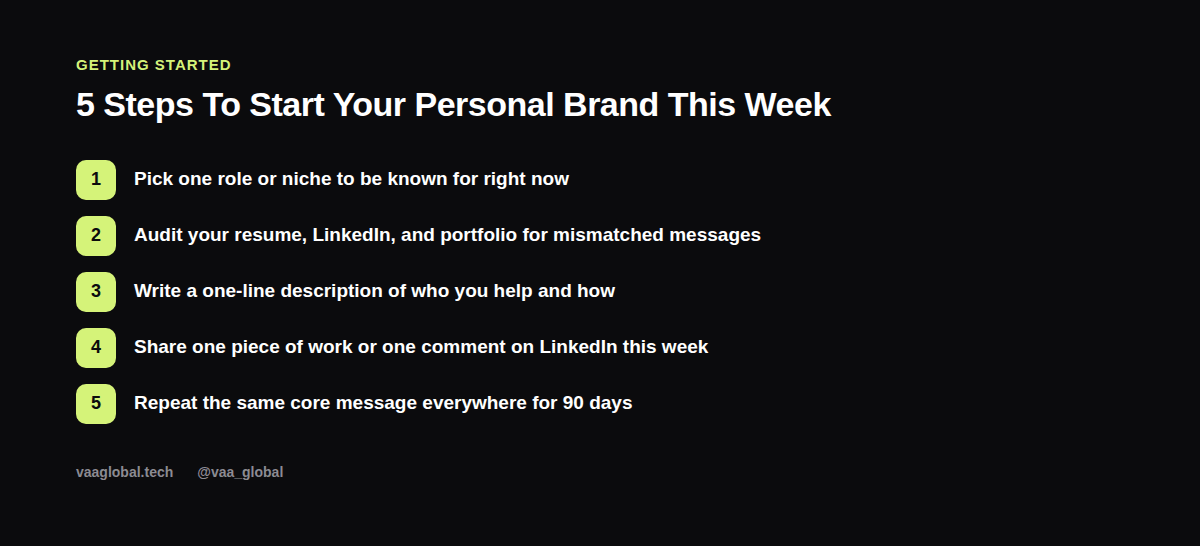
Pick one role or niche to be known for right now. Audit your resume, LinkedIn, and portfolio for mismatched messages, since inconsistency is one of the fastest ways to look unfocused. Write a one-line description of who you help and how, and reuse it across every platform. Share one piece of work or leave one thoughtful comment on LinkedIn this week, just to start building visibility. Then repeat the same core message everywhere for about 90 days before you reassess or adjust it.
Common Personal Branding Mistakes To Avoid
The most common mistake is trying to brand yourself as everything at once, hoping broad appeal will catch more opportunities, when it usually confuses people instead. Other mistakes include copying someone else's voice or niche instead of your own actual background, going completely silent on LinkedIn for months, and never updating your materials once you gain new skills or results. If you want a deeper, more advanced look at building a sustained personal brand once the basics are in place, see our guide on how to build a personal brand as a remote professional.
Where This Shows Up Across Your Job Search
A clear personal brand touches nearly every part of a remote job search: your resume summary, your LinkedIn About section, and eventually your interview answers. VAA Global students who've completed a course can also point to Career Bloom inside their student portal once their profile is consistent, since course-matched roles are easier to land when your materials already tell one clear story (opportunities and support do not guarantee employment). For additional context on how personal branding plays out in professional networks, LinkedIn's help center covers the platform side of this directly.
The Bottom Line
Personal branding basics for remote job seekers aren't complicated: pick a clear focus, keep it consistent everywhere, show up somewhere, and back your claims with proof. You don't need a huge following or years of experience to start, just a clear message you're willing to repeat until it sticks.