
A medical virtual assistant superbill task sounds intimidating the first time you hear the word, but a superbill is really just a detailed receipt of a patient visit that the patient can submit to their insurance company for reimbursement. Understanding how to prepare one accurately is a practical skill that many remote medical admin roles expect, especially for out-of-network providers, therapists, and specialty clinics that don't bill insurance directly. This guide covers what a superbill template looks like, how it supports out-of-network reimbursement, and why solid medical VA billing support starts with getting this one patient billing statement right.
What Is a Superbill, Really?
A superbill is not an insurance claim. It's the source document a patient (or their insurance company) uses to process a claim themselves. Therapists, chiropractors, dentists, and many out-of-network specialists hand patients a superbill instead of billing the insurer directly. The patient then files it for reimbursement, if their plan allows it. Because the practice never submits anything to the insurance company, the administrative burden shifts to accurate, complete paperwork up front instead of back-and-forth claim corrections later.
What Information Goes on a Superbill
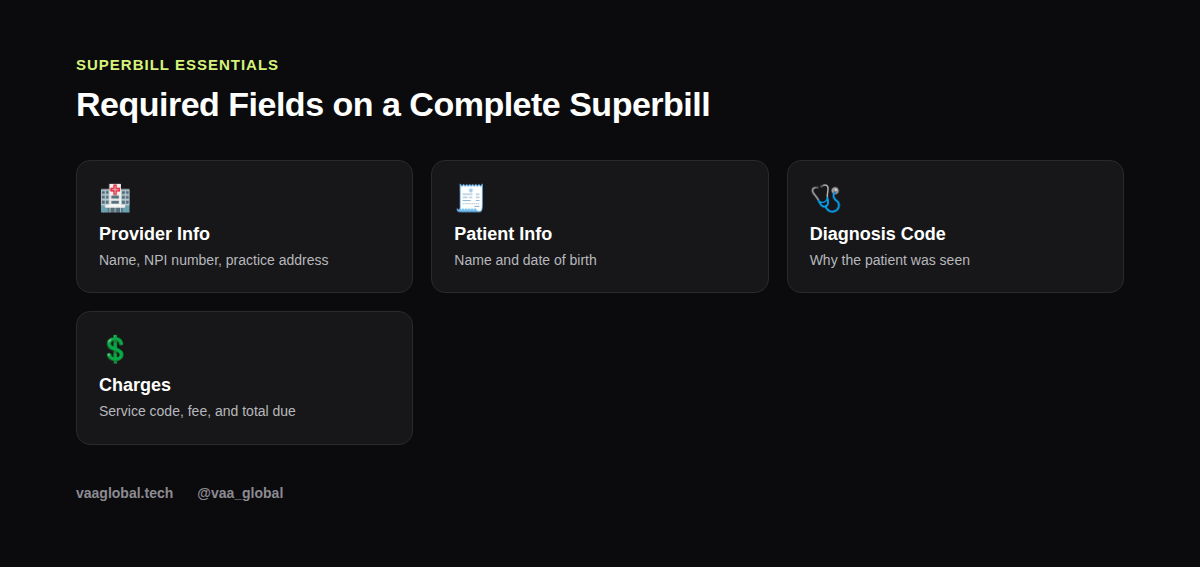
A complete superbill typically includes: the provider's name, National Provider Identifier (NPI) number, and practice address; the patient's name and date of birth; the date of service; the diagnosis code(s) describing why the patient was seen; the procedure or service code(s) describing what was done; the charge for each service; and the total amount paid or owed. Missing even one of these fields, such as the NPI, is one of the most common reasons an insurer rejects a patient's reimbursement request.
A Simplified Example (For Training Purposes Only)
Imagine a therapy practice where a medical VA prepares superbills weekly. A fictional example might look like this: Provider: Dr. A. Okafor, NPI [sample number]. Patient: J. Smith, DOB 03/14/1990. Date of service: 10/02/2026. Diagnosis: generalized anxiety (per provider's documentation). Service: 45-minute individual psychotherapy session. Charge: $150. As a medical VA, you would pull the diagnosis and service codes from the provider's note, not invent them yourself, then format them into the superbill template the practice uses.
Step-by-Step: How a Medical VA Prepares a Superbill
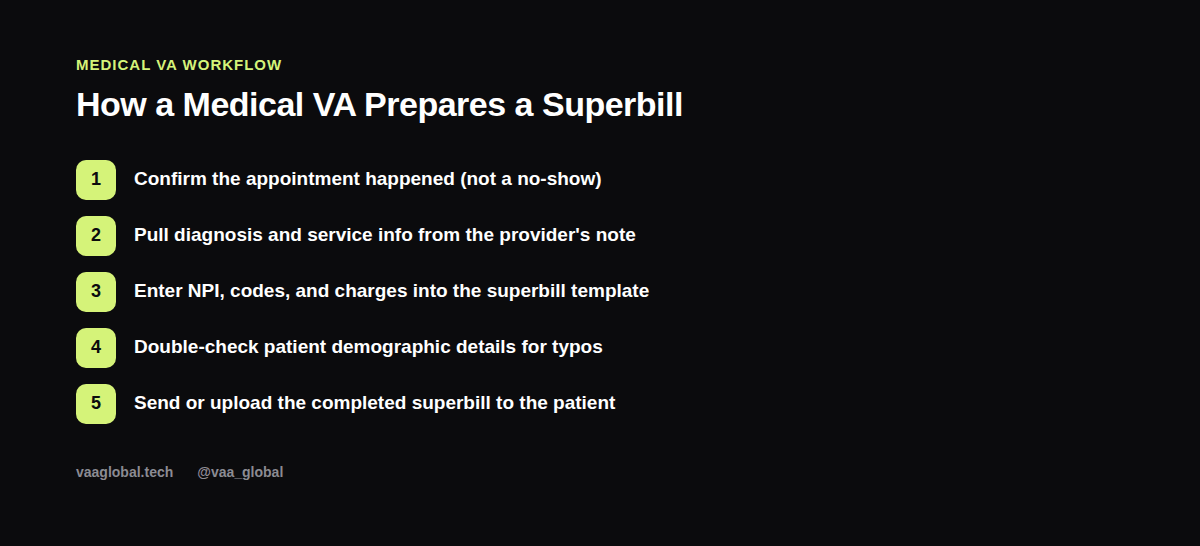
So how do medical virtual assistants prepare a superbill in practice? The process usually looks like this: first, confirm the appointment actually happened and wasn't a no-show; second, pull the diagnosis and procedure information the provider documented, often straight out of a SOAP note; third, enter that information along with the provider's NPI and the charge into the superbill template; fourth, double-check patient demographic details for typos; and finally, send or upload the completed superbill to the patient or practice's billing portal. Accuracy matters more than speed here, because an error can delay a patient's reimbursement by weeks.
Superbill vs. Insurance Claim: Key Differences
Many beginners confuse a superbill with a claim, so it helps to see them side by side. A superbill is given to the patient, who files it themselves; an insurance claim, by contrast, is submitted directly by the practice to the insurer using standardized electronic billing codes and formats. A superbill is informational for the payer until the patient submits it; a claim immediately triggers the insurer's adjudication process. If you later move into tasks that involve denial management or insurance verification, you'll notice claims involve far more back-and-forth than a superbill ever does.
Common Errors That Delay Patient Reimbursement
The most frequent superbill mistakes include: using an outdated or incorrect diagnosis code, forgetting the provider's NPI, listing the wrong date of service, and failing to itemize multiple services performed on the same visit. Because patients rely on this document for their own money, a small formatting slip can mean a real financial delay for someone. As a result, many practices have a second person review every superbill before it goes out, and that review role is a natural fit for a detail-oriented medical VA.
Why Coding Accuracy Still Matters on a Superbill
Even though a medical VA usually isn't choosing the diagnosis or procedure codes, you still need enough familiarity with CPT and ICD-10 basics to spot an obviously mismatched code or a missing modifier before the document goes out. For authoritative guidance on billing codes and reimbursement rules, the Centers for Medicare & Medicaid Services (CMS.gov) is the right place to point a practice if questions come up that fall outside your scope.
Where This Fits in a Medical VA's Career
Superbill preparation is often one of the first billing-adjacent tasks a new medical VA is trusted with, because the stakes are lower than submitting an actual claim and the format is more templated. It's a great way to build toward broader medical billing tasks over time. VA Global's Medical Virtual Assistant Training course introduces medical billing and coding fundamentals across its six beginner-friendly modules, so you don't need a finance or healthcare background to start.
The Bottom Line
A medical virtual assistant superbill task is really a careful documentation job: gather the right information, format it correctly, and double-check every field before it reaches the patient. Master this one template well, and you'll build the accuracy habits that carry over into every other billing-related task in a medical VA role.



