If you've spent any time studying HIPAA for a healthcare role, you've probably seen another acronym sitting right next to it, which is why a medical virtual assistant HITECH Act explained guide is worth reading early in your training. HITECH stands for the Health Information Technology for Economic and Clinical Health Act, a law passed in 2009 that reshaped how healthcare handles digital patient records and privacy enforcement. You don't need to be a lawyer to understand it, just the general shape of what it changed and why it matters to your daily work.
What Is the HITECH Act in Plain Terms?
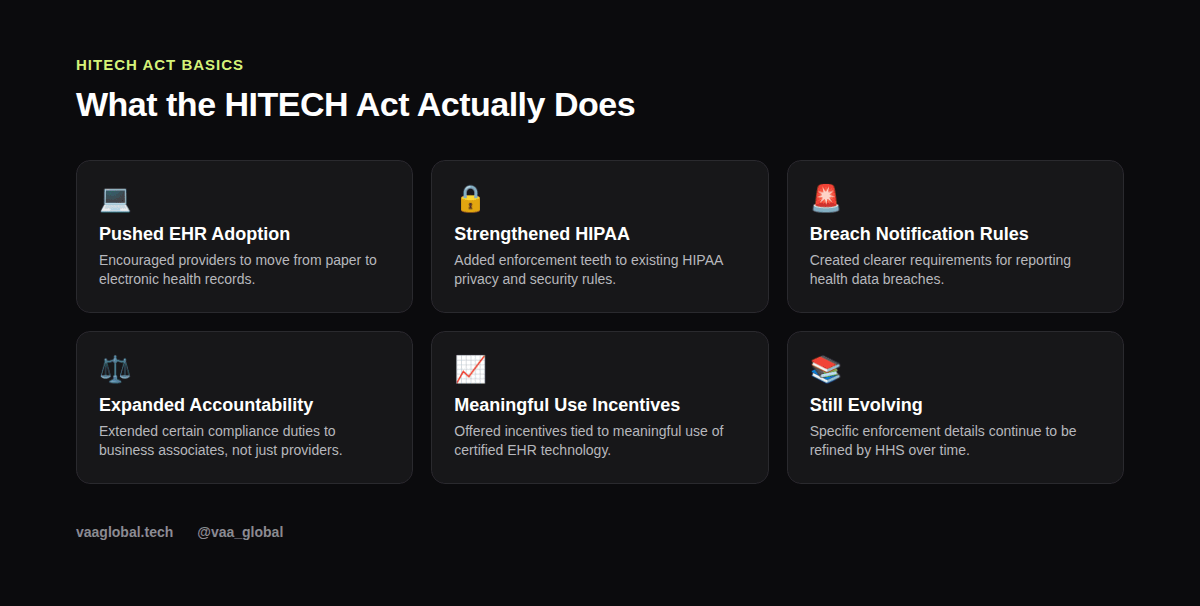
So, what is the HITECH Act in plain terms? It's a law that did two big things at once: it pushed providers toward adopting electronic health records, and it gave HIPAA sharper enforcement teeth. Before HITECH, HIPAA existed, but enforcement and breach reporting weren't as clearly defined as they became afterward.
How Does HITECH Relate to HIPAA?
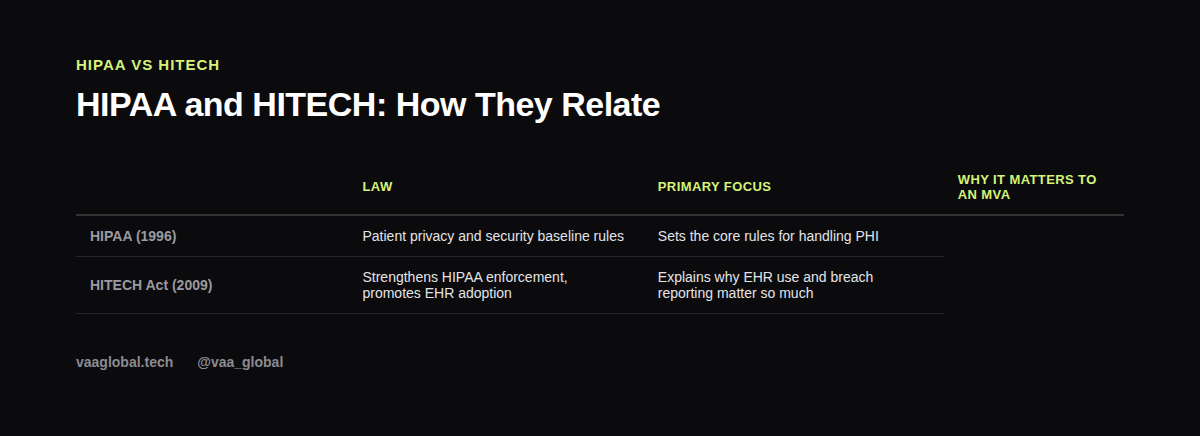
A fair question for a beginner is how HITECH relates to HIPAA in practice, since the two get mentioned together so often. HITECH didn't replace HIPAA; instead, it built directly on top of it. The law expanded certain compliance responsibilities to business associates, the vendors and contractors that handle patient data on behalf of a covered healthcare provider, not just the provider itself. This is part of why business associate agreements matter so much in this field, a topic our guide on business associate agreements covers in more detail.
Why Did HITECH Encourage EHR Adoption?
So, why did HITECH encourage EHR adoption so heavily? Before the law, many practices still relied heavily on paper charts, which made patient data harder to share, protect, and track consistently. HITECH created incentives tied to meaningful use of certified EHR technology, encouraging providers to switch to digital records. That shift is a big part of why EHR knowledge matters so much for anyone entering healthcare administration today, remote or otherwise.
What Happens If There Is a HIPAA Breach?
A natural follow-up question is what happens if there is a HIPAA breach, since HITECH is also known for formalizing breach notification requirements. In general terms, if certain patient data is exposed improperly, affected individuals and sometimes the government need to be notified. The exact thresholds and procedures are detailed and specific, so rather than guessing at numbers, the right move is always to check HHS.gov directly for current requirements.
Why This Matters Even for Administrative Roles
You might wonder why an MVA, who doesn't touch billing codes or clinical decisions, needs to understand HITECH at all. The answer is simple: every time you access an EHR, send a message through a patient portal, or handle any record containing PHI, you're operating inside the compliance framework HITECH helped shape. Our article on patient data protection covers the practical habits that flow from this.
HITECH and Your Day-to-Day Work
In practice, HITECH's influence shows up less as a specific rule you follow and more as the reason certain habits exist at all: secure EHR logins, careful handling of portal messages, and clear reporting procedures if something seems off. Understanding the "why" behind these habits tends to make people follow them more consistently than just being told the rule.
A Quick Timeline, in Plain Terms
To put it in order: HIPAA came first, in 1996, setting the baseline privacy and security rules. Then, in 2009, HITECH arrived and strengthened that foundation significantly, adding real enforcement weight and tying EHR adoption to federal incentive programs. As a result, the healthcare compliance landscape you're learning about today looks the way it does largely because of both laws working together.
What Not to Guess About
A fair warning here: specific penalty amounts, exact compliance deadlines, and detailed breach thresholds under HITECH change and get updated, so it's not worth memorizing numbers you might misremember. Instead, know the general concept, and when a real situation comes up at work, defer to your employer's compliance officer or the official guidance at HHS.gov.
How to Talk About HITECH in an Interview
If asked, you can confidently explain that HITECH strengthened HIPAA enforcement and encouraged EHR adoption, without needing to cite specific numbers. That level of understanding shows genuine comprehension of the compliance landscape you'll be working within, which is exactly what most employers are checking for at the entry level.
The Bottom Line
A medical virtual assistant HITECH Act explained in simple terms comes down to this: it's the law that made EHR adoption a priority and gave HIPAA real enforcement power. You don't need the legal details memorized, just a working understanding of why EHR habits and data protection matter so much in this field. VAA Global's Medical Virtual Assistant Training is a 6-module, beginner-level course covering HIPAA compliance, EHR basics, and healthcare administration, with no prior medical background required, plus job assistance after graduation.