
Figuring out what to charge is one of the trickiest parts of going independent, which is exactly why a medical virtual assistant rate calculator how to price your services guide matters so much once you start taking on clients. There's no single magic number that works for everyone, since your rate depends on your skills, the scope of work, and the client's own budget. What you can control is understanding the factors that genuinely influence pricing, so you negotiate from a place of confidence instead of guesswork.
Why There's No Single "Right" Rate
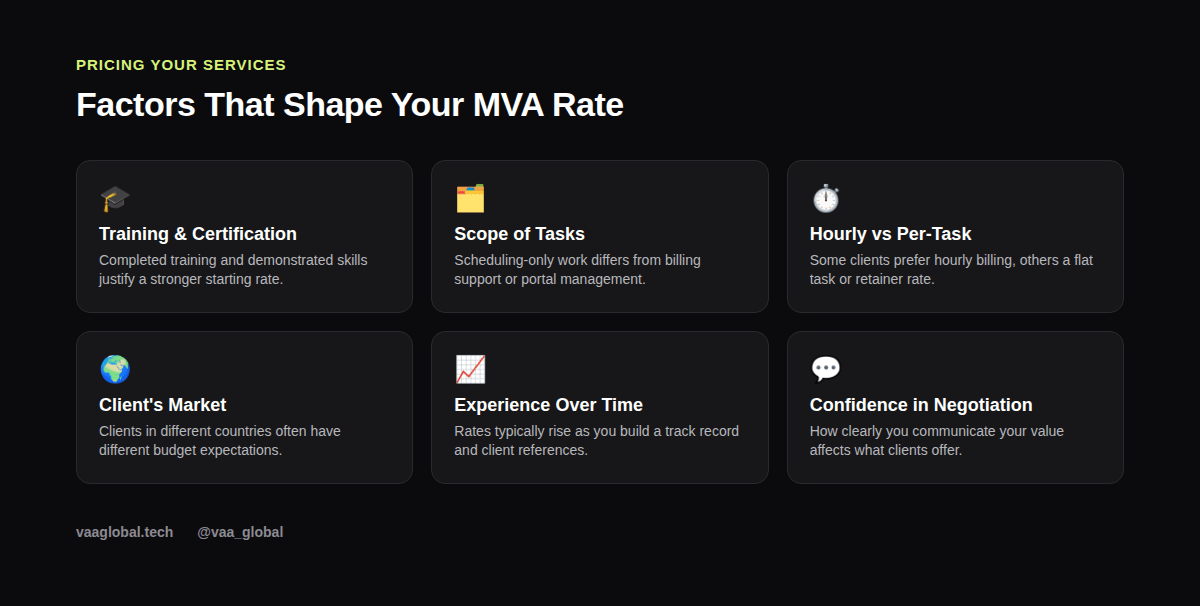
Unlike a fixed salary, independent rates genuinely vary based on who you're working with, what you're doing, and where that client is based. A rate that works for one client relationship might be too low or too high for another, so the goal isn't finding one universal number, it's learning to evaluate each opportunity on its own terms.
Start With the Scope of Work
Scheduling support, patient portal management, and medical billing assistance all carry different levels of responsibility and risk. Tasks involving sensitive patient data or billing accuracy generally justify a higher rate than purely administrative scheduling, simply because the margin for error, and the consequences of one, are higher.

Should I Charge Hourly or Flat Rate?
A question almost every new MVA asks is whether they should charge hourly or a flat rate. Hourly billing works well early on, since it's simple and transparent for both sides when pricing virtual assistant services for the first time. A flat task rate suits clearly defined, repeatable work, like processing a set number of intake forms. A monthly retainer fits ongoing part-time support, where a client wants predictable coverage and you want predictable income. Each model has tradeoffs between hourly vs retainer pricing, so match it to the actual working relationship rather than defaulting to one out of habit.
Factoring In Training and Certification
Completing structured training, understanding HIPAA compliance basics, and being comfortable with EHR concepts all add real value a client is paying for, even if it doesn't show up as a line item. Skilled, trained support reduces a practice's risk, and that's worth factoring into your rate rather than pricing yourself purely on time spent.
Accounting for Compliance-Sensitive Work
Work that touches protected health information carries more responsibility than purely general admin tasks, which is part of why understanding frameworks like HIPAA, covered in detail at HHS.gov, matters even for pricing conversations. A client working with a trained, compliance-aware assistant is getting more than just hours; they're getting reduced risk, and that's worth reflecting in your rate.
How Do I Raise My Rates Over Time?
So, how do I raise my rates over time without scaring off good clients? Your first few clients will likely pay less than your rate three years in, and that's normal. As you build references, speed, and a track record of reliability as an independent contractor, you earn the ability to raise your rate without losing good clients. Our guide on rate negotiation covers how to have that conversation when the time comes, including how to approach independent contractor pricing changes with existing clients respectfully.
What Should a Beginner MVA Charge?
What should a beginner MVA charge when they genuinely don't have a reference point yet? Rather than guessing blindly, look at general ranges discussed within the healthcare virtual assistant rates community and in resources like our article on medical virtual assistant salary expectations. Treat any number you find as a reference point, not a rule, since your specific skills and client relationship still matter more than any average.
Avoiding the Race to the Bottom
It's tempting to underprice yourself to win a first client, but consistently low rates can be hard to raise later and may attract clients who undervalue the work itself. A steadier approach is pricing fairly from the start and being selective about which opportunities you take, even if that means fewer clients initially. If you're juggling more than one client at once, our guide on working with multiple practices covers how to balance scope and pricing across several relationships at the same time.
The Bottom Line
A medical virtual assistant rate calculator how to price your services approach really comes down to evaluating scope, risk, experience, and the client's context, rather than chasing one perfect number. Learn those factors well, practice them on real conversations, and pricing discussions get a lot less stressful over time, even with clients you've never worked with before. VAA Global's Medical Virtual Assistant Training is a 6-module, beginner-level course covering HIPAA compliance, medical billing, and healthcare administration, with no prior medical background required, plus job assistance after graduation.