
Medical virtual assistant front office vs back office work describes a split you will run into almost immediately once you start looking at job postings in this field, because the two roles involve genuinely different daily routines, even though both sit under the same job title. Understanding the difference early helps you aim your training and your job search in the right direction.
Front-Office Work Centers On Patient Contact
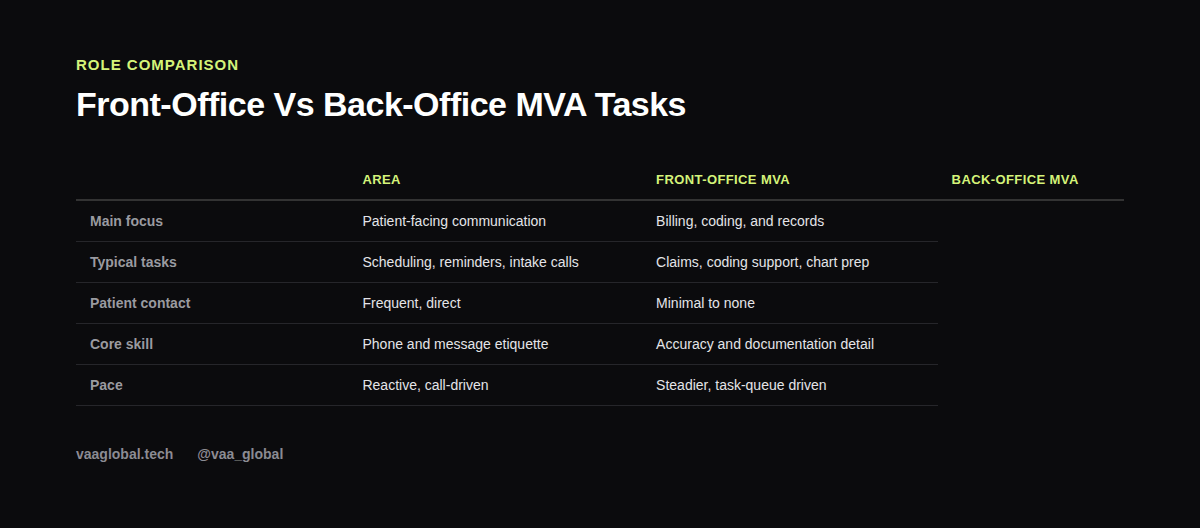
A front-office MVA is usually the voice or message a patient interacts with directly: booking appointments, sending reminders, answering general questions, and handling intake calls. This role leans heavily on the kind of phone etiquette for patient calls and the scheduling logic covered in a general medical virtual assistant appointment scheduling guide, since the work is reactive and happens in real time with a person on the other end.
Back-Office Work Centers On Accuracy And Documentation
A back-office MVA spends most of the day on tasks that do not involve talking to patients at all: processing claims, supporting the billing cycle, preparing charts, and helping with documentation accuracy. This role draws more on the general medical billing tasks and medical coding boundaries that any medical VA learns, but applies them in much greater depth and volume than a front-office role typically requires.
The Pace And Pressure Feel Different
Front-office work tends to be bursty and reactive, a quiet hour followed by a wave of calls after a provider runs late, while back-office work is usually steadier and organized around a task queue that can be worked through at a more predictable pace. Neither is objectively harder, but they genuinely suit different temperaments, and it is worth being honest with yourself about which pace you actually enjoy.
Skills That Transfer Between The Two Roles
Core knowledge, medical terminology, HIPAA awareness, and basic EHR vs EMR familiarity, applies to both roles equally. What changes is how you apply it: a front-office MVA uses terminology to understand a patient's question, while a back-office MVA uses it to code or document a visit correctly. This shared foundation is exactly why most medical virtual assistant daily tasks training starts broad before narrowing toward either specialty.
Many Practices Blend Both Roles Into One Position
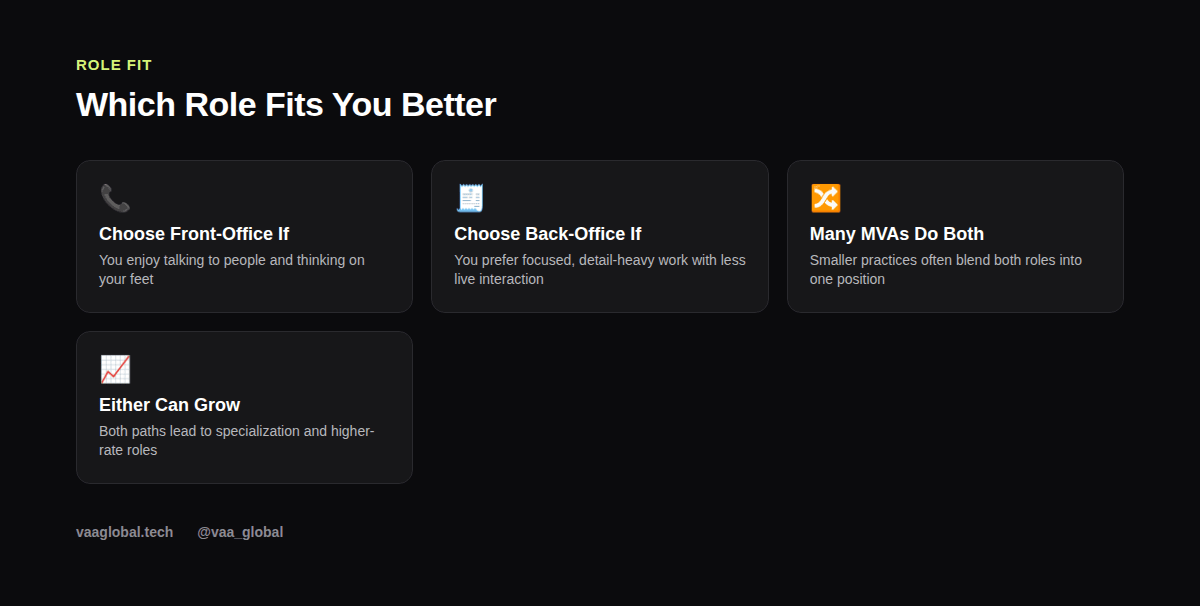
Smaller practices, which make up a large share of the clients a remote medical VA works with, often cannot afford to split front-office and back-office duties between two separate hires. In practice, this means many medical VAs end up doing a bit of both: answering calls in the morning and processing billing tasks in the afternoon, which is actually a good way to figure out which side of the work you prefer long-term.
How This Shapes Your Early Job Search
If a job posting emphasizes scheduling, patient communication, and phone work, you are looking at a front-office role. If it emphasizes billing software, coding knowledge, and chart accuracy, you are looking at a back-office role. Reading postings with this lens helps you avoid applying to roles that do not actually match the skills you want to build or the pace you want to work at.
Common Questions New Hires Ask About This Split
People exploring this path often ask what is the difference between front-office and back-office MVA roles, and the honest answer is direct patient contact versus behind-the-scenes documentation and billing work. Others ask whether they have to choose one path permanently, and the short version is no, many medical VAs move between both or do a hybrid role, especially early in their career. A third common question is which role pays more, and the honest answer is that rate depends far more on specialty, experience, and client type than on which side of the office you work in.
What A Typical Hybrid Day Can Look Like
A hybrid MVA might start the morning confirming appointments and returning missed calls, then shift after lunch into reviewing claim denials or preparing charts for the next day's visits. This back-and-forth can feel scattered at first, but it also builds a broader skill set faster than staying in just one lane, which is part of why many experienced medical virtual assistants say the hybrid route taught them the most in their first year.
The Bottom Line
Front-office vs back-office MVA work is really a question of where your attention goes each day, toward live patients or toward careful documentation and billing, and most medical VAs get useful exposure to both before settling into a preference. The American Health Information Management Association offers resources on health information roles that are worth a look if the back-office side interests you, and a beginner-friendly medical virtual assistant training course covering both sides is the right starting point either way.



