
Medical virtual assistant becoming a trainer mentor is one of the most natural next steps for someone with a couple of years of solid client experience, since the questions newer MVAs ask are often the exact ones you once struggled with yourself. Teaching someone else what you know isn't just generous, it's also a legitimate way to grow your income and reputation once you've built real credibility in the field.
Why MVAs Move Into Training And Mentoring
After a couple of years doing the work, many MVAs find themselves naturally answering questions from newer people in their network. This usually isn't planned, it happens because experience builds credibility, and credibility attracts people looking for guidance. Formalizing that into mentoring or training is simply recognizing something that's already happening.
Building Training Credibility Before You Teach Anyone
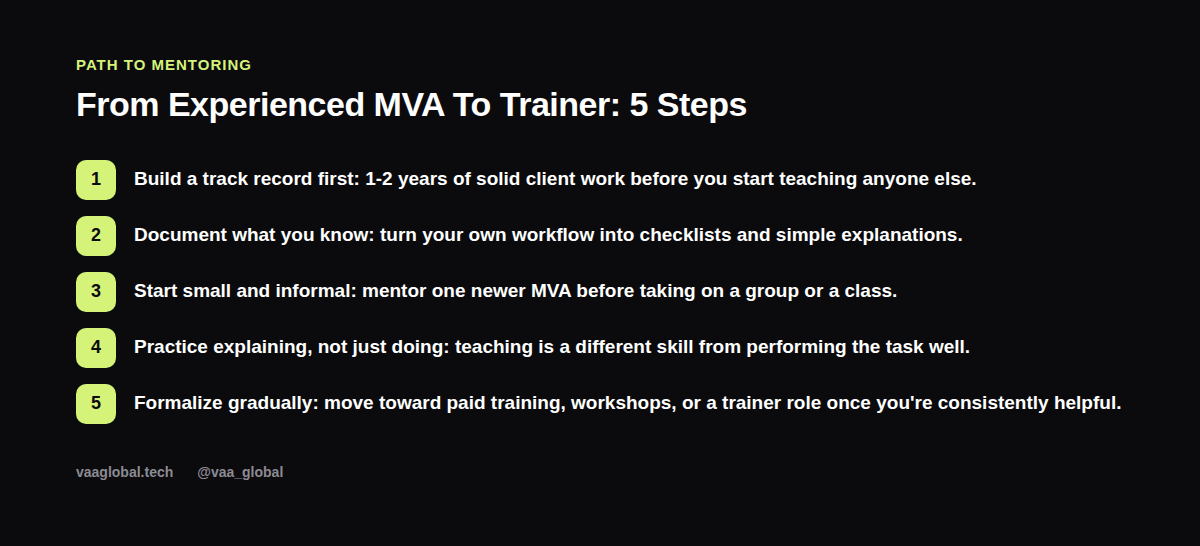
Building training credibility starts with your own track record, not a certificate. Clients who trust your work, a portfolio of real tasks handled well, and a career path after two years that shows steady growth all matter more than any formal teaching qualification when you're starting out.
Mentoring New Virtual Assistants One-On-One First
Mentoring new virtual assistants informally, one person at a time, is the best way to test whether you actually enjoy teaching before committing to anything bigger. Offer to answer questions for someone just starting out, be specific and honest in your feedback, and pay attention to whether you find the process energizing or draining. That answer tells you a lot about whether this path fits you.
Teaching Healthcare VA Skills Requires A Different Skill Set
Teaching healthcare VA skills well is genuinely different from performing those skills well yourself. Being great at insurance verification doesn't automatically mean you can explain it clearly to someone who's never done it. Practice breaking down your own process into simple steps, and ask a mentee what confused them so you can adjust your explanation next time.
Documenting Your Process Into Teachable Material
Turn your own workflow into checklists, short written guides, or even simple screen-recorded walkthroughs. This documentation becomes the backbone of anything you eventually teach formally, and it also makes your one-on-one mentoring faster and more consistent, since you're not reinventing explanations from scratch every time.
Moving Toward A Paid Workshop For Freelancers
Once you've mentored a few people informally and it's gone well, a paid workshop for freelancers is a reasonable next step. Start small, maybe a short group session on one specific skill like EHR workflows or insurance verification, priced modestly while you build a reputation as a trainer specifically, separate from your reputation as a practitioner.
Where To Find People Who Want Mentoring
Healthcare VA communities, including the ones covered in our piece on networking in healthcare VA communities, are full of newer MVAs looking for guidance. Offer value there consistently, and mentoring opportunities tend to come to you rather than needing to be chased down. Our general piece on how mentorship can accelerate your remote career covers the mentee's side of this relationship, which is worth understanding too.
Protecting Your Own Client Work While You Teach
Don't let mentoring eat into the client work that built your credibility in the first place. Set boundaries around how much time you give away for free, and remember that burnout prevention applies just as much to mentoring commitments as it does to client workload. If you eventually want to go further and consider building an agency, training skills transfer directly into onboarding new hires. For anyone just starting their own MVA journey, VAA Global's Medical Virtual Assistant Training course is a 6-module, beginner-level program with job assistance included. For general research on how mentorship benefits both parties, Harvard Business Review has published useful perspectives; see their mentoring coverage for more context.
How Do I Become A Mentor For New Medical Virtual Assistants?
So, how do I become a mentor for new medical virtual assistants in practice, not just in theory? Start by offering help to one person. Keep it informal at first. Notice whether you enjoy the back-and-forth of explaining things. If you do, offer the same help to a second person. Growth from there happens naturally, usually through word of mouth inside the communities you're already part of.
What Experience Do I Need To Train Other VAs?
People often ask what experience do I need to train other VAs before they feel ready to start. There's no official threshold. That said, most effective mentors have handled real client work for a year or more, made mistakes, fixed them, and can speak from experience rather than theory. If you're still early in your own journey, focus on your own growth first.
Can I Get Paid To Mentor Virtual Assistants?
Can I get paid to mentor virtual assistants, or does it have to stay a favor? Both are common. Many mentors start by helping for free, then move to paid coaching calls or small workshops once demand is clearly there. Price modestly at first. Your reputation as a trainer builds separately from your reputation as a practitioner, and it takes a little time either way.
The Bottom Line
Medical virtual assistant becoming a trainer mentor isn't about having all the answers, it's about having enough real experience to guide someone through the questions you once had yourself. Start small, document what you know, and let your credibility grow naturally before you formalize anything into paid training.



