
Finding the right medical virtual assistant networking communities early in your career can shortcut months of trial and error, since someone in the group has almost always already solved the exact problem you're stuck on. Working remotely in healthcare support can feel isolating, but it doesn't have to be, and the communities that exist for this exact role are more active than most beginners realize.
Why Community Matters More In This Specific Role
Medical virtual assistant work comes with unique questions that general freelancing communities can't always answer, like HIPAA nuances, EHR quirks across different practice management systems, or how to handle a specific insurance verification scenario. A community built specifically around healthcare VA work has people who've already faced your exact question.
Healthcare VA Facebook Groups Worth Joining
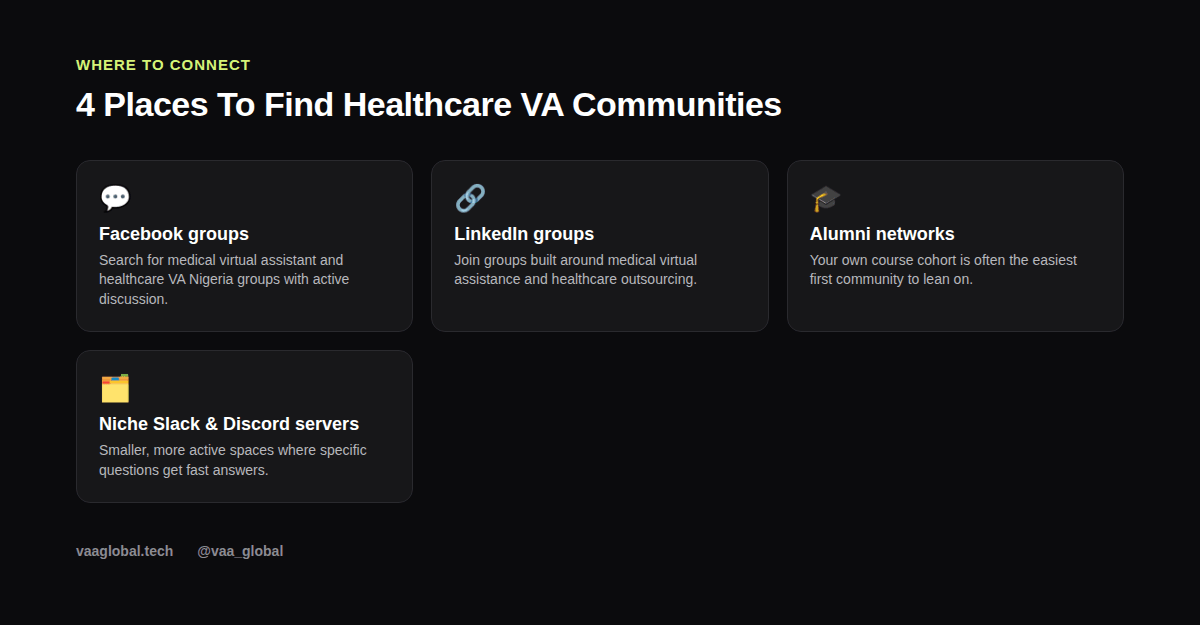
Search Facebook directly for terms like medical virtual assistant Nigeria or healthcare VA community, and look for groups with regular, recent activity rather than ones that look abandoned. Active healthcare VA Facebook groups are where a lot of informal job leads, client referrals, and honest is this a scam discussions happen before they hit job boards.
LinkedIn Groups For Virtual Assistants
LinkedIn groups for virtual assistants tend to be more professional in tone and better for connecting with potential clients directly, rather than just peers. Join a few relevant ones, but don't just lurk; comment thoughtfully on a handful of posts each week to start building visibility within the group.
Your Alumni Network Benefits More Than You Expect
If you've gone through a structured training program, your own course cohort is often the easiest community to start with, since you already share a common starting point. Alumni network benefits include shared job leads, honest feedback on rates, and people who remember exactly what it was like to be new. Check whether there's a community or alumni network after you graduate from whichever program you took.
How To Actually Contribute, Not Just Consume
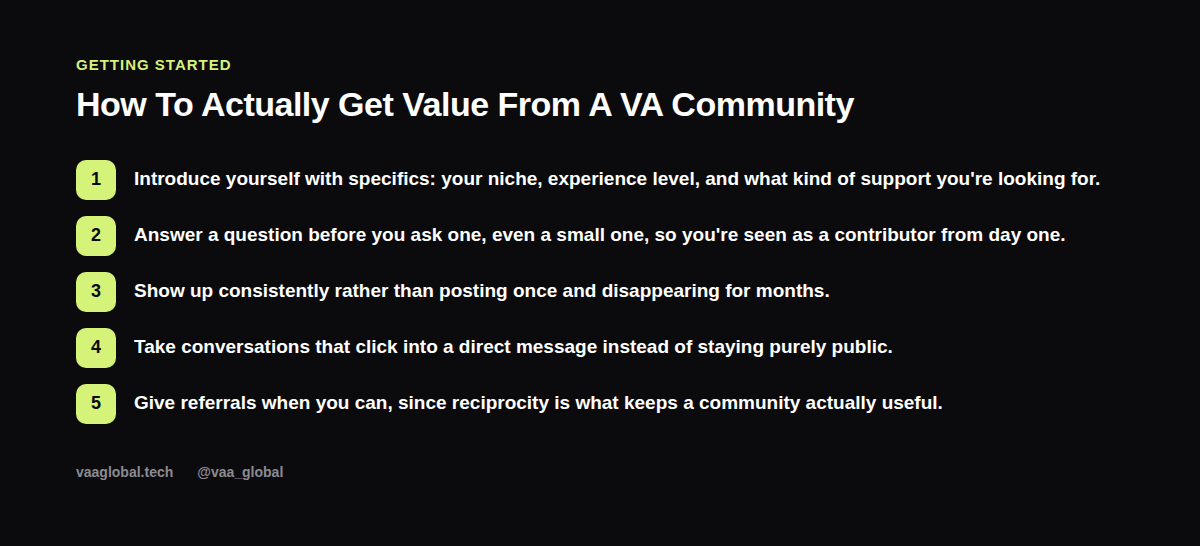
The most useful members of any remote worker community are the ones who answer questions, not just the ones who post them. Share what's worked for you, even small wins like a scheduling trick or a template you built. This builds your reputation faster than months of silent lurking ever could, and it's also just good practice for networking online as a remote professional more broadly.
Spotting Scams And Bad Advice Inside Communities
Not everything shared in a group is accurate, and some posts are outright scams disguised as job opportunities. Cross-check anything that sounds too good against trusted sources, and read our guide on medical VA job scams and warning signs before acting on an unfamiliar lead from a group.
Turning Online Connections Into Real Opportunities
Move promising conversations from public group comments into a direct message, where you can have a real back-and-forth without an audience. This is also where referrals tend to happen, since people are more comfortable recommending someone they've actually talked to one-on-one. For a broader look at building client relationships from scratch, see how to build trust with a new remote client in the first month.
Combining Community With Mentorship
Communities and one-on-one mentorship work well together. A community gives you breadth, while a mentor gives you depth on specific problems. If you're further along, consider eventually becoming a trainer or mentor yourself, and read more on how mentorship can accelerate your remote career. If you're just starting out, VAA Global's Medical Virtual Assistant Training course is a 6-module, beginner-friendly program with job assistance, and it naturally connects you with others on the same path. For general advice on building a professional network from scratch, Indeed's career guide covers the fundamentals that apply well beyond this specific field; see their guide to professional networking for more.
Where Do Medical Virtual Assistants Find Community Support?
Where do medical virtual assistants find community support beyond the obvious Facebook and LinkedIn groups? Course alumni channels, Discord servers built around freelancing in Nigeria, and even replies under industry hashtags on X all count. Start with one or two spaces. Stay active there. Expand only once you've found real value, not just noise.
How Do I Network With Other Virtual Assistants?
How do I network with other virtual assistants without it feeling forced? Comment genuinely on posts instead of generic one-word replies. Ask a specific question in a group instead of a vague one. Follow up with people who respond. Over a few months, a handful of loose connections usually turns into two or three people you actually trust and check in with regularly. Keep in mind that quality beats quantity here. Three people who'll actually answer your message at 11pm when something goes wrong with a client are worth more than three hundred connections who've never replied to anything you've posted.
The Bottom Line
The right medical virtual assistant networking communities turn a solitary remote job into something with real support behind it. Join a couple of active groups, lean on your alumni network, give before you take, and stay alert for scams, and these communities will pay off far beyond just moral support.



