
Medical virtual assistant burnout prevention deserves more attention than it usually gets, because this role combines the always-on pressure of remote freelancing with the emotional weight of handling patient concerns, appointment anxieties, and sometimes genuinely distressing messages. It's a specific kind of tired that doesn't always look like burnout from the outside, which makes it easy to ignore until it's serious.
Why This Role Burns People Out Differently
Unlike general admin work, medical virtual assistant tasks often touch real patient anxiety, like a scheduling conflict for someone worried about a diagnosis, or an insurance denial that needs explaining to a frustrated person. That emotional layer, stacked on top of normal freelance pressures like inconsistent income and blurred work hours, is what makes healthcare worker burnout signs show up faster than in less emotionally loaded remote roles.
Recognizing Compassion Fatigue Before It Deepens
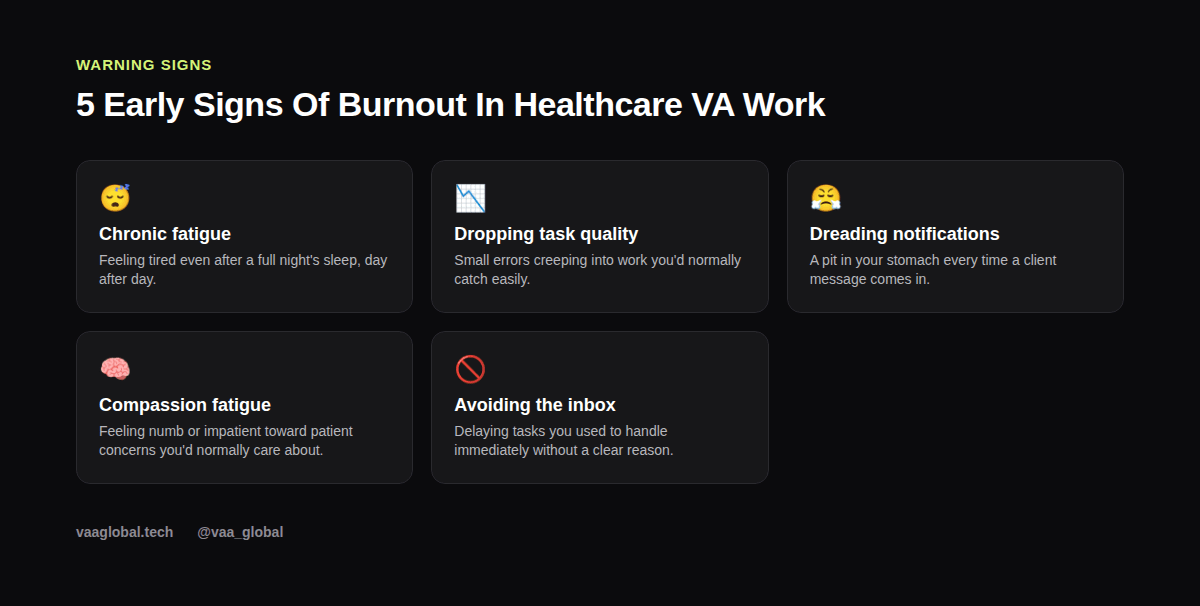
Compassion fatigue remote work shows up as a dulling of the empathy that probably drew you to this field in the first place. If patient messages that used to concern you now just feel like noise to clear, that's worth paying attention to rather than dismissing as just being busy.
Setting Work Boundaries As A Freelancer
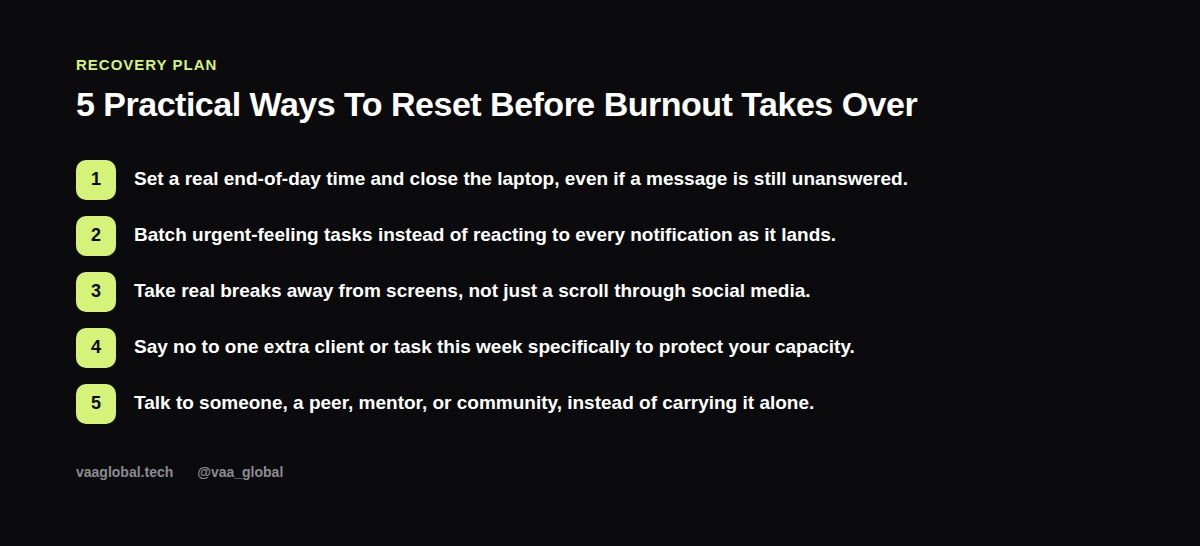
Setting work boundaries freelancer-style means deciding, in advance, when you'll stop checking messages, and actually sticking to it most days. Without a traditional office to leave at 5pm, the boundary has to be something you create yourself, which takes more deliberate effort than it sounds like it should.
Managing The Always-On Feeling Of Remote Healthcare Work
A lot of remote work mental health strain comes from feeling like you always need to be reachable, especially across time zones. Our guide on managing time zones and task prioritization on a busy day can help reduce the sense that everything is urgent all the time, which is a big part of what wears people down.
Handling Multiple Clients Without Losing Yourself
If you're working multiple practices at once, burnout risk compounds fast, since each client adds its own set of patient concerns and deadlines. Be realistic about how many clients you can hold at once without quality or your own wellbeing slipping.
Difficult Interactions Add Up Quietly
Even one recurring difficult interaction, whether it's a demanding patient caller or a difficult provider you work under, can quietly drain more energy than a full day's worth of routine tasks. Name it to yourself honestly instead of pretending it doesn't affect you.
Daily Habits That Actually Help
Simple, boring habits work better than dramatic self-care gestures. A consistent sleep schedule, actual breaks away from your screen, and a hard stop time at the end of your workday do more for burnout prevention than an occasional spa day ever will. Our broader guide on how to avoid burnout working remotely covers habits that apply across any remote role, not just this one.
When To Ask For Help
If exhaustion, dread, or numbness persists for weeks rather than days, that's worth talking to someone about, whether that's a peer in your networking community, a mentor, or a mental health professional. The World Health Organization has useful general information on burnout as a recognized occupational phenomenon; see their statement on burnout for more context. If you're considering this field and want to build sustainable habits from the start, VAA Global's Medical Virtual Assistant Training course covers the realities of the role alongside its 6-module, beginner-level curriculum.
How Do I Prevent Burnout As A Medical Virtual Assistant?
How do I prevent burnout as a medical virtual assistant when the work itself feels urgent every single day? Start small. Pick one habit, like a hard stop time, and hold it for two weeks straight. Add a second habit after that one sticks. Self-care here isn't a spa day. It's boring consistency: sleep, breaks, and a clear line between work hours and everything else.
What Are The Signs Of Burnout In Remote Healthcare Work?
What are the signs of burnout in remote healthcare work, beyond just feeling tired? Watch for irritability toward clients you used to enjoy working with. Watch for procrastinating on tasks you once did without thinking. Watch for a sense of dread each morning before you even open your laptop. Any one of these alone might be a rough week. All three together, for more than two weeks, is worth taking seriously.
How To Set Boundaries With Healthcare Clients
How to set boundaries with healthcare clients without damaging the relationship comes down to clarity and consistency. State your hours upfront. Repeat them if a client tests the edges. Hold the line calmly rather than apologetically. Most clients adjust quickly once they see you're reliable within those hours, rather than inconsistently available at all hours instead.
The Bottom Line
Medical virtual assistant burnout prevention isn't about working less, necessarily, it's about building boundaries and habits that let you keep doing meaningful work without quietly running yourself down. Catch the early signs, protect your time deliberately, and don't carry the emotional weight of this job completely alone. Real work-life balance in this field is built one boundary at a time, not discovered all at once.



