
Medical virtual assistant handling a difficult provider is a skill almost nobody talks about in training, but almost everyone ends up needing at some point, since providers are often stretched thin themselves and that stress doesn't always come out gracefully. Knowing how to stay professional without absorbing all of the tension yourself makes the difference between a bad week and a damaged working relationship.
Why This Happens So Often In Healthcare Settings
Providers often work under real pressure: packed schedules, high-stakes decisions, and limited time. None of that excuses poor treatment, but understanding the context helps you respond strategically rather than personally. A short, curt reply from a provider having a rough day isn't usually about you specifically, even though it can feel that way.
Recognizing Patterns Of Difficult Client Communication
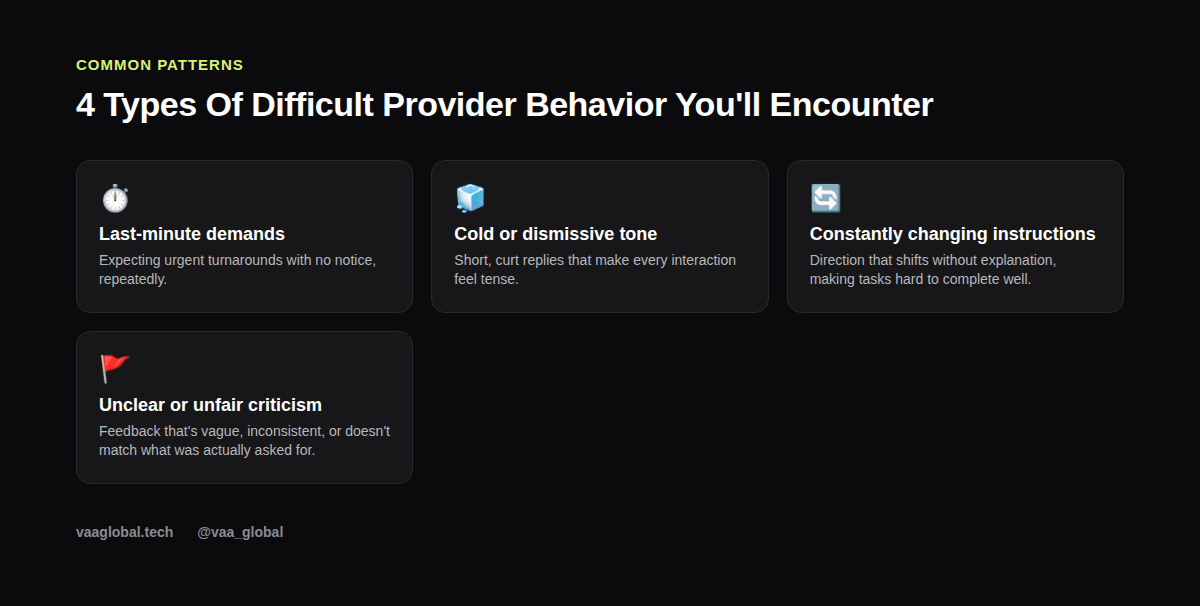
Difficult client communication tends to fall into a few recognizable patterns: last-minute demands with no notice, a consistently cold or dismissive tone, instructions that keep shifting without explanation, or feedback that's vague and inconsistent. Naming the specific pattern helps you address it concretely instead of just feeling generally frustrated.
Staying Calm And Factual In The Moment
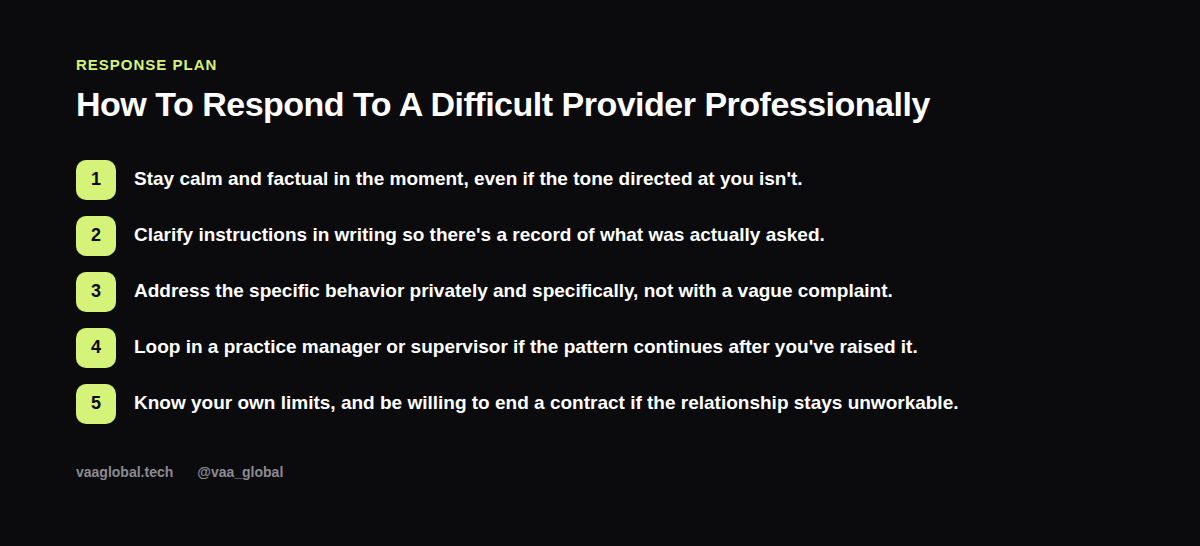
When a provider is short or sharp with you, respond with calm, factual language rather than matching their tone. A reply like I want to make sure I get this right, could you clarify what you would like for this, does more for the working relationship than a defensive or emotional reply ever would, even when the frustration is understandable.
Getting Instructions Clarified In Writing
If a provider's instructions keep shifting, start confirming direction in writing, even a quick summary email after a verbal conversation. This isn't about building a paper trail defensively, it's about reducing the back-and-forth that happens when memory differs from what was actually said. This is part of basic phone etiquette and task prioritization that also just happens to protect you.
Managing A Demanding Client Without Burning Out
Managing a demanding client long-term requires real boundaries, not just patience. Set clear working hours, stick to agreed scope, and don't let one difficult relationship bleed into how you feel about your other clients. Our piece on burnout prevention covers this in more depth, since a single difficult relationship can quietly drain more energy than an entire regular workload.
Addressing Specific Behavior, Not Vague Frustration
If something needs to be raised directly, be specific. Saying something like when messages come in after hours expecting an immediate reply, it is hard for me to maintain quality the next day lands better than a general complaint about the relationship feeling difficult. Specific feedback is easier for a provider to actually act on.
When To Involve A Practice Manager Or Supervisor
If you're working through an agency or a larger practice, a practice manager or office administrator can sometimes mediate more effectively than you can directly, especially if the pattern continues after you've raised it once. This isn't going over someone's head, it's using the structure that's there for exactly this situation.
Protecting Professional Boundaries With Clients Long-Term
Professional boundaries with clients matter even more in ongoing relationships. If you're working multiple practices, a single difficult one shouldn't be allowed to set the tone for how you approach every client relationship. For general guidance on handling difficult clients as a freelancer, see how to handle difficult clients as a freelancer, and for protecting your own wellbeing, the American Psychological Association has useful general guidance on managing workplace stress; see their work stress resources for more. VAA Global's Medical Virtual Assistant Training course also covers professional communication as part of its beginner-friendly, 6-module curriculum.
Knowing When To End The Contract
Sometimes, despite your best efforts, a working relationship stays unworkable. If a provider's behavior crosses into disrespect that doesn't improve after you've addressed it directly, it's reasonable to end the contract using your agreed termination terms. Protecting your own professionalism sometimes means walking away from a client relationship that isn't working. This kind of workplace conflict remote worker situation is rare, but it's worth knowing you have that option.
What Do I Do If A Provider Is Rude To Me?
What do I do if a provider is rude to me on a given day? First, don't take it personally in the moment. Reply calmly and factually. Note what happened once the conversation ends. If it keeps happening, that's when you raise it directly or loop in a manager. One rude moment is not a pattern. A repeated one is.
How Do I Handle A Difficult Doctor As A Virtual Assistant?
How do I handle a difficult doctor as a virtual assistant without making things worse? Keep your tone steady even under pressure. Confirm instructions in writing. Avoid matching frustration with frustration. This conflict resolution approach works because it gives the other person nothing to escalate against, and it protects your own reputation either way.
Should I Quit A Contract With A Difficult Provider?
Should I quit a contract with a difficult provider the first time things feel tense? Usually not right away. Try addressing the specific behavior first. If it improves, great. If the same pattern repeats after you've raised it clearly, ending the contract through your agreed notice terms becomes a reasonable, professional choice rather than an overreaction.
The Bottom Line
Medical virtual assistant handling a difficult provider comes down to staying calm, getting things in writing, addressing specific issues directly, and knowing your own limits. Most difficult relationships improve with clear, professional communication, but it's okay to recognize when one simply won't.



