

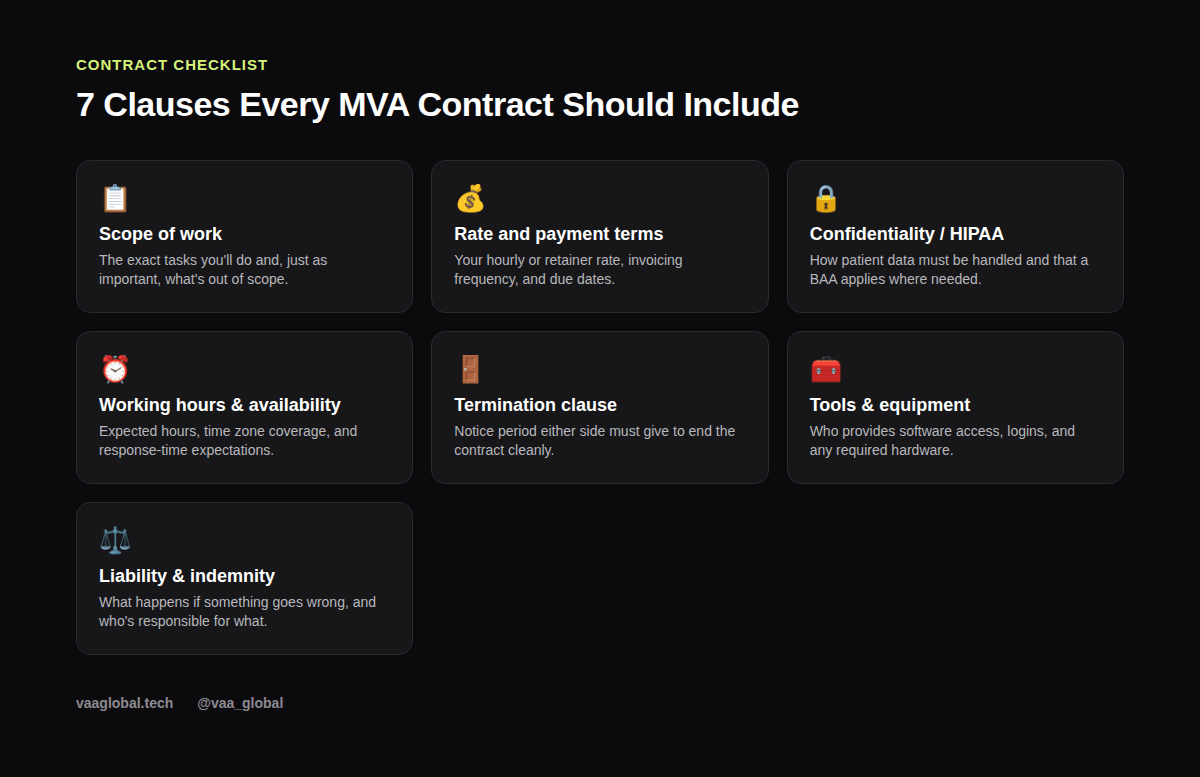
Getting the medical virtual assistant contract essentials right before you start a new engagement protects you from scope creep, late payments, and confusion over who's responsible for what. A good contract isn't about distrust, it's about making sure both you and the practice agree in writing on what the work actually looks like.
Why A Written Contract Matters, Even For Small Gigs
It's tempting to skip a formal contract when a client seems friendly and the work sounds simple. However, verbal agreements fall apart the moment there's a disagreement about hours, pay, or what you were actually hired to do. A written agreement, even a short one, gives both sides something to point back to. This matters even more in healthcare support work, since you're often handling sensitive patient information from day one.
Scope Of Work: Say What You'll Do And What You Won't
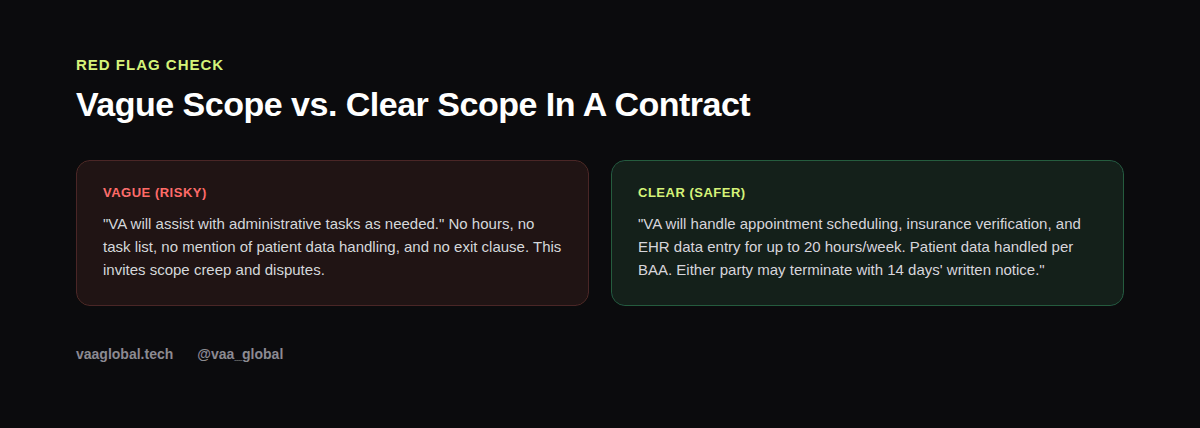
Your scope of work agreement should list specific tasks like scheduling, insurance verification, or EHR data entry, along with an estimated hours range. Just as importantly, note what's out of scope. Without this, clients sometimes add tasks gradually until the job looks nothing like what you agreed to. If you ever feel unsure about where medical boundaries sit, our piece on medical coding boundaries is a useful companion read.
Independent Contractor Terms And Classification
Most MVAs work as independent contractors, not employees, and your contract should say so explicitly. Independent contractor terms typically clarify that you set your own hours (within agreed availability windows), use your own equipment, and are responsible for your own taxes. This distinction protects both you and the client legally. If you're unsure of your rights in this arrangement, see understanding your rights as an independent contractor.
Confidentiality And The HIPAA Confidentiality Clause
Any contract involving patient data needs a HIPAA confidentiality clause, and many practices will also require a Business Associate Agreement (BAA) as a separate document. This spells out how you're allowed to access, store, and share patient information, and what happens if there's a breach. Never skip this step, even for a short-term gig. Read our guide on the business associate agreement for medical virtual assistants to understand what it actually covers.
Rate, Payment Terms, And Invoicing Frequency
Your rate should be stated clearly, whether it's hourly, per-task, or a monthly retainer, along with how often you'll invoice and the payment terms (Net 7, Net 15, etc). For a deeper walkthrough on the invoicing side specifically, see our invoicing clients guide.
Working Hours, Time Zones, And Availability
Spell out expected working hours and how quickly you're expected to respond to messages. This is especially important if you're supporting a client in a different time zone, since being available means something different depending on where everyone sits. Our guide on managing time zones covers this in more detail.
The Termination Clause: Your Exit Ramp
A termination clause states how much notice either side must give to end the arrangement, typically 7 to 30 days. Without this, ending a contract gets messy fast, especially if you're owed outstanding payment or still have active patient-facing responsibilities to hand off cleanly.
Tools, Equipment, And Liability
Clarify who provides software logins, EHR access, and any required hardware, and include a basic liability clause describing what happens if something goes wrong on either side. This isn't about expecting problems, it's about not having to figure it out mid-crisis.
Before You Sign Anything
Read the whole document, even the boring parts, before you sign. If anything feels vague, ask for it to be clarified in writing rather than assuming good intent will cover it later. Our general guide on reading a remote job contract before signing applies directly here. Freelance contract clauses that feel unclear on first read are usually unclear for a reason, so don't be afraid to push back. For general guidance on contractor agreements, the U.S. Department of Labor also publishes background on worker classification; see their overview for general context, even if you're working outside the US.
How Do I Protect Myself In A Freelance Healthcare Contract?
Start with the basics. Get everything in writing. Never rely on a verbal promise. Read every clause slowly. Ask questions before you sign, not after. Keep your own signed copy stored somewhere safe. If a client resists putting terms in writing, treat that as a signal to slow down. A client who respects your time will respect a short, clear contract too. This single habit protects you more than almost anything else on this list.
Common Contract Mistakes New MVAs Make
New MVAs often skip the contract step entirely for small gigs. They assume it's not worth the effort. This is a mistake. Even a one-page agreement beats nothing. Another common mistake is agreeing to vague language like assist as needed instead of naming specific tasks. Vague language invites scope creep. A third mistake is forgetting to address what happens if the client needs you to handle patient data before a BAA is signed. Always confirm that piece before you touch anything sensitive.
Building This Into Your Career Long-Term
Strong contracts become even more important as you take on more clients or consider building an agency down the line, since you'll eventually be the one drafting agreements for others. If you're just starting out, VAA Global's Medical Virtual Assistant Training course covers HIPAA compliance fundamentals as part of its 6-module, beginner-friendly curriculum.
The Bottom Line
Getting the medical virtual assistant contract essentials nailed down before you start isn't about assuming the worst, it's about setting clear expectations so the relationship runs smoothly. Scope, rate, confidentiality, hours, termination, tools, and liability: get these seven things in writing, and most disputes never happen in the first place.



