Having more than one offer at the same time is a good problem, but it's still a stressful one if you've never dealt with it before. Learning how to handle multiple job offers at once mostly comes down to three things: getting the timelines to line up, comparing fairly instead of just going with gut feeling, and communicating honestly with everyone involved so you don't burn a bridge on your way to a decision.
First, Align the Deadlines
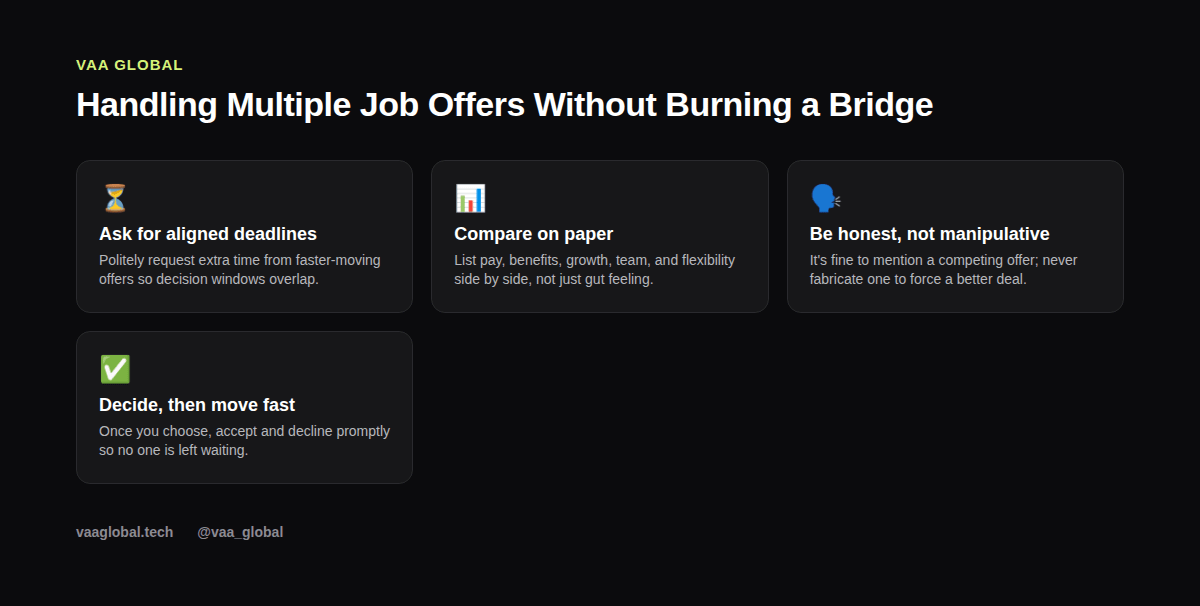
The biggest challenge in juggling job offers isn't the comparison itself — it's that offers rarely arrive on the same schedule. If one company wants an answer by Friday and another won't even extend an offer until the following week, ask the faster one for a short, reasonable extension so you're not forced to decide blind.
How to Ask for More Time
“Thank you so much for the offer — I'm genuinely excited about this opportunity. I'm finishing up a parallel process and would really appreciate a few extra days to make sure I'm making the right decision. Would it be possible to extend the deadline to [date]?”
This is exactly how do I ask for more time to decide between offers without sounding uncommitted: be warm, specific about the date you need, and brief about the reason.
Compare Offers on Paper, Not Just in Your Head
Write out each offer across the same categories — pay, benefits, growth opportunities, team and manager, flexibility, and stability — rather than relying on a vague sense of which one “feels right.” For a fuller list of what belongs in this comparison, how to evaluate a job offer beyond salary covers each factor in more depth.
Using a Competing Offer Honestly
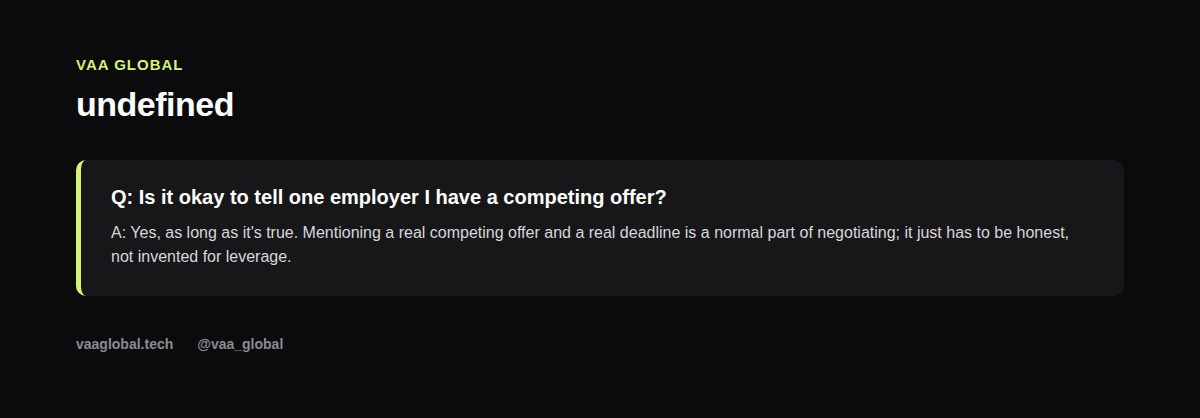
It's completely fair to mention a real competing offer and a real deadline when negotiating with another company — this is normal and expected. What crosses a line is inventing an offer that doesn't exist to manufacture pressure. Employers sometimes ask follow-up questions, and getting caught in a fabricated claim can cost you the whole opportunity, not just the leverage.
Don't Let Fear of Burning a Bridge Freeze You
Some candidates avoid asking for more time or mentioning a competing offer because they worry it'll damage the relationship. In practice, companies deal with candidates comparing multiple offers constantly, and a respectful, honest ask rarely causes lasting harm — silence and ghosting do far more damage to your reputation than a clear, polite conversation.
Declining an Offer Without Burning the Bridge
Once you've decided, decline the offers you're not taking as soon as possible, not after you've started your new role. Here's a template for how do I turn down a job offer politely:
“Thank you again for the offer and for the time your team spent with me throughout the process. After careful consideration, I've decided to accept a different opportunity that's a closer fit for where I want to grow right now. I really appreciated getting to know the team and hope our paths cross again.”
Move Fast Once You've Decided
Sitting on a decision after you've genuinely made up your mind only extends everyone's uncertainty, including your own. Accept the offer you want and decline the others within the same day or two, so the companies you're turning down can move forward with their process instead of holding a spot open unnecessarily.
Keep Every Conversation Organized
When you're managing more than one offer, deadline, and point of contact at once, it's easy to mix up details. Keep each offer's deadline, key terms, and contact noted in your job search tracker spreadsheet so you're working from clear facts rather than memory under pressure.
What If One Offer Needs Start Date or Flexibility Clarified Too
Sometimes the comparison isn't just about pay — it's about practical details like when you'd start or how flexible the hours really are. If that's part of what's making one offer harder to evaluate, how to negotiate start date and remote flexibility walks through getting those specifics clarified before you commit either way.
Why Declining Professionally Matters Long-Term
How you decline a job offer professionally says as much about you as how you accept one. Industries, especially remote and niche ones, are smaller than they look, and the recruiter or hiring manager you turn down today might be the person reviewing your application at a different company two years from now. A warm, respectful decline costs you nothing and keeps that door open.
The Bottom Line
Handling multiple job offers at once is a genuinely good problem to have, and most of the stress comes from uncertainty about what's socially acceptable to ask for. Request reasonable extensions, compare fairly on paper, be honest about any real competing offers, and move quickly and kindly once you've decided. The Balance Careers' guide to handling multiple job offers has a few more scripts if you want additional phrasing for trickier conversations.