A big number in the offer letter feels like the whole decision, but it isn't. Learning how to evaluate a job offer beyond salary is what separates people who end up in a role that actually fits their life from people who take the highest number and regret it within six months. Pay matters, obviously, but it's only one line in a much longer list of things that determine whether a job is actually good for you.
Start With Total Compensation, Not Just Base Pay
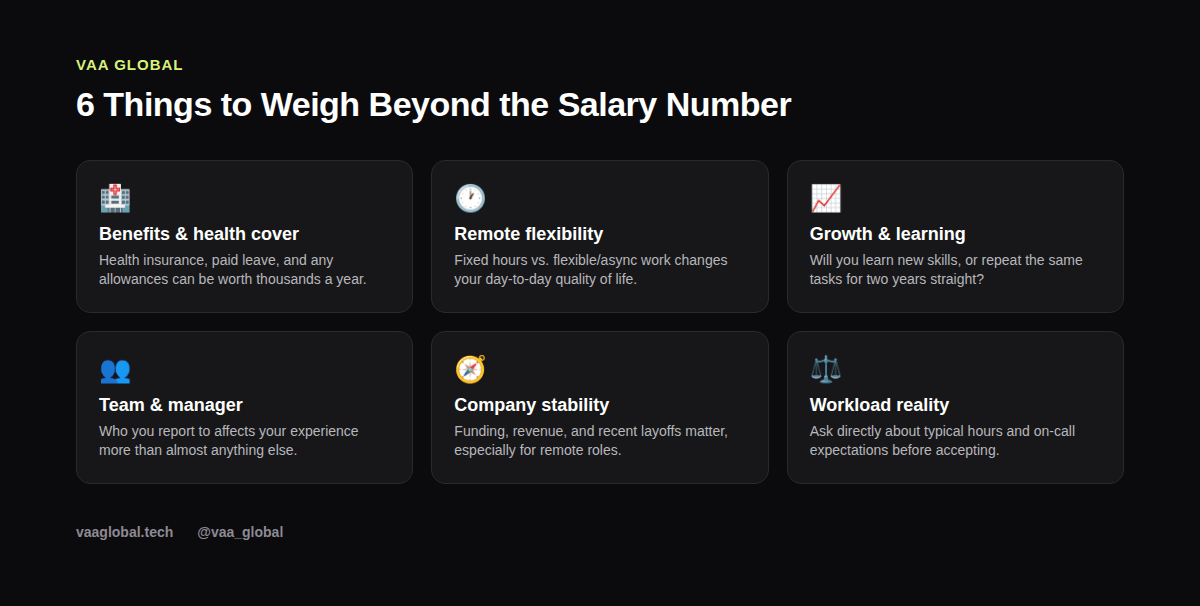
Health insurance, paid leave, retirement contributions, equipment allowances, and internet or co-working stipends all have real dollar value, and two offers with the same base salary can differ by thousands once you add these up. Ask for a written breakdown of total compensation, not just the headline number, so you're comparing like with like.
Look Closely at Remote Flexibility
“Remote” means different things at different companies. Some expect fixed hours and constant availability; others run fully async with real flexibility over when you work. If flexibility matters to you, ask directly: are there mandatory meeting hours, what time zone does the team mostly operate in, and is there a hybrid requirement hiding in the fine print.
Ask What You'll Actually Learn
A role that pays slightly less but teaches you skills that compound over the next two years is often the better long-term choice than one that pays more but leaves you doing the same narrow task on repeat. Ask what a typical first six months looks like, and whether there's budget or support for courses, certifications, or conference attendance.
Who You'd Report To Matters More Than the Logo
Company reputation matters less day-to-day than the person you'd actually report to. If possible, ask to speak with your prospective manager directly before accepting, or at least with a current team member, and pay attention to how clearly they answer specific questions about expectations and support.
Check Company Stability, Especially for Remote Roles
Remote roles at financially unstable companies carry extra risk, since remote teams are often the first cut during downsizing. A quick look at recent funding news, layoff history, or how long the role has been open (a role reposted repeatedly can be a signal) gives you a rough read on stability before you commit.
Get Real About Workload
Ask directly: what are typical hours, is there on-call or after-hours expectation, and how is overtime or crunch handled. Vague answers here (“it varies” with no further detail) are themselves useful information. If this offer looks almost too appealing given everything else about it, it's worth reviewing signs a remote job offer is too good to be true before you sign anything.
Take the Time You Need
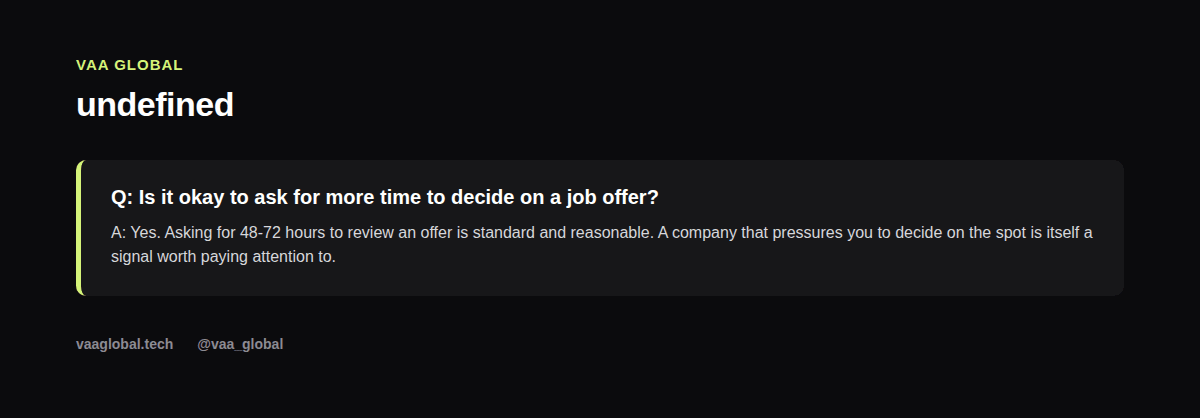
You don't have to decide on the spot. Asking for 48-72 hours to review a written offer is completely standard, and a company that pressures you to accept immediately is itself worth noting. Use that window to actually read the offer letter and ask any last clarifying questions in writing.
Compare Offers Side by Side
If you're weighing more than one, write out each factor — pay, benefits, flexibility, growth, team, stability, workload — in a simple table rather than trying to hold it all in your head. This is one of the clearest ways how do I know if a job offer is good relative to your other options, instead of judging each one in isolation.
Build a Simple Remote Job Offer Checklist
Rather than reinventing a job offer evaluation from scratch every time, build one remote job offer checklist you can reuse: total compensation, flexibility, growth, manager, stability, and workload. Having the same seven or eight things to consider before accepting a job written down, every single time, keeps emotion and excitement from overriding the practical check you'd normally do with a clear head.
Don't Skip the Gut Check
After you've gone through every item on your checklist, step back and notice how you actually feel about the role. Spreadsheets and comparisons matter, but so does whether the thought of starting this job on Monday morning feels energizing or draining. Treat that instinct as one more data point, not the whole decision, but don't ignore it either. A role that checks every box on paper but leaves you uneasy is worth a second look before you sign.
The Bottom Line
Salary is the easiest number to compare, which is exactly why it gets too much weight in most decisions. To properly evaluate a job offer beyond salary, look at total compensation, real flexibility, growth potential, your future manager, company stability, and honest workload expectations — then give yourself the time to weigh them together. For help getting the offer itself to where you want it, see how to negotiate a salary offer for a remote job, and once you've accepted, how to get a job offer letter covers what should follow in writing. Glassdoor's guide to evaluating a job offer is also a useful second opinion if you want more detail on any one factor.