

Almost every candidate has to explain why you left your last job at some point in an interview, and almost every candidate overthinks it. The trick isn't finding some magic phrase that erases a bad experience — it's learning to frame the truth in a way that sounds forward-looking rather than bitter, no matter how the previous job actually ended.
Why Interviewers Ask This Question
This interview question about leaving is almost guaranteed to come up, and interviewers aren't trying to trap you — they're trying to gauge two things: whether you'll be a reliability risk for them too, and whether you handle difficult situations with maturity. A reason for leaving that sounds bitter, vague, or dramatic raises a quiet red flag, even if the underlying situation was entirely justified. The content of your answer matters less than the tone.
The Core Rule: Never Badmouth a Former Employer
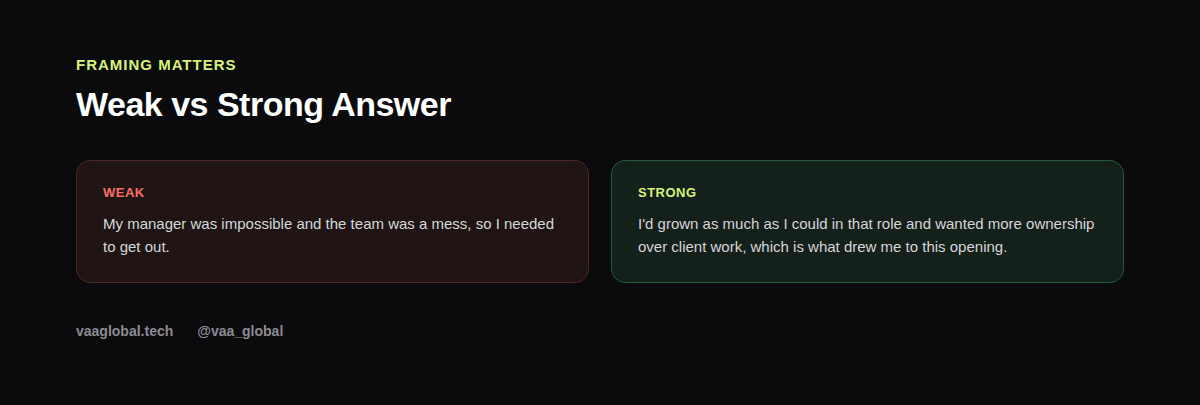
This is the single biggest mistake candidates make. Even when a former manager genuinely was unreasonable, or the company genuinely was dysfunctional, saying so out loud in an interview tells the new interviewer more about your judgment than about your old employer. Keep criticism general and brief if you must mention it at all, and pivot quickly to what you want next.
How to Explain Leaving Without Bad-Mouthing Your Boss
If the real reason was a difficult manager, reframe it around your own needs rather than their flaws: “I realized I work best with more structured feedback and clearer project ownership, and I'm looking for a role that offers that.” This is honest without naming names or assigning blame, and it tells the interviewer something useful about what you're looking for.
What If You Left for More Money?
Is it okay to say I left for more money? Partially, but frame it as part of a bigger picture rather than the whole story. Compensation alone can sound transactional and raise concerns you'll leave again just as quickly. Something like “I was ready for a role that matched both my growth and my market value, and this position's scope and compensation both line up with where I am now” covers the honest truth while showing there's more to your decision than pay.
What Do I Say If I Was Fired?
Honesty matters here more than anywhere else, because background checks and reference calls can surface the truth anyway. Keep it short, take appropriate ownership without excessive self-blame, and focus on what you learned. For example: “The role and I weren't a long-term fit, and it ended sooner than I'd planned. I've reflected on what I'd do differently, and I'm confident this next role plays more to my strengths.” Avoid going into excessive detail unless directly asked.
Explaining a Short Job Stint
How do I explain a short job stint without raising suspicion? Briefly acknowledge the short tenure, give one honest and non-dramatic reason (a mismatch in expectations, a company restructuring, a role that changed significantly after you joined), and move on. Dwelling on it signals insecurity; a short, confident explanation signals self-awareness. If you've had more than one short stint, it may help to also show a pattern of growth since then, such as completing relevant training or taking on bigger freelance projects.
Connecting Your Reason for Leaving to the New Role
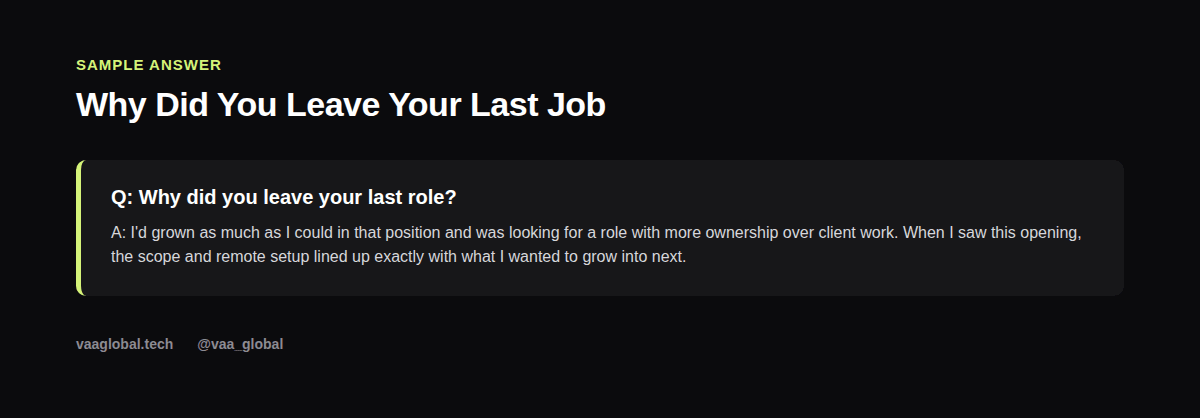
The strongest answers always tie back to the specific opportunity in front of you. Instead of a generic “I wanted a change,” say what specifically drew you here: the remote flexibility, the scope of responsibility, the chance to work with a particular tool or client type. This turns your reason for leaving into evidence that you've done your homework, which pairs well with genuinely researching the company before your interview.
Practicing Your Answer Out Loud
A career change explanation that sounds natural in your head can come out clumsy or defensive the first time you actually say it under pressure. Say your answer out loud several times, ideally to another person or recorded on your phone, until the framing feels automatic rather than rehearsed-sounding. This is a good candidate for broader interview practice alongside other tough questions you're likely to face.
What Not to Say, Even If It's True
Avoid phrases like “they were toxic,” “I hated it there,” or anything that sounds like venting rather than reflection. Also avoid oversharing personal details about workplace conflict, legal disputes, or health issues unless they're directly relevant and you're comfortable discussing them. Keep the focus on the future role, not a post-mortem of the last one.
How This Question Fits Into the Bigger Interview
This is usually one of the first questions in a remote job interview, and how you handle it sets the tone for everything after. A shaky, defensive answer here can make an interviewer listen more skeptically to the rest of your responses, while a calm, confident one builds momentum. According to career guidance from Indeed, brevity and forward focus consistently rank among the strongest predictors of a well-received answer. If you're rebuilding momentum after a tough stretch, pairing this with work on building confidence after job rejection can help the whole interview feel less high-stakes. It's also worth reviewing common resume mistakes remote job seekers make, since an unclear resume often invites this question to be asked more pointedly than it needs to be.
The Bottom Line
Learning to explain why you left your last job well comes down to honesty wrapped in a forward-looking frame — acknowledge what happened without bitterness, connect it to what you want next, and practice saying it until it sounds natural rather than scripted. Handle this question with composure, and it stops being something to dread and becomes just another normal part of the conversation.