Building a GRC resume with no experience feels harder than it actually is, mostly because beginners try to copy the format of a senior professional's resume instead of designing one that works for their actual situation. The trick is leading with skills and evidence of effort, rather than a thin work history that cannot compete on its own.
Why Generic Compliance Resume Examples Fail
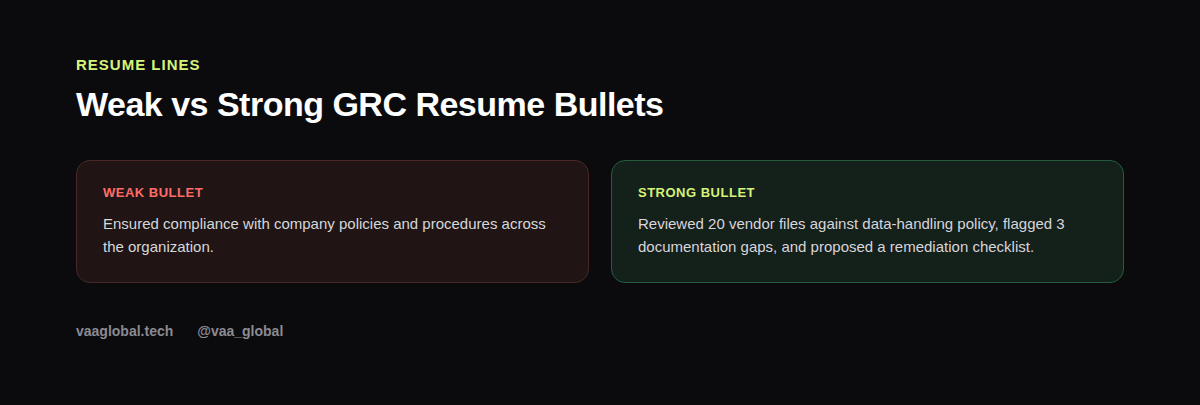
Most compliance resume examples beginners copy online are too vague to be useful: phrases like “ensured compliance with company policies” tell a hiring manager nothing specific. Instead, every bullet point should answer three questions: what did you actually do, against what standard, and what was the outcome. A rewritten version might read: “Reviewed 20 vendor files against the company's data-handling policy, flagged three documentation gaps, and proposed a remediation checklist to close them.” This is far more convincing, even when it describes a self-built practice exercise rather than a paid job.
What Should Go on a GRC Resume at the Top
What should go on a GRC resume when work history is thin? Lead with a four-to-six line skills summary that uses real terminology: control testing, risk register, policy review, stakeholder communication, remediation tracking. This summary does two jobs at once: it proves you know the vocabulary, and it gives an automated resume-screening system the exact keywords it is often looking for, which matters more than beginners realize given how many applications get filtered before a human ever reads them.
How Do I List a Portfolio Project on a Resume?
How do I list a portfolio project on a resume without it looking like filler? Treat it exactly like a work experience entry, with a title, a brief context line, and two or three bullet points describing what you produced. For example: “Self-Directed GRC Portfolio Project — Built a five-item risk register for a fictional mid-size retailer, including likelihood and impact scoring and a proposed control for each identified risk.” This single entry often does more for an entry level GRC resume than three vague sentences about being a fast learner.
Translating Past Jobs Into GRC Language
Transferable skills for compliance exist in almost every job, even ones that seem completely unrelated. If you worked in customer service, a bullet like “resolved customer disputes by verifying account activity against company policy before approving refunds” shows exactly the evidence-checking instinct GRC work requires. If you worked in retail operations, inventory reconciliation experience translates directly into control-testing language. The key is rewriting, not inventing; describe what you genuinely did, using words that map to GRC concepts.
Risk Analyst Resume Tips for a Tighter Focus
If you are specifically targeting risk-focused roles, risk analyst resume tips include quantifying risk wherever you honestly can, even in a practice project: “Rated five identified risks by likelihood and impact, prioritizing two high-severity items for immediate remediation recommendations.” Numbers, even small or hypothetical ones from a self-built exercise, make a resume feel concrete rather than abstract, and interviewers often ask follow-up questions about exactly these specifics.
What Certifications Should You Put on a GRC Resume?
What certifications should I put on a GRC resume, and does an unfinished one still count? Yes, list certifications you are actively pursuing with an expected completion date, since this shows commitment rather than empty intention. Place this section near the top, close to your skills summary, rather than buried at the bottom where a fast-scanning recruiter might miss it entirely.
Formatting Choices That Actually Matter
Keep the resume to one page if you have under three years of total work experience, use a clean, single-column layout that resume-screening software can parse reliably, and avoid graphics or tables that often break when converted to plain text by automated systems. For general formatting pitfalls that apply across fields, our guide on common resume mistakes remote job seekers make covers several issues that also sink GRC applications specifically, and the structure used in writing a cybersecurity resume with no experience transfers almost directly to GRC roles.
Pairing the Resume With the Right Application Strategy
A strong resume still needs the right targets. Review our guide on breaking into GRC with no experience for which adjacent entry-level roles to apply to, and check ISACA's certification guidance directly before committing time and money to a specific credential, so the resume you build actually matches what employers in your target market are screening for.
Checking Your Draft Before You Send It
Before submitting, read your resume out loud once, because awkward phrasing is much easier to catch by ear than by eye. For example, if a bullet sounds vague when spoken aloud, it probably needs a specific number or concrete detail added. Also, because many systems strip formatting, save and reopen your file as plain text to confirm nothing breaks; however, this step alone will not fix weak content, so do it after the writing is solid rather than instead of revising. Finally, since first impressions matter, double-check that your skills summary and certifications are visible without scrolling, as a recruiter spending only a few seconds per resume may never reach the bottom of the page otherwise.
The Bottom Line
A GRC resume with no experience succeeds by substituting real evidence for job history: a clear skills summary, a self-built portfolio project, honestly translated past work, and visible commitment through certifications in progress. None of this requires fabricating anything; it requires presenting genuine effort clearly enough that a hiring manager can see it.