Comparing GRC for startups vs GRC for enterprises reveals two genuinely different working worlds, even though the underlying principles of governance, risk, and compliance stay the same. If you're trying to decide where to start your GRC career, or you're moving from one environment to the other, understanding these differences will save you some real surprises.
How Does GRC Work at a Small Company?
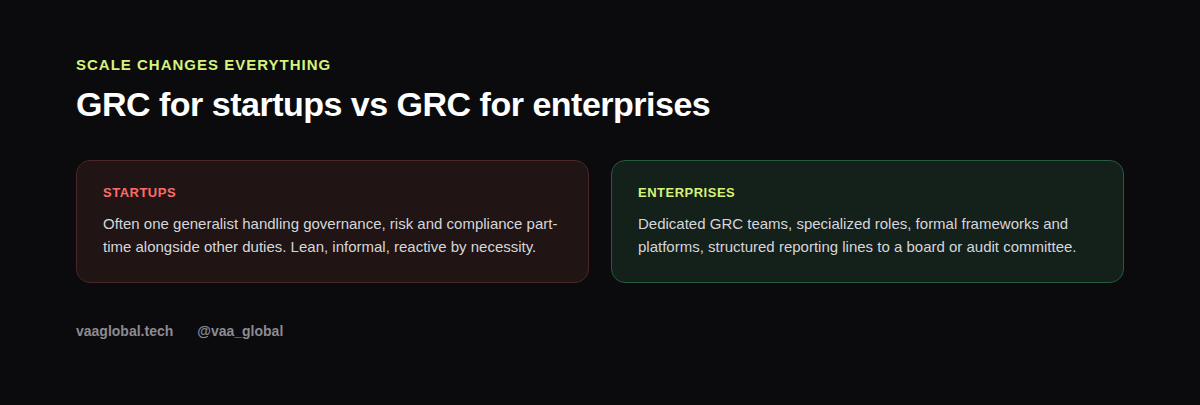
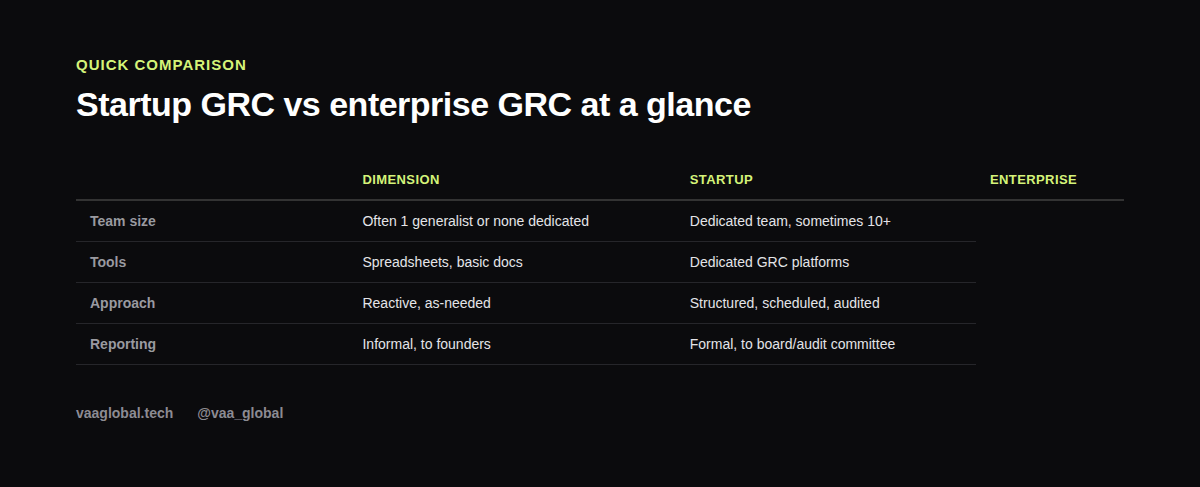
How does GRC work at a small company in practice? Often, it doesn't have a formal name at all — the founder, an operations lead, or an early hire handles startup compliance as one responsibility among many, usually reactively, in response to a specific client request, investor due-diligence checklist, or a new regulatory requirement that suddenly becomes unavoidable. There's rarely a dedicated risk register or mature control framework; things get documented as they're forced to be.
When Does a Startup Need a Dedicated GRC Person?
When does a startup need a dedicated GRC person, rather than continuing to handle it informally? Common triggers include a funding round that requires formal compliance documentation, a major client (especially an enterprise client) demanding evidence of security and compliance controls, or simply growing past the size where ad-hoc handling creates real risk. This is often one of the first specialized hires a scaling company makes once it outgrows informal processes.
What Does an Enterprise GRC Team Look Like?
What does an enterprise GRC team look like once an organization reaches real scale? Typically a structured group with specialized roles — risk analysts, compliance officers, internal auditors, sometimes a Chief Risk Officer — using a dedicated GRC platform, formal enterprise risk management frameworks aligned with recognized bodies like ISACA, and scheduled reporting cycles up to an audit committee or board. Decisions move more slowly, since changes often need sign-off from multiple stakeholders, but coverage is far more thorough and consistent as a result. A single risk rarely slips through unnoticed the way it sometimes can at a leaner organization.
Is It Easier to Start a GRC Career at a Startup or Enterprise?
Is it easier to start a GRC career at a startup or enterprise, if you're choosing your first move? Enterprises generally offer clearer entry-level paths, more structured training, and mentorship from established GRC professionals, which makes them a more forgiving place to learn the fundamentals. Startups offer less structure but more breadth and ownership — you might touch governance, risk, and compliance all in one role, which builds a generalist skill set fast, just with less guardrails.
The Tools Reflect the Difference in Scale
Startup compliance work usually runs on spreadsheets and shared documents, the same foundational tools covered in our GRC tools every beginner should learn guide. Enterprise GRC teams layer in dedicated platforms on top of that same foundation, not instead of it — the underlying logic of a risk register doesn't change, just the software managing it at scale.
Career Mobility Between the Two
Many GRC professionals move between startup and enterprise environments over a career, and each move teaches something the other environment can't. Someone who started at a startup often brings practical, scrappy problem-solving to an enterprise role; someone who started at an enterprise often brings structured rigor that helps a scaling startup build its first real GRC function properly. Neither background is wasted.
Which Environment Fits Your Working Style
If you prefer clear process, defined scope, and working within an established control maturity model, enterprise GRC will likely feel more comfortable. If you prefer broader ownership, faster decisions, and building things somewhat from scratch, startup compliance work will probably suit you better, at least for a season of your career. Many people genuinely enjoy phases of both, and plenty of GRC careers end up zig-zagging between the two rather than following a straight line from one to the other. There's no wrong order here — what matters more is being honest with yourself about which working style keeps you engaged, rather than chasing whichever label sounds more prestigious on a given day.
Foundational Skills Help Either Way
Whichever environment you're aiming for, foundational knowledge transfers across both. VAA Global's Operations Management course covers process design and quality management concepts that apply directly to building a GRC function from scratch at a smaller organization, while the Cybersecurity course builds the risk and controls literacy that enterprise GRC teams expect from day one.
The Bottom Line
GRC for startups vs GRC for enterprises isn't really a question of which is more legitimate GRC work — both are real, valuable experience, just at very different scales and levels of formality. Choose based on how you like to work and what kind of mentorship or ownership you're looking for right now, and don't be surprised if your career eventually touches both. The core discipline — identifying risk, building controls, staying compliant — stays constant; only the scale, the tooling, and the formality around it really change as an organization grows. Keep that underlying consistency in mind the next time a job posting makes one environment sound completely unlike the other, because the gap is usually about process maturity, not the fundamental work itself.