Not every GRC program is created equal, and that's exactly the gap GRC maturity models explained here are designed to measure. A maturity model gives you a structured way to describe how consistent, data-driven, and proactive an organization's risk and compliance practices actually are, rather than just saying 'we're doing okay.'
Where Maturity Models Come From
Maturity models as a concept originated from software engineering's Capability Maturity Model, which described how disciplined and repeatable a development process was. GRC teams borrowed and adapted that same idea, since the underlying question is similar: is this function run consistently and deliberately, or is it reactive and inconsistent from one situation to the next?
The Five Common Levels
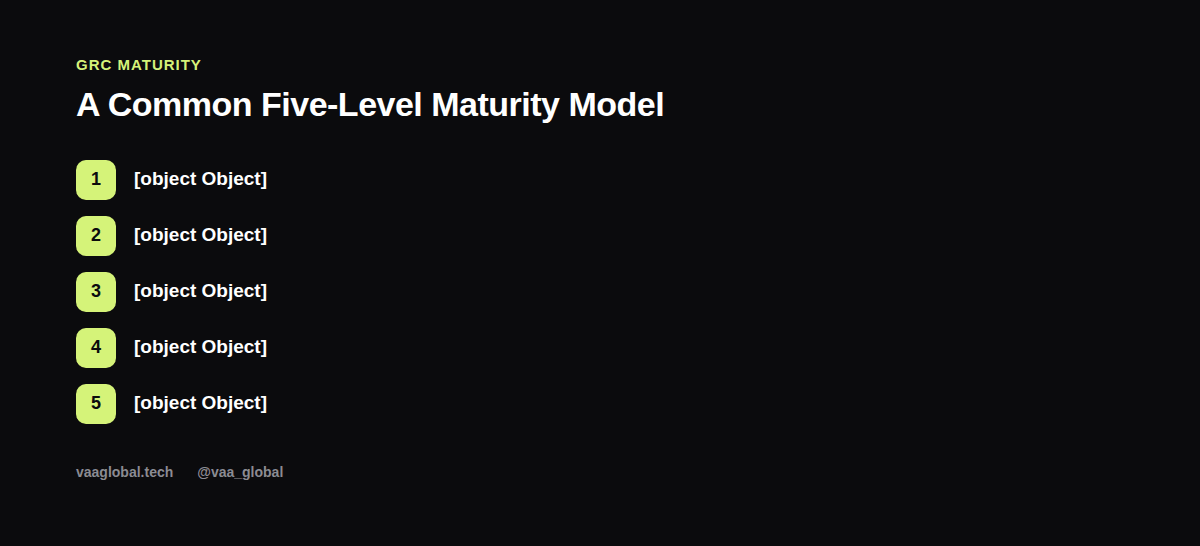
While specific models vary by vendor or consultancy, most GRC maturity models describe a similar progression, shown in the graphic above. At Level 1 (Ad Hoc), risk and compliance get handled reactively with no consistent process. At Level 2 (Initial), some processes exist, but they vary by team and aren't well documented. At Level 3 (Defined), consistent, documented processes are used across the organization. At Level 4 (Managed), those processes are actively measured and monitored with real data. At Level 5 (Optimized), continuous improvement is genuinely built into how GRC operates, not bolted on as an afterthought.
Why Bother Measuring Maturity at All?
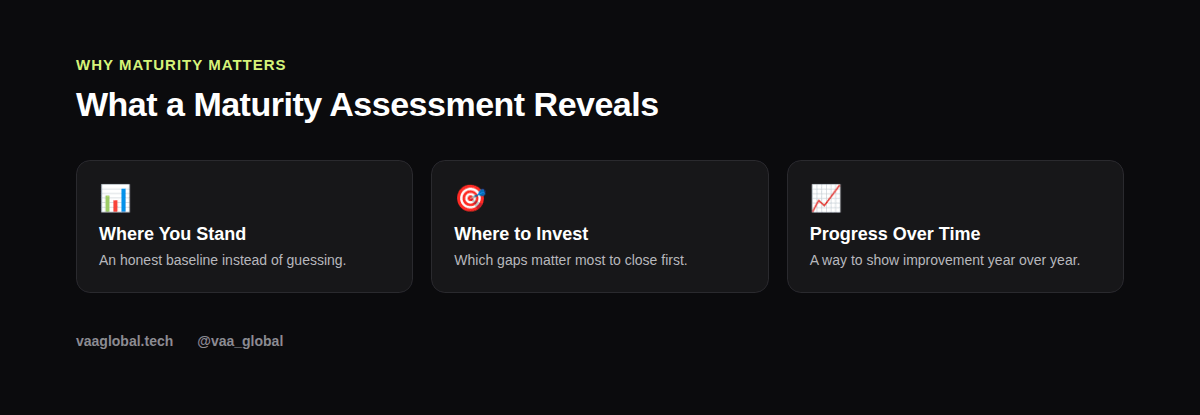
A maturity assessment gives a GRC program an honest baseline instead of relying on gut feeling about how well things are going. As the grid below shows, it reveals where an organization actually stands, which gaps deserve investment first, and a consistent way to demonstrate progress year over year to leadership or a board.
What Low Maturity Actually Looks Like
A Level 1 or Level 2 organization often has smart, hardworking people doing good individual work, but no consistent process tying it together. Risk assessments happen inconsistently or only after an incident. A risk register might exist in theory but go unmaintained for months. Controls get implemented without clear ownership or testing. None of this means the people are doing a bad job — it usually just means the program hasn't had the structure, time, or investment to mature yet.
What Higher Maturity Looks Like
At Levels 4 and 5, risk assessment basics, a maintained risk register, and clearly owned controls aren't just present — they're measured and tied to actual decision-making. Leadership gets regular reporting on key risk indicators tied to a defined risk appetite. Internal audit findings close within tracked timelines rather than lingering indefinitely. The whole system runs on evidence rather than assumption, and improvement happens deliberately rather than only after something breaks.
How to Run a Simple Maturity Assessment
A practical starting point doesn't require an expensive external consultant. Pick a handful of GRC areas — risk assessment, control testing, vendor risk management, incident response — and honestly rate each one against the five levels described above. The goal isn't to score a 5 everywhere immediately; it's to build a realistic roadmap that prioritizes the gaps that matter most, given the organization's actual risk profile and resources.
Common Questions Beginners Ask
People often ask what are the levels of GRC maturity — most models describe something close to ad hoc, initial, defined, managed, and optimized, as covered above, even if the exact labels vary. On how do you assess GRC maturity, it typically involves rating specific GRC functions against a defined scale, sometimes via self-assessment and sometimes with outside help. People also ask why does GRC maturity matter, and the honest answer is that it turns a vague sense of 'we should be doing better' into a concrete, prioritized improvement plan. And can a small company have mature GRC — yes, maturity is about consistency and discipline relative to the organization's size and risk, not about having a huge dedicated team.
Benchmarking Against Frameworks
Many organizations anchor their maturity work to established frameworks rather than inventing their own criteria from scratch. For instance, NIST CSF's tiers (Partial, Risk Informed, Repeatable, Adaptive) function very similarly to a GRC maturity scale, and COSO's components give a structured way to check whether internal control maturity specifically is improving. Using a recognized reference point, like the guidance available at nist.gov, also makes it easier to compare notes with peers or auditors who are already familiar with the same vocabulary.
Why This Matters for Your Career
Understanding GRC maturity models gives you language to describe not just individual frameworks like ISO 27001 or SOC 2, but how well an organization runs its entire risk and compliance function. If you're early in your GRC journey, building hands-on experience with the fundamentals — what is a risk register and how to build one, what is a control in GRC, and risk assessment basics for GRC beginners — is exactly the groundwork that lets you later speak credibly about moving an organization from one maturity level to the next.
The Bottom Line
With GRC maturity models explained in plain terms, remember that maturity isn't about perfection — it's about moving steadily from reactive, inconsistent practices toward measured, deliberately improving ones. Wherever an organization currently sits on that scale, the path forward is the same: build consistent processes, measure them honestly, and keep improving from there.