A typical GRC career path moves from analyst to senior analyst, then to manager, and eventually to director, but the timeline and the skills that actually get you promoted at each stage are rarely spelled out clearly anywhere. Understanding this progression early helps you make smarter decisions about which projects to volunteer for and which certifications are worth your time at each stage.
GRC Analyst: The Foundation Years
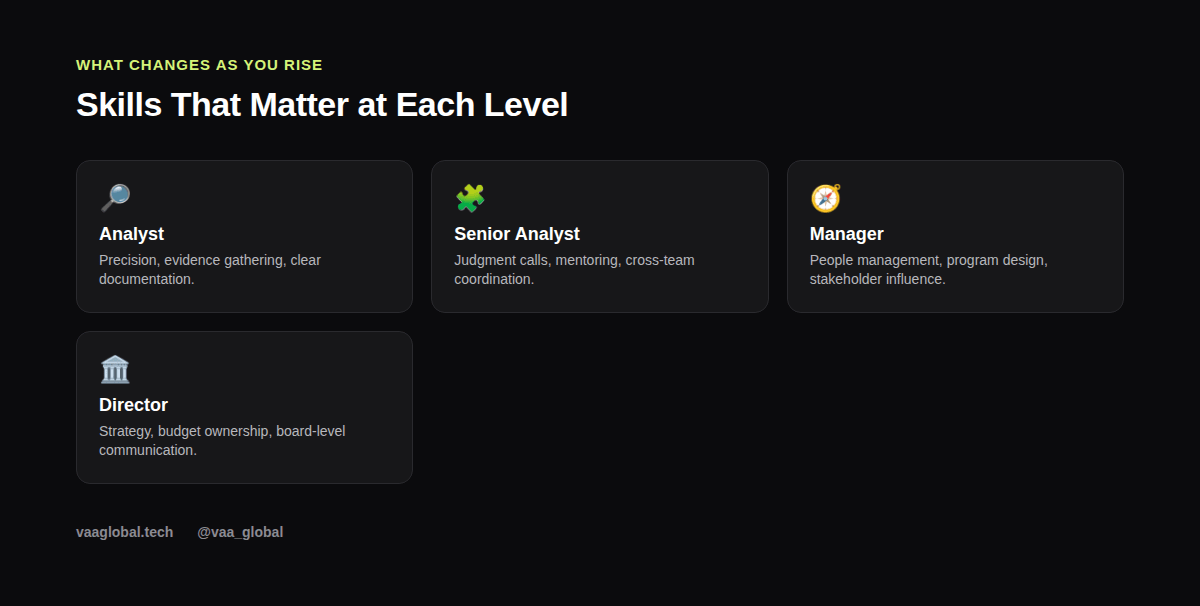
In your first zero to two years, the job is almost entirely about precision: testing controls correctly, gathering solid evidence, and writing findings clearly enough that someone outside the team can act on them. The fastest way to stand out here is not volunteering for extra tasks randomly, but becoming known as the analyst whose work other people do not have to double-check. That reputation for reliability is what gets you considered for senior responsibilities earlier than your peers.
GRC Analyst to Manager: What Changes at Senior Level
The jump from GRC analyst to manager usually passes through a senior analyst stage first, typically around two to four years in. Senior GRC analyst duties expand to owning an entire risk domain, such as third-party vendor risk or data privacy, rather than just completing assigned tasks. You start mentoring junior analysts, leading more complex reviews independently, and being the person management asks when a tricky judgment call comes up, since judgment calls, not just rule-following, start mattering more at this stage.
Becoming a GRC Manager: A Real Shift in Skills
Around the four to seven year mark, many people move into a GRC Manager role, and this is where the job changes the most. Instead of doing the testing yourself, you are now designing the overall program, managing a small team, and translating findings into language senior leadership actually cares about, which is usually business impact rather than technical detail. What skills do GRC managers need most? People management and stakeholder influence matter more here than any additional certification, since your success now depends on getting cooperation from departments that do not report to you.
GRC Director Responsibilities: Strategy Over Execution
GRC director responsibilities sit almost entirely at the strategy and governance level. A director sets the overall risk appetite recommendations for the organization, owns the GRC budget, and reports directly to the board or an executive risk committee. At this level, you are rarely testing a single control yourself; you are deciding which categories of risk deserve investment this year and defending those decisions to people who may push back hard. This requires comfort with ambiguity and political dynamics that the analyst years do not really prepare you for on their own.
How Long Does It Take to Become a GRC Director?
How long does it take to become a GRC director, realistically? Most people who reach this level have spent seven to twelve years total across analyst, senior analyst and manager stages, sometimes gaining breadth by rotating through internal audit or a specific risk domain along the way. Faster paths exist, usually for people who move companies strategically to take on bigger scope earlier, but a decade is a reasonable baseline expectation rather than an exception.
How Do You Get Promoted in GRC?
How do you get promoted in GRC, beyond simply waiting out the years? Three things consistently show up in people who move faster than average: they take ownership of problems nobody assigned them, they communicate findings in business language rather than compliance jargon, and they build genuine relationships with the departments whose controls they review rather than treating every interaction as adversarial. None of these are technical skills, which is worth remembering if you assumed certifications alone would carry you up the ladder.
What Comes After GRC Analyst, If Not Management
What comes after GRC analyst does not have to be a straight line toward director. Some people pivot sideways into internal audit, as covered in our comparison of GRC versus internal audit, while others specialize deeply in one area like data privacy or third-party risk and become a recognized subject-matter expert rather than a manager. Both are legitimate career paths, and understanding your own preference for people management versus deep expertise early will save you from chasing a management title that does not actually suit you.
Building Toward This Path From Day One
If you are still early in your GRC journey, it helps to understand what hiring managers actually look for at the entry level first; our guide on breaking into GRC with no experience covers that groundwork directly. It is also worth reviewing general career-growth advice like how to ask for a raise in a remote job, since compensation conversations at each promotion stage follow similar principles regardless of field. ISACA's career resources on governance leadership are also worth a direct read as you plan your own long-term certification roadmap.
The Bottom Line
The GRC career path from analyst to director is real and achievable, typically spanning seven to twelve years, but it depends far more on judgment, communication and stakeholder trust than on stacking certifications alone. If you understand what changes at each level early, you can start building the right skills years before you actually need them for a promotion.