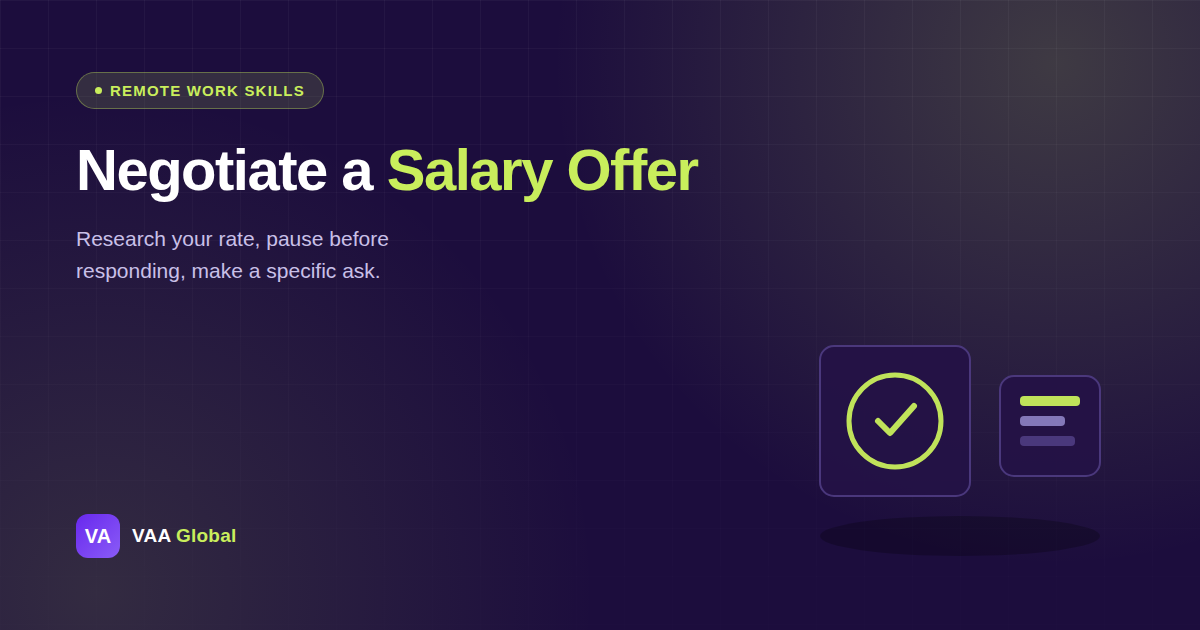

Asking for a raise feels genuinely uncomfortable in any work setting, but remote work adds a distinct layer, without the passive, in-person visibility a manager might otherwise have into your daily contributions, making deliberate self-advocacy considerably more important.
Why Remote Work Requires More Deliberate Self-Documentation
In a traditional office, a manager often observes your work somewhat passively, seeing you handle a difficult situation well, noticing your consistent presence and effort. Remote work removes much of this passive observation, which means your actual contributions and results need to be actively, deliberately communicated and documented over time, rather than assumed to be automatically visible and remembered.
This isn't about self-promotion for its own sake, it's a practical recognition that remote managers genuinely have less passive visibility into your daily work than an in-person manager would, making active communication a genuinely necessary substitute, not an optional nicety.
Building a Genuine Case Before You Ask
Rather than a vague sense that you've been working hard, compile specific, concrete evidence, a project you led successfully, a measurable improvement you drove, positive feedback you've received from colleagues or clients, over the weeks and months leading up to your request. This concrete evidence is considerably more persuasive than a general, unsupported claim of deserving more.
Keeping an ongoing, simple record of your genuine contributions throughout the year, not just compiling this evidence hastily right before a raise conversation, makes this process both easier and more genuinely convincing when the time actually comes.
Scheduling a Dedicated Conversation
Raising this topic within a regular, unrelated check-in call can make it feel like an afterthought, both to you and to your manager. Scheduling a dedicated conversation specifically for this purpose signals genuine seriousness and gives your manager appropriate time to prepare, rather than being caught off guard mid-conversation about something else entirely.
Presenting Your Request Clearly and Confidently
Lead with your specific, concrete contributions and results, then clearly state your actual request, rather than hoping your manager will infer what you're asking for from a vague, indirect conversation. Clarity and confidence, backed by genuine evidence, tend to land considerably better than an apologetic, hesitant approach.
How VAA Global Prepares You for This
The job placement assistance included with every VAA Global course includes guidance on exactly this kind of practical career conversation, helping you build genuine confidence advocating for yourself professionally from early in your career, not just when you eventually reach a senior position.
Handling a Raise Conversation That Doesn't Go as Planned
If a raise conversation doesn't result in an immediate yes, asking specifically and directly what concrete steps or achievements would make a future raise possible turns a disappointing outcome into an actionable, genuine roadmap, rather than an ambiguous dead end that leaves you uncertain about what to do next.
It's also worth evaluating honestly whether a pattern of repeated, unsuccessful raise conversations over time might signal that your current role or employer genuinely isn't going to offer the growth and compensation trajectory you're looking for, in which case exploring other opportunities may become the more appropriate next step.
Either way, approaching this conversation with genuine preparation and professionalism, regardless of the immediate outcome, builds a track record of self-advocacy that serves you well throughout your entire career, not just in this one specific instance.
The Long-Term Value of Building This Skill Early
Learning to advocate for yourself professionally, calmly, with genuine evidence, and without excessive apology, is a skill that compounds considerably over an entire career, not just in this one specific raise conversation. People who build this comfort early tend to navigate every subsequent negotiation, salary, scope, working conditions, with more genuine confidence.
This is precisely why practicing this skill deliberately, even in a lower-stakes context first, genuinely pays dividends throughout the rest of your professional life, well beyond any single conversation.
Start building it now, in whatever role you're currently in.
With consistent practice, this kind of self-advocacy genuinely gets easier, and it pays off considerably over the course of a career.
For anyone still deciding between this and another path, the free Career Compass quiz at vaaglobal.tech/career-compass is worth trying before you commit.
VAA Global Talent at talent.vaaglobal.tech is specifically built to connect graduates like you with employers actively hiring for these roles.
When you're ready to start applying, VAA Global's free CV and LinkedIn review tool at vaaglobal.tech/cv-review is worth using to make sure your application actually lands well.
Research from GitLab Remote Work Report backs this up, consistently finding that this pattern holds across the wider remote job market, not just as an isolated trend.
This isn't just anecdotal either, Upwork Freelance Forward Research has published findings that point in exactly the same direction.
World Economic Forum Future of Jobs Report has tracked this pattern closely, and their findings reinforce exactly the point made here.
Advocating for Yourself Remotely
This is a genuinely learnable skill worth building early in your remote career, not something to defer until you feel more senior or established. You can apply to VAA Global to build both real skills and this kind of professional confidence.