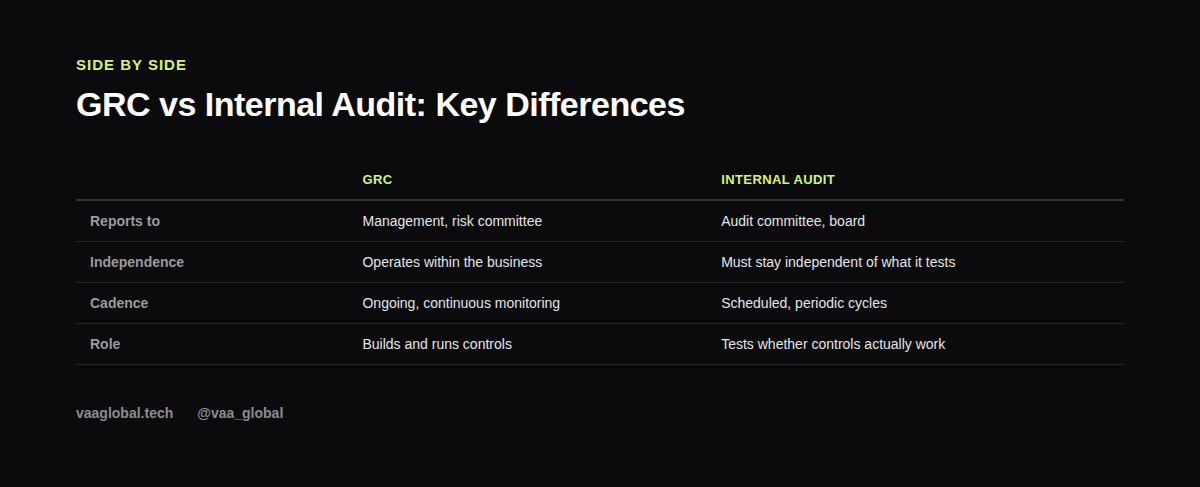
GRC vs internal audit is a confusing comparison for a lot of beginners because both fields talk about controls, risk and compliance constantly. The real difference comes down to independence and timing: GRC builds and continuously monitors controls from inside the business, while internal audit independently tests those same controls on a separate schedule, reporting to a different line of authority.
Why Internal Audit Independence Actually Matters
Internal audit independence is not a bureaucratic formality; it exists because a function cannot credibly grade its own homework. If the same team that designed a control also certified that the control works perfectly, there would be an obvious conflict of interest whenever something goes wrong. That is why internal audit typically reports to an audit committee or board rather than to the department whose controls it is testing, which keeps its findings honest even when they are uncomfortable for management to hear.
The GRC and Audit Relationship, Explained Through a Cycle
The GRC and audit relationship makes more sense when you walk through one control cycle. First, the GRC team designs a control to manage a specific risk, for example requiring manager approval before a large payment is released. Second, GRC monitors this control on an ongoing basis, checking samples of transactions regularly. Third, internal audit, working independently, periodically tests the same control using its own sampling and evidence, often at a different time and with different transactions than GRC reviewed. Finally, any gap either side finds loops back up to governance, where leadership decides how the issue gets fixed and by when.
Risk Based Auditing vs Continuous GRC Monitoring
Modern internal audit teams increasingly use risk based auditing, meaning they spend more time testing the controls tied to the highest-impact risks rather than reviewing everything equally. This overlaps with GRC's own risk register, since both functions are essentially asking which risks deserve the most attention, just on different timelines. A GRC team might monitor a high-risk control every month, while internal audit might formally test the same control once or twice a year as part of its own risk based audit plan.
Who Tests GRC Controls, and Why It Is Not the Same People
Who tests GRC controls, ultimately? Both GRC and internal audit test controls, but their purposes differ. GRC's testing is meant to catch and fix problems quickly as part of normal operations. Internal audit's testing is meant to give independent assurance to leadership and, in some industries, to external regulators, that the control environment as a whole can be trusted. This is why a healthy organization needs both layers rather than treating them as redundant.
Is Internal Audit the Same as GRC? A Direct Answer
Is internal audit the same as GRC? No, and treating them as interchangeable in an interview is a common beginner mistake that signals you have not studied the distinction carefully. GRC is embedded in day-to-day operations and often reports through risk or compliance leadership. Internal audit sits apart from daily operations specifically so it can report honestly without pressure from the teams it reviews. The Institute of Internal Auditors publishes detailed standards and guidance on this independence requirement, which is worth reading directly if you want the formal definition rather than a paraphrase.
Can a GRC Analyst Become an Internal Auditor?
Can a GRC analyst become an internal auditor, and does it make career sense? Yes, this move happens often, and the transferable skills are substantial: control testing experience, familiarity with risk registers, and comfort writing clear findings all translate directly. The adjustment is usually more about mindset than skill, since an auditor has to maintain strict independence and cannot help fix the issues they find the way a GRC analyst often can. If you are mapping out this kind of career progression, it is worth reading about the broader GRC career path from analyst to director, since audit experience is a common stop along the way.
How Audit Committee Reporting Changes the Incentives
Audit committee reporting is the structural feature that keeps internal audit honest. Because audit findings go to the board level rather than being filtered by the managers being reviewed, there is far less pressure to soften a bad finding. GRC teams, by contrast, usually report through management lines, which can create subtle pressure to present issues more favorably, even with good intentions. Understanding this dynamic is useful whether you are applying for a GRC role or an audit role, since it shapes how much editorial freedom you will actually have in your findings. If you are deciding between the two paths generally, our guide on the broader GRC analyst job description is a useful companion read, as is this piece on common resume mistakes remote job seekers make before applying to either.
The Bottom Line
GRC vs internal audit boils down to independence and timing rather than subject matter: both deal with controls and risk, but GRC builds and continuously monitors them from inside the business, while internal audit independently tests them on a separate schedule and reports to a different authority. Knowing this distinction clearly, and being able to explain it in your own words, is one of the fastest ways to sound credible in an interview for either path.