Understanding change management basics is essential for anyone working in GRC, because unmanaged change is one of the fastest ways a well-controlled environment quietly turns into a risky one. Change management is the structured process of reviewing, approving, and documenting changes to systems, infrastructure, or processes before they're put into effect, so changes don't introduce risk nobody saw coming.
What Is Change Management in GRC?
What is change management in GRC, specifically, compared to how IT might talk about it? In a GRC context, change management is less about the technical mechanics of making a change and more about the governance layer around it: who's allowed to approve what kind of change, what evidence proves the approval actually happened, and how changes get traced back to a documented decision if something later goes wrong. It's the control that makes sure changes happen deliberately, not accidentally or without anyone noticing.
Why GRC Teams Care About Change Management
From a pure risk standpoint, uncontrolled change is dangerous because it bypasses every other control built around the current state of a system. A firewall rule, an access permission, a piece of production code — all of these can be changed by someone with the right access, and if that change isn't reviewed first, it can quietly undo protections that took real effort to build. Auditors specifically test change management because it's a leading indicator: weak change controls tend to predict weak controls everywhere else too.
The Change Approval Workflow
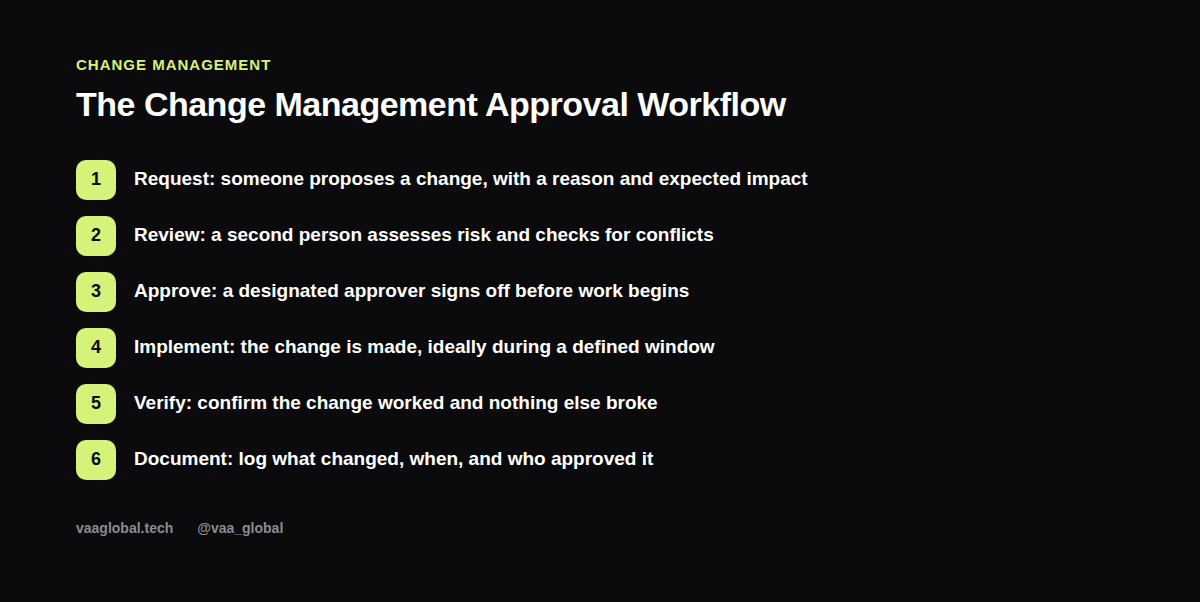
A solid change approval workflow has six stages. Request: someone proposes the change, with a clear reason and expected impact. Review: a second person — not the requester — assesses the risk and checks for conflicts with other planned work. Approve: a designated approver signs off before any work actually begins. Implement: the change gets made, ideally during a defined maintenance window for higher-risk changes. Verify: someone confirms the change worked as intended and didn't break anything else. Document: the whole thing gets logged — what changed, when, and who approved it — creating the audit trail that proves the process was actually followed.
Standard Change vs Emergency Change
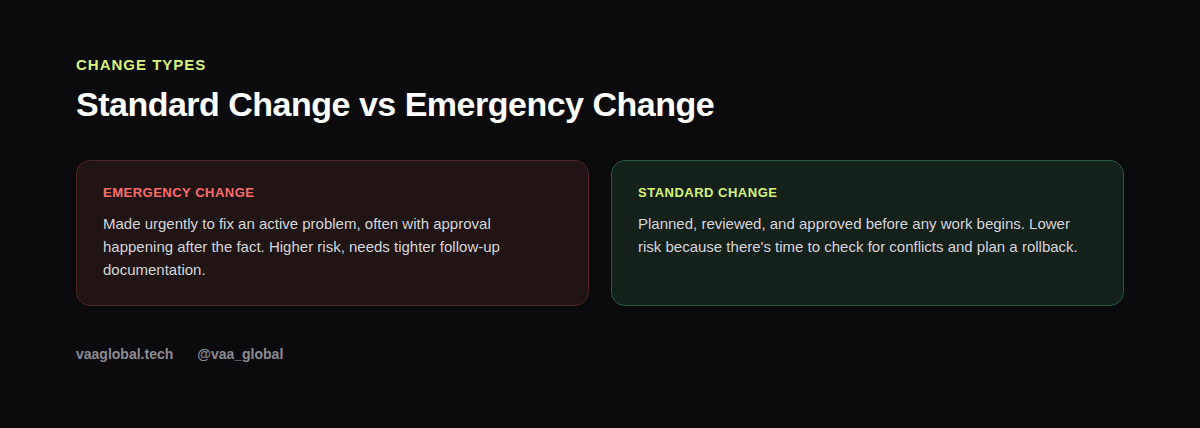
What is an emergency change, and how is it different? A standard change is planned, reviewed, and approved before any work begins, with time to check for conflicts and plan a rollback if something goes wrong. An emergency change happens urgently, usually to fix an active problem like an outage or active security issue, and approval sometimes has to happen after the fact out of genuine necessity. Emergency changes carry more risk precisely because the normal review safeguards get compressed or skipped, which is exactly why they need tighter follow-up documentation to compensate.
Who Approves a System Change?
Who approves a system change depends on its risk level and scope. Low-risk, routine changes might just need sign-off from a team lead. Higher-risk changes — anything touching production systems, customer data, or core infrastructure — often go through a change advisory board, a small group representing different stakeholders who collectively weigh the risk and timing before approving. The point of a broader approval group isn't bureaucracy for its own sake; it's catching conflicts or risks that one person alone might not know to look for.
A Worked Example: Reviewing a Risky Change
Say someone proposes disabling a security alert temporarily to reduce noise during a system migration. A good review would ask: what exactly does this alert normally catch, what's the actual risk of missing it during the migration window, is there a narrower fix (like adjusting the threshold instead of disabling it entirely), and what's the rollback plan if something goes wrong while the alert is off? If the review surfaces that the alert catches a genuinely critical issue, the right call might be to approve a narrower, time-boxed exception instead of a blanket disable — exactly the kind of judgment call good change management is built to surface before it becomes a problem.
Why Unmanaged Change Causes Audit Findings
Why does unmanaged change cause audit findings so reliably? Because an auditor sampling recent changes will ask for evidence of review and approval for each one, and any change made without that trail is an automatic finding, regardless of whether the change itself turned out fine. This connects directly to common GRC audit findings and how to fix them more broadly — missing documentation is one of the most frequent patterns auditors report, and change management is one of the easiest places for that gap to show up. The Institute of Internal Auditors publishes broader guidance on IT general controls, including change management, worth reading for a deeper dive.
Change Management as a GRC Career Skill
Change management overlaps heavily with access control reviews and incident response planning, since poorly managed change is a common root cause behind both access problems and security incidents. If you're building toward an IT governance or GRC role, VAA Global's Operations Management course covers process design and improvement principles that overlap meaningfully with how change management workflows get structured, even though it isn't GRC-specific. The documentation habits covered in how to write a GRC policy document also apply directly here, since a change management policy follows the same structure as any other GRC policy. It also pairs well with access control review basics, since the two controls are often tested together during an audit.
The Bottom Line
Change management basics come down to one principle: nothing meaningful should change without someone reviewing it first and a record proving that review happened. Build the request-review-approve-implement-verify-document workflow into daily habits, treat emergency changes as the exception that needs extra follow-up, not the norm, and change management stops being a source of audit findings and starts being one of your strongest controls.