Figuring out the best GRC certifications for beginners can feel overwhelming fast, mostly because almost every credential in this space assumes you already have some professional experience. That's genuinely frustrating when you're trying to break in from the outside. This guide walks through the major certifications, what they actually require, and a realistic order of operations if you're starting from zero.
Why 'Beginner Certification' Is a Bit of a Myth in GRC
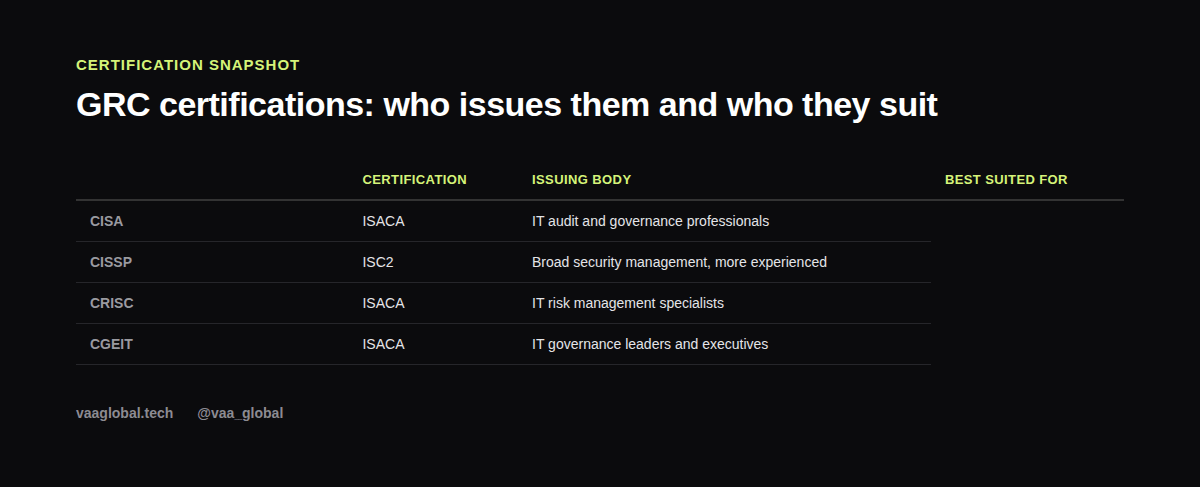
Here's the uncomfortable truth: most recognized GRC certifications are not designed for people with zero work experience. CISA (from ISACA) focuses on IT audit and governance and generally expects candidates to be working toward or already have relevant experience. CISSP (from ISC2) is a broad security-management credential that similarly expects professional background before you can hold the full certification. CRISC, covered in more detail in our CRISC certification explained article, leans specifically toward IT risk work. None of these were built as day-one, no-experience entry points — which means asking which GRC certification is easiest for beginners is slightly the wrong question.
CISA: Best If You're Drawn to Audit
CISA (Certified Information Systems Auditor) is aimed at people who gravitate toward the audit and governance side of GRC — checking that systems and processes actually do what they're supposed to, and that controls hold up under scrutiny. If you enjoy detail-oriented, process-driven work, this is worth researching further directly on isaca.org.
CISSP: Best If You Want Broad Security Management
CISSP, administered by ISC2, covers a wider swath of security management rather than focusing narrowly on one of governance, risk, or compliance. It tends to suit people who already have meaningful security experience and want a broad, well-recognized credential that signals seniority across multiple domains.
CRISC: Best If Risk Specifically Excites You
If identifying and managing risk is the part of this work that actually interests you — more than auditing or broad security management — CRISC is the more targeted option. It's an entry-level GRC certification only in the sense that it's often someone's first ISACA credential, not in the sense that it requires no background.
What to Do Before You Pay for Any Exam
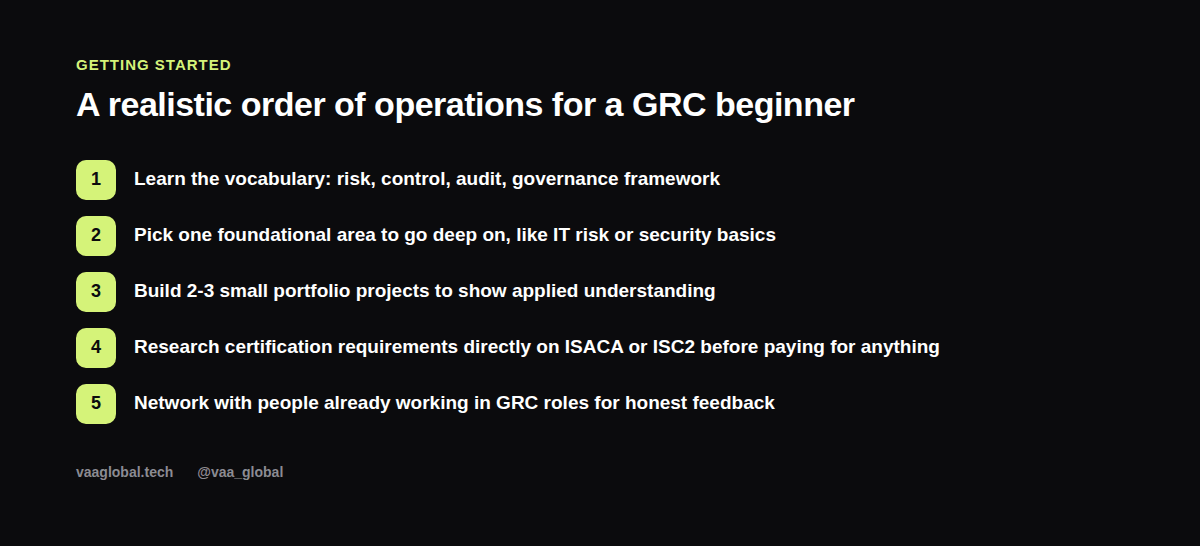
Before you spend money on a certification, spend time first. Learn the core vocabulary — risk appetite, control testing, governance frameworks, audit trails — through free resources, books, and ISACA/ISC2's own study materials; plenty of free primers aimed at ISACA certifications for beginners exist on both bodies' sites. Build a small portfolio (our guide on building a GRC portfolio with no experience walks through concrete project ideas) so you have something real to point to. Do I need a certification to work in GRC at the very entry level? Often not immediately — many people land their first GRC-adjacent role (like a junior compliance analyst or audit support position) based on relevant transferable skills and a strong portfolio, then pursue certification once they're already working in the field and ISACA's or ISC2's experience requirements are within reach.
Consider Adjacent Experience First
If you're coming from a completely unrelated background, consider building foundational technical skills before jumping straight to certification shopping. VAA Global's Cybersecurity course covers vulnerability management, incident response, and web application security — all areas that overlap meaningfully with GRC risk and control work — and can give you enough hands-on grounding to make later certification study far less abstract. Similarly, a business analysis background transfers well into governance and process-control work, since both rely on structured requirements thinking.
How to Choose Between Them
How to choose a GRC certification really comes down to answering one question honestly: which part of the work do you enjoy more — auditing and verifying (CISA), broad security leadership (CISSP), or identifying and managing risk (CRISC)? Pick based on genuine interest and your existing or planned work experience, not just which one sounds more impressive on LinkedIn.
A Sensible Sequence for True Beginners
If you're starting with nothing, a sensible sequence looks like: build foundational knowledge, land some kind of relevant entry-level or adjacent role, build 2-3 portfolio projects, then pursue the certification that matches the work you're actually doing. This order avoids the common mistake of chasing the certification first and the relevant experience second, which often leaves people with a credential they technically can't even use yet because the experience requirements aren't met.
So What GRC Certification Should I Get First?
If you push past all the caveats and want one practical governance risk and compliance credentials answer: most people's realistic first ISACA certification ends up being CISA or CRISC, chosen based on whether they lean toward audit or risk, and pursued only after they've already landed some adjacent work experience. Think of this whole decision less as picking a GRC career starting point in isolation and more as picking a destination for a journey you're already partway through. The certification should follow your work, not substitute for it.
The Bottom Line
There's no single best GRC certifications for beginners pick that works for everyone, because the honest starting point for most people isn't a certification at all — it's foundational knowledge and real project work. Once you know which lane of governance, risk, or compliance genuinely interests you, research the current requirements directly on isaca.org or isc2.org, and choose the credential that matches both your interest and your actual experience level.