If you want to become a GRC analyst in Nigeria, the good news is that the field already has real local demand, especially in banking, fintech and NGOs, on top of a growing number of fully remote roles with international companies. The path is similar to GRC entry routes anywhere else in the world, but a few local realities are worth planning around specifically.
Why Nigeria Has Real GRC Demand
GRC jobs in Nigeria exist mostly because of heavy regulatory requirements in banking and finance, growing data protection enforcement under the NDPR, and an expanding fintech sector that regulators watch closely. Compliance jobs Nigeria postings often sit inside banks, microfinance institutions, insurance companies and fintech startups, all of which need people who can translate regulation into day-to-day practice. This demand has been fairly steady even through broader hiring slowdowns, because regulatory obligations do not disappear when a company tightens its budget.
Start With Local Regulatory Literacy
Before chasing international certifications, build a working understanding of Nigerian regulatory bodies relevant to your target industry, such as the Central Bank of Nigeria for banking-related compliance or the Nigeria Data Protection Commission for NDPR-related work. Being able to explain, in an interview, how a specific NDPR requirement affects a company's data handling process is a strong signal that you have done real homework rather than just memorizing international frameworks that may not map directly to Nigerian regulation.
Which Companies in Nigeria Hire GRC Analysts
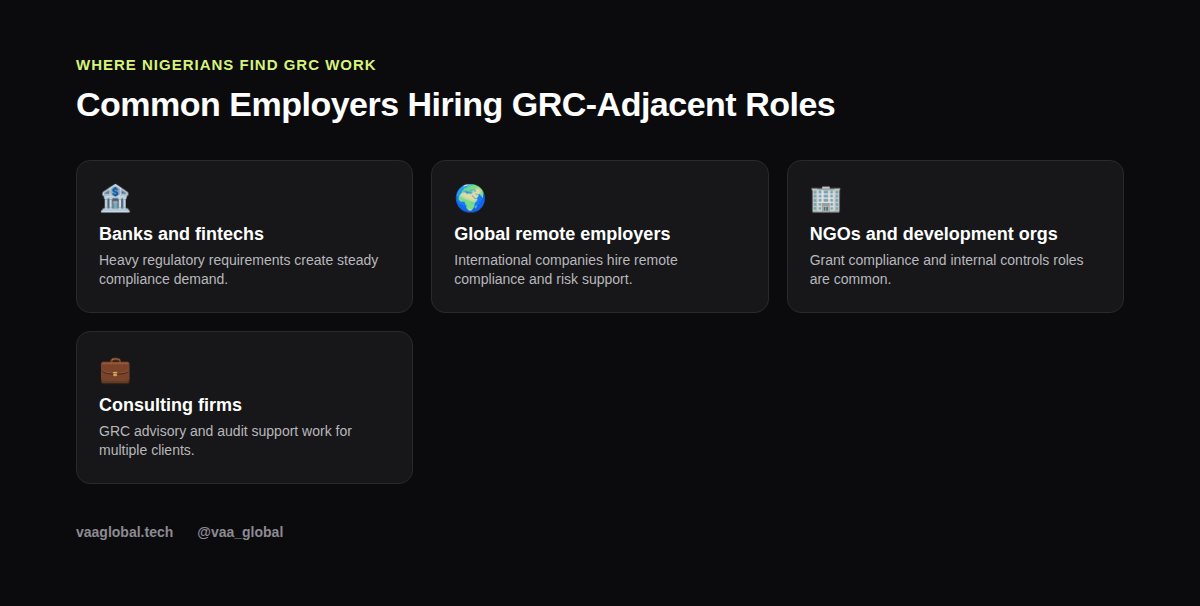
Which companies in Nigeria hire GRC analysts most actively? Nigerian banks compliance careers are a reliable starting point, since every licensed bank needs a compliance function by regulation. Fintech companies, especially those handling payments or lending, hire GRC-adjacent roles like risk analyst or compliance officer at a surprisingly early stage for their size. NGOs and development organizations operating in Nigeria also hire for grant compliance and internal controls roles, which rarely show up when searching purely for the title “GRC Analyst” but involve nearly identical work.
Remote GRC Roles for Nigerians Working Internationally
Remote GRC roles for Nigerians with international companies have become genuinely viable in the last few years, particularly for roles that are documentation-heavy and do not require being physically on-site. The main things international employers screen for are clear written English, reliable internet and power for calls, and familiarity with globally recognized frameworks rather than only local regulation. If your target is this kind of remote role, it helps to study how other Nigerians have approached high-paying remote jobs from Nigeria and how they structured their applications to stand out internationally.
Which GRC Certifications Are Worth Pursuing From Nigeria
GRC certification Nigeria options are mostly the same internationally recognized ones available anywhere, delivered online. A foundational ISO 27001 or risk management certificate is a reasonable first step, since these are widely recognized by both local and international employers. ISACA, a global professional association for governance and risk professionals, publishes detailed certification pathways and requirements directly on its site, which is worth checking before paying for any course that claims to prepare you for a specific credential.
Dealing With Local Infrastructure Realities
Power outages and inconsistent internet are genuine obstacles for remote GRC work, since much of the job involves video calls with stakeholders and uninterrupted access to shared systems. Investing early in backup power and a reliable internet connection is not optional if you are targeting international remote employers, who will notice repeated dropped calls quickly. Planning around this honestly, rather than hoping it will not be an issue, saves a lot of awkward conversations later.
Building the Right Resume for a Nigerian GRC Application
Your resume should lead with concrete, specific language rather than generic claims. A strong bullet point looks like “reviewed vendor onboarding files against NDPR data processing requirements and flagged three documentation gaps” rather than “ensured compliance.” If you are unsure how to structure this kind of document, our guide on writing a cybersecurity resume with no experience uses the same specific, evidence-based approach that works well for GRC applications too, and our piece on common resume mistakes remote job seekers make is worth checking before you submit anything.
A Realistic Starting Checklist
If you are asking how do I start a GRC career in Nigeria right now, use a simple checklist. Which companies in Nigeria hire GRC analysts in your city or sector, and have you actually listed five of them by name yet. Can Nigerians get remote GRC jobs abroad in your specific niche, and have you looked at three real international job postings to see what they ask for. What certifications are recognized in Nigeria for GRC, and have you picked exactly one to finish in the next ninety days instead of browsing endlessly. Answering these four questions concretely, on paper, turns a vague ambition into an actual plan you can act on this month.
The Bottom Line
To become a GRC analyst in Nigeria, combine local regulatory literacy with one recognized international certification, apply to both Nigerian banks or fintechs and remote-friendly global employers, and make sure your infrastructure and documentation skills can support international remote work if that is your target. The field is growing locally and globally at the same time, which puts Nigerians who prepare properly in a genuinely strong position.