A day in the life of a remote GRC analyst looks less dramatic than the job title might suggest, and that's actually a good thing — it's steady, detail-oriented work rather than constant crisis management. If you're wondering what does a GRC analyst do once you strip away the buzzwords, this is a realistic walk-through of a fairly ordinary day.
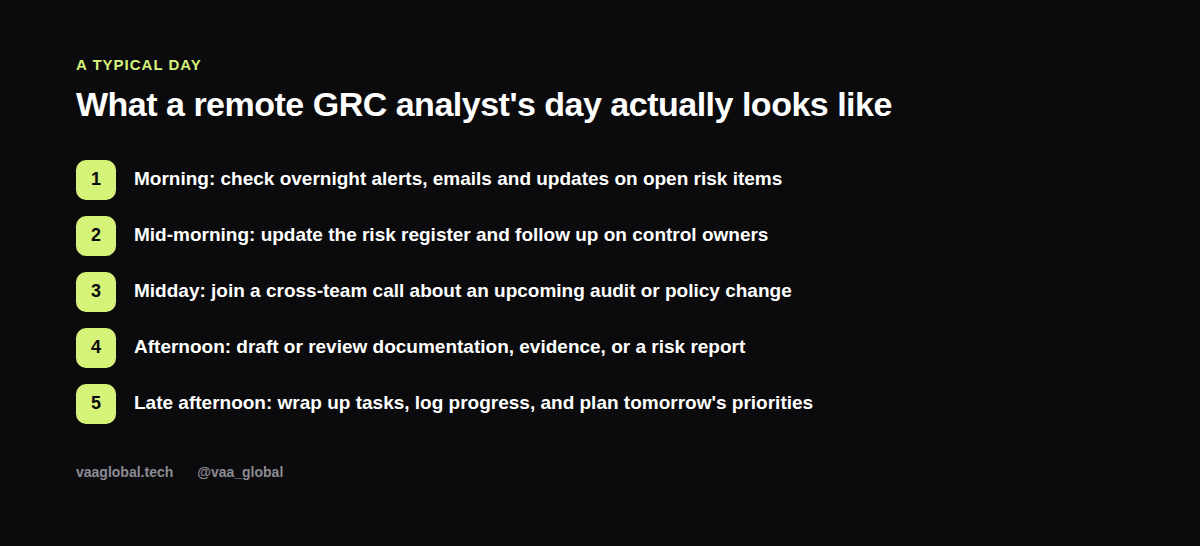
Morning: Checking What Happened Overnight
The day usually starts with email and any overnight alerts or updates — a control owner flagging they missed a deadline, a new regulatory bulletin worth reading, or a question from a colleague in a different time zone. For a remote GRC analyst job spanning multiple regions, this first 30-45 minutes is about triage: what actually needs attention today versus what can wait.
Mid-Morning: The Risk Register Is Never 'Done'
A meaningful chunk of GRC analyst daily tasks involves the risk register — not a one-time document but a living tracker that needs regular updates. Has a risk's likelihood changed? Did a control owner complete their remediation task? This part of the job is genuinely administrative, and being comfortable with repetitive, detail-heavy tracking work matters more here than people expect going in.
Midday: Cross-Team Meetings
How many meetings does a GRC analyst have varies a lot by organization and seniority, but a mid-level analyst might have one to three meetings most days: a sync with a control owner about a stalled remediation item, a planning call ahead of an upcoming audit, or a policy review session with legal or IT. These meetings tend to be focused and relatively short rather than sprawling, because GRC work usually has clear, specific items to resolve.
Afternoon: Documentation and Writing
A surprising amount of the job is writing: drafting or reviewing policy updates, summarizing a risk finding for a non-technical stakeholder, or organizing audit evidence into something a reviewer can actually follow. Clear writing is an underrated GRC skill, and plenty of analysts spend as much time wordsmithing a report as they spend analyzing the underlying risk itself.
What Tools Does a Remote GRC Analyst Use Daily?
What tools does a remote GRC analyst use daily depends on the employer, but a common stack includes a spreadsheet or dedicated GRC platform for the risk register, a shared document or wiki tool for policies, a messaging platform like Slack or Teams for cross-team collaboration, and video calls for anything that needs real discussion rather than async back-and-forth. Our guide on GRC tools every beginner should learn covers this landscape in more depth.
Is Remote GRC Analyst Work Boring?
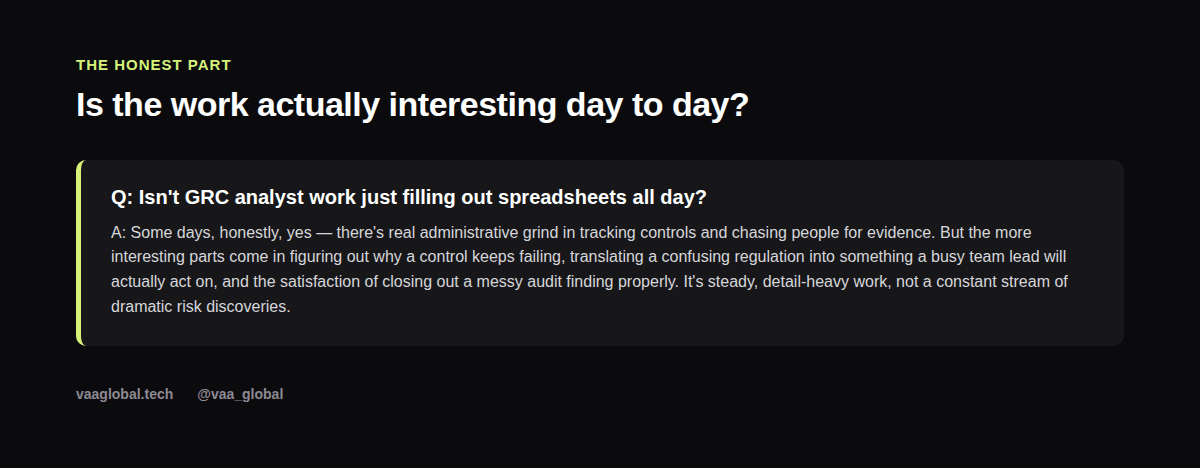
Is remote GRC analyst work boring, compared to the way the field sometimes gets portrayed? Some days, genuinely, yes — there's real repetition in chasing documentation and updating trackers. But the more satisfying parts come from solving a specific puzzle: why does this control keep failing, how do you get a reluctant team to actually fix something, how do you explain a confusing regulatory requirement simply enough that people act on it. It rewards patience and clear communication more than constant excitement.
The Remote Part Specifically
Working remotely in this role mostly means the meetings happen over video instead of in a conference room, and documentation becomes even more important, since you can't just walk over and ask a quick question. Our broader piece on a day in the life of a remote business analyst covers similar async-collaboration dynamics that apply here too, and our guide to building a daily routine for remote work is useful for anyone newly adjusting to this structure.
Where Certifications Fit Into the Daily Work
Interestingly, the day-to-day work doesn't change much whether or not an analyst holds a certification like CISA or CRISC from ISACA. Certifications tend to shape the depth and seniority of the work you're trusted with over time, rather than the basic shape of a typical day, which stays fairly consistent across junior and mid-level roles. Consequently, someone earlier in their career shouldn't expect the daily routine to look dramatically different once they're certified; it's the scope and responsibility that shift, not the rhythm.
End of Day: Closing the Loop
Most days end with a short wrap-up: logging what got done, flagging anything that needs follow-up tomorrow, and sometimes a quick written update for a manager or stakeholder who's in a different time zone and won't be online until your evening. It's a small habit, but it keeps the risk register and audit trail honest over time rather than letting things quietly slip.
The Bottom Line
A realistic day in the life of a remote GRC analyst is steadier and more document-heavy than the job title might suggest from the outside — less crisis management, more careful tracking, writing, and follow-up. If that kind of methodical, detail-oriented rhythm appeals to you more than constant urgency, this is a career path worth taking seriously, and the remote version of it offers the same flexibility most remote careers do, just applied to work that happens to be about managing organizational risk.