
Building corporate branding portfolio projects for beginners is the fastest way to prove you can actually do brand strategy work, not just talk about it. Branding roles are competitive, and most hiring managers want to see applied thinking before they trust someone with a real brand. Fortunately, you don't need a paying client to build a convincing portfolio; you need a handful of well-reasoned, well-presented projects based on real or realistic brands.
Why Branding Portfolios Matter So Much in This Field
Branding is a visual and strategic discipline at once, which means a resume alone can't prove you're good at it. Employers and clients want to see the actual thinking behind a decision: why this color, why this tone of voice, why this positioning. A portfolio answers those questions before anyone asks them out loud, which is exactly why candidates with even a small, thoughtful portfolio tend to stand out from those with none.
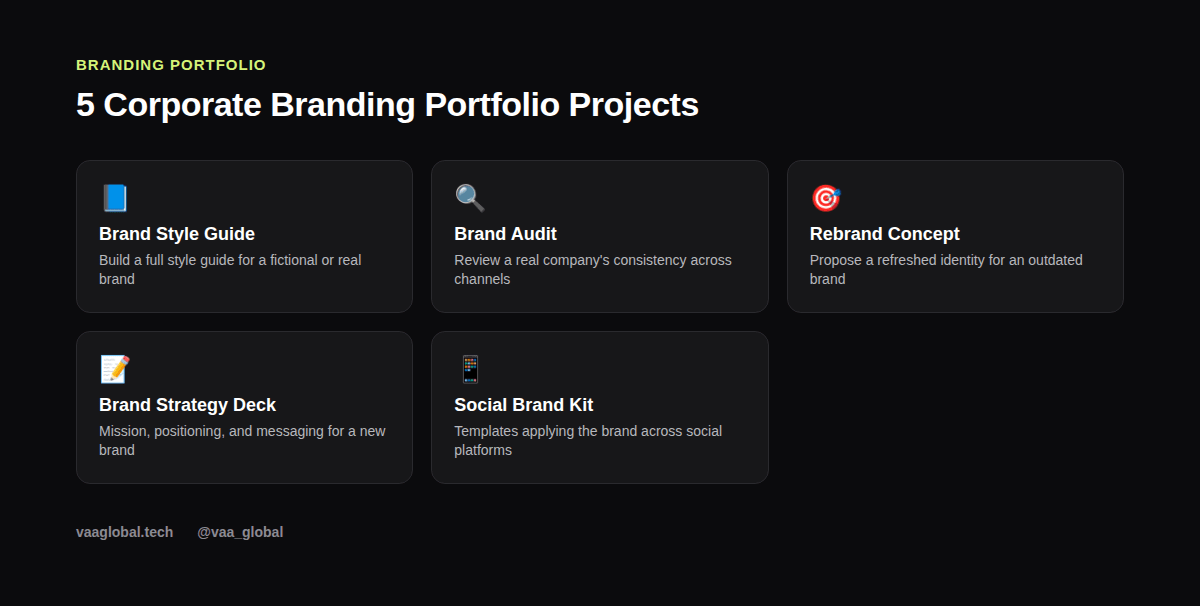
Project 1: A Full Brand Style Guide
Pick a fictional brand or a real small business and build a complete style guide: mission and personality, logo rules, color palette with hex codes, typography, tone of voice, and imagery style. This is the single most useful project you can build, because it touches nearly every core branding skill at once. Our detailed walkthrough on how to build a brand style guide from scratch covers exactly what to include in each section.
Project 2: A Brand Audit of a Real Company
Choose a real company and review how consistently its brand shows up across channels — website, social media, packaging, and advertising. Note any inconsistencies in color, tone, or messaging, and summarize your findings in a short report. This project demonstrates sharp observational skills, which matter just as much as creative ones in branding work.
Project 3: A Rebrand Concept
Find a brand that feels outdated or inconsistent and propose a refreshed identity. Explain what's not working with the current brand, what you'd change, and why, then sketch out (even roughly) what the new direction might look like. For context on how real rebrands go wrong, our article on common rebranding mistakes companies make is a useful reference point before you start.
Project 4: A Brand Strategy Deck
Build a short slide deck covering a brand's mission, target audience, positioning statement, competitive differentiation, and key messaging pillars. This is the strategic layer that sits underneath every visual decision, so showing you can think this way — before any design happens — proves you understand branding beyond just aesthetics. Our piece on corporate branding vs marketing helps clarify exactly where strategy work like this fits.
Project 5: A Social Media Brand Kit
Apply a brand's identity (real or fictional) across a few social media templates: a post, a story, and a profile banner. This shows you can translate strategy and style guide rules into real, usable assets, which is often the day-to-day output expected in junior branding roles.
How to Present These Projects Convincingly
Don't just show the final visuals; explain your thinking. A one-paragraph summary above each project — what the brand needed, what you decided, and why — turns a pretty deliverable into a credible case study. If you're preparing to talk about these projects in interviews, our guide on corporate branding skills that employers actually want explains what interviewers are really listening for.
How Many Projects Do You Need Before Applying?
Two or three strong projects beat five rushed ones. Start with the brand style guide and the brand audit, since those two demonstrate both creative and analytical skills, then add the others as time allows.
Branding Portfolio Ideas You Can Add Later
If you want more branding portfolio ideas once the core five are done, consider a competitor comparison grid, a brand voice workbook, or a packaging concept for a product brand. Each one builds on skills you've already practiced, so they're relatively quick additions. For example, a brand audit project naturally leads into a rebrand concept example, since the audit surfaces exactly what needs fixing. Similarly, a brand strategy deck pairs well with a style guide, because strategy should always come before visual execution, not after.
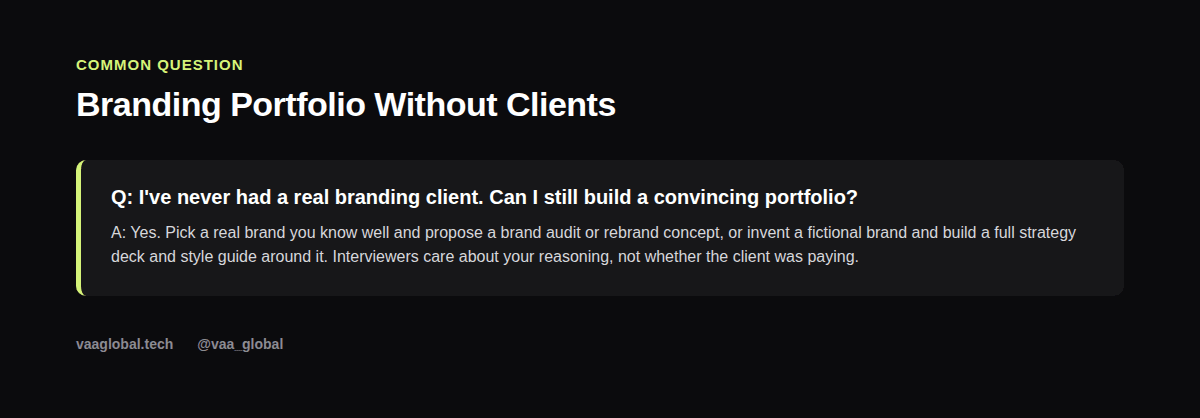
How Do I Build a Branding Portfolio With No Clients, Realistically?
Many beginners wonder how do I build a branding portfolio with no clients and still have it look credible. The answer is simpler than it seems: treat your fictional or unpaid project exactly as you would a paid one. Research the market, write a real brief for yourself, and document your decisions as though a client will ask you to justify them, because eventually one will. As for what should a corporate branding portfolio include beyond the basics, aim for a mix of strategic thinking and visual execution, since most entry-level roles need both. Finally, if you're still asking how many branding projects do I need, remember that depth beats volume; one excellent, well-documented project outperforms three shallow ones every time.
Mistakes to Avoid
Avoid picking an overly ambitious global brand for your rebrand concept just to sound impressive; a thoughtful rebrand of a small, real local business often reads as more credible. Also avoid skipping the strategic reasoning behind visual choices, since that reasoning is exactly what separates a junior-looking portfolio from one that reads as genuinely strategic.
The Bottom Line
Corporate branding portfolio projects for beginners turn abstract knowledge into something real and reviewable, and they are often the deciding factor when competing against other entry-level candidates. Start with a style guide and a brand audit, explain your reasoning at every step, and present the work cleanly. If you want structured guidance while building these skills, our 10-week Corporate Branding and Strategy course covers brand fundamentals, brand strategy, brand identity, brand research, brand communication, digital brand management, and rebranding. For the career path beyond the portfolio, see how to become a freelance brand strategist, and the American Association of Advertising Agencies publishes useful industry perspective on brand strategy standards.