Common rebranding mistakes companies make tend to repeat themselves across industries, and almost all of them trace back to the same root cause: rushing visuals before fixing strategy. A rebrand sounds exciting, but it's actually one of the riskiest moves a company can make, because it touches customer trust, employee morale, and years of accumulated brand equity all at once. Understanding where rebrands typically go wrong helps you, as a future brand strategist, avoid repeating the same errors.
Why Rebrands Fail More Often Than People Expect
A rebrand is not just a visual refresh; it's a public statement that something about the company is changing. When that statement isn't backed by a real strategic reason, customers notice, even if they can't articulate exactly why the new look feels off. Because so much is riding on a successful launch, companies often rush the process under pressure from leadership wanting visible change quickly, which is exactly when mistakes creep in.
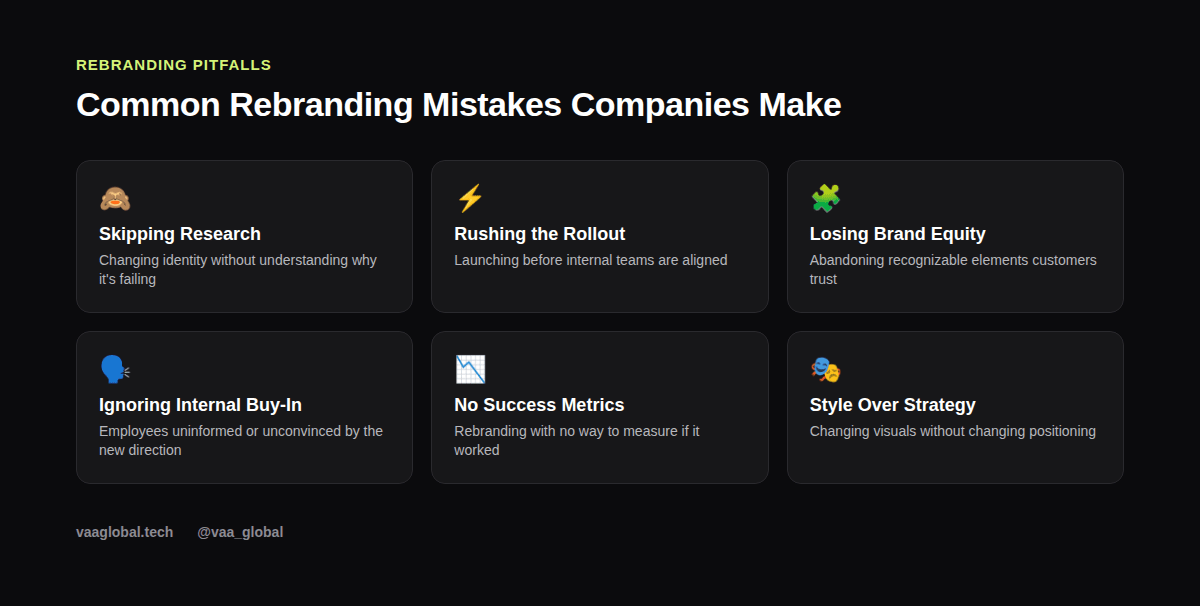
Mistake 1: Skipping Research Into Why the Brand Is Failing
Many companies jump to redesigning before diagnosing the actual problem. If customers are leaving because of poor service or an outdated product, a new logo won't fix that; it just delays the real conversation. A proper brand audit, interviewing customers and reviewing how the brand shows up across channels, should always come before any visual decisions.
Mistake 2: Rushing the Rollout Before Internal Alignment
Launching a new identity externally before employees understand and believe in it is a common and costly error. Staff end up representing the brand inconsistently, sometimes defending the old identity out of habit, which confuses customers during the exact window when consistency matters most. Internal training and communication should happen well before the public launch, not alongside it.
Mistake 3: Abandoning Recognizable Brand Equity
Some companies change so much at once — logo, colors, name, tone — that loyal customers no longer recognize the brand. This "equity" built over years doesn't transfer automatically to a new look. A safer approach keeps at least one familiar anchor (a color, a symbol, a tagline) so existing customers have something to hold onto during the transition.
Mistake 4: Ignoring Internal Buy-In
Employees are the brand's first audience, and if they don't believe in or understand the new direction, that disconnect shows up in customer interactions. Companies sometimes treat internal communication as an afterthought, announcing a rebrand company-wide the same week it launches publicly. Giving employees time to ask questions and understand the "why" behind the change reduces this risk significantly.
Mistake 5: Launching With No Success Metrics
It's surprisingly common for a company to invest heavily in a rebrand without defining what success actually looks like. Without metrics — brand awareness surveys, customer sentiment tracking, sales impact — there's no way to know if the rebrand worked or to justify the investment afterward. Setting these benchmarks before launch, not after, keeps the project accountable.
Mistake 6: Changing Visuals Without Changing Strategy
A new logo or color palette means little if the company's positioning, messaging, and customer experience stay exactly the same. Customers eventually notice when a shiny new look doesn't match the substance underneath. The strongest rebrands pair visual change with a genuine shift in strategy, whether that's a new target audience, a repositioned value proposition, or an improved product experience. Our article on corporate branding vs marketing explains why this strategic layer is so often underestimated.
Why Do Company Rebrands Fail So Often, Really?
If you're asking why do company rebrands fail so often, the pattern usually comes down to sequencing. Companies tend to treat rebranding without research as a shortcut, assuming a new look alone will fix declining relevance. However, strategy mistakes compound: internal brand alignment gets skipped, brand equity loss goes unnoticed until sales dip, and nobody connects the two. As a result, the public blames "the new logo" when the real issue was rebranding strategy mistakes made months earlier, long before launch day. So, if you're wondering how do I avoid rebranding mistakes in your own work, the honest answer is patience: diagnose first, align internally second, and only then touch the visuals. Likewise, what should happen before a company rebrands is rarely glamorous — research, interviews, and alignment meetings — but skipping these steps is exactly what causes expensive, public failures later.
How to Approach a Rebrand More Safely
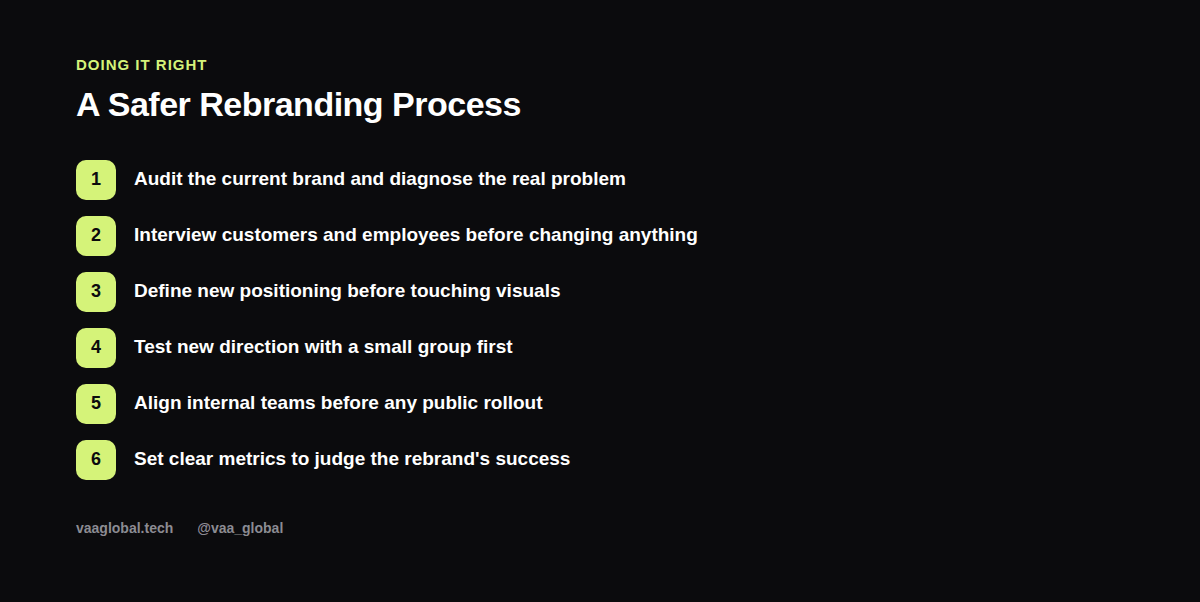
A safer process starts with a full brand audit, moves to customer and employee interviews, defines new positioning before any visuals change, tests the new direction with a small group first, aligns internal teams before public rollout, and sets clear metrics upfront. Practicing this sequence on a portfolio project is a great way to internalize it before working on a real one; our guide on corporate branding portfolio projects for beginners includes a rebrand concept exercise structured exactly this way.
What This Means If You're Building a Career in Branding
Understanding these failure patterns is genuinely valuable career knowledge, not just theory. Clients and employers want strategists who can spot a shaky rebrand plan before it launches, not after it's already damaged trust. If you want to build this instinct systematically, our guide on how to build a brand style guide from scratch covers the groundwork every rebrand should be built on.
The Bottom Line
Common rebranding mistakes companies make almost always come down to moving on visuals before strategy, and rushing a launch before the people inside and outside the company are ready for it. A careful, research-first process protects both brand equity and customer trust. If you want structured training in exactly this kind of strategic thinking, our 10-week Corporate Branding and Strategy course covers brand fundamentals, brand strategy, brand identity, brand research, brand communication, digital brand management, and rebranding specifically. The American Marketing Association also publishes useful research on brand positioning if you want to go deeper on the strategic side.