Learning how to become a freelance brand strategist is a realistic path even if you've never worked at an agency, because the skill itself — helping a business define and communicate who it is — is something you can practice and prove independently. Freelance brand strategy work has grown alongside the rise of small businesses and solo founders who need branding help but can't afford a full agency retainer. If you're methodical about building skills and proof of work, this is a genuinely achievable career path.
What a Freelance Brand Strategist Actually Does
A brand strategist helps a business clarify its mission, audience, positioning, and messaging, then often extends into visual identity decisions like style guides. Unlike a graphic designer, the work is less about making things look good and more about figuring out what the brand should say and why, before anything gets designed. Freelance clients are usually small businesses, startups, or solo founders who need this thinking but don't have an in-house marketing team.
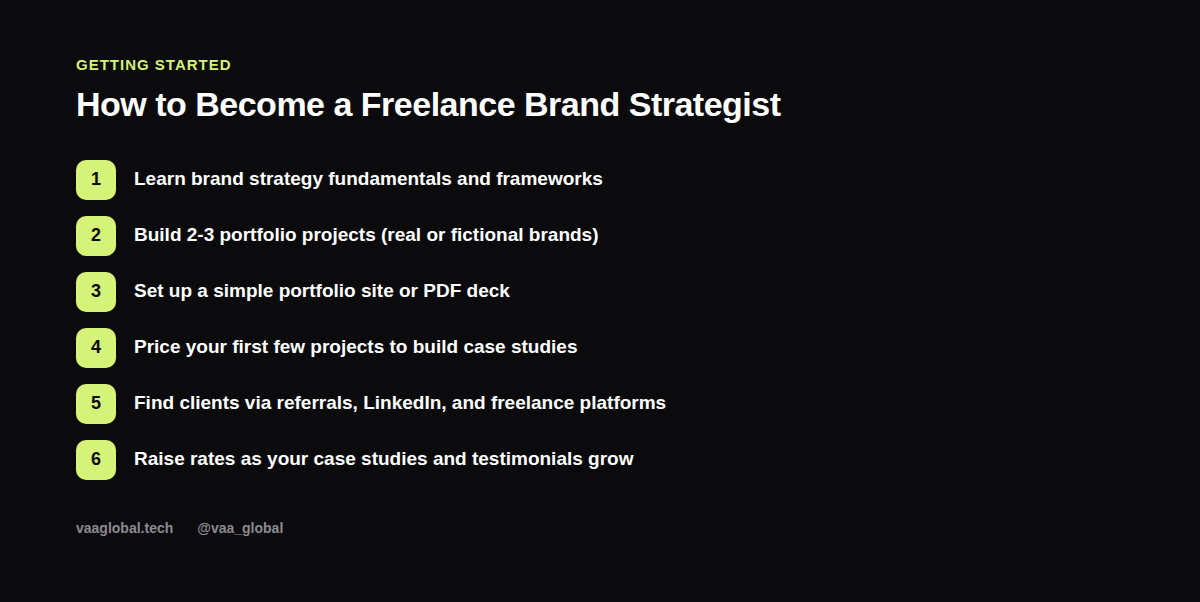
Step 1: Learn the Core Strategy Frameworks
Before taking on clients, make sure you genuinely understand the fundamentals: brand positioning, target audience definition, competitive differentiation, and messaging frameworks. Our article on what is corporate branding and strategy is a solid starting point if you're still building this foundation.
Step 2: Build Two or Three Portfolio Projects
Since most beginners don't have paying clients yet, build portfolio projects using fictional brands or real businesses you're not formally working for. A full brand style guide and a brand audit are two of the most convincing projects to start with. Our guide on corporate branding portfolio projects for beginners walks through exactly what to build and how to present it.
Step 3: Set Up a Simple Way to Showcase Your Work
You don't need an elaborate website to start. A clean PDF deck or a simple one-page site showing two or three projects, each with a short explanation of your reasoning, is enough to start pitching clients. Keep it focused rather than trying to show everything you've ever made.
Step 4: Price Your First Projects to Build Case Studies
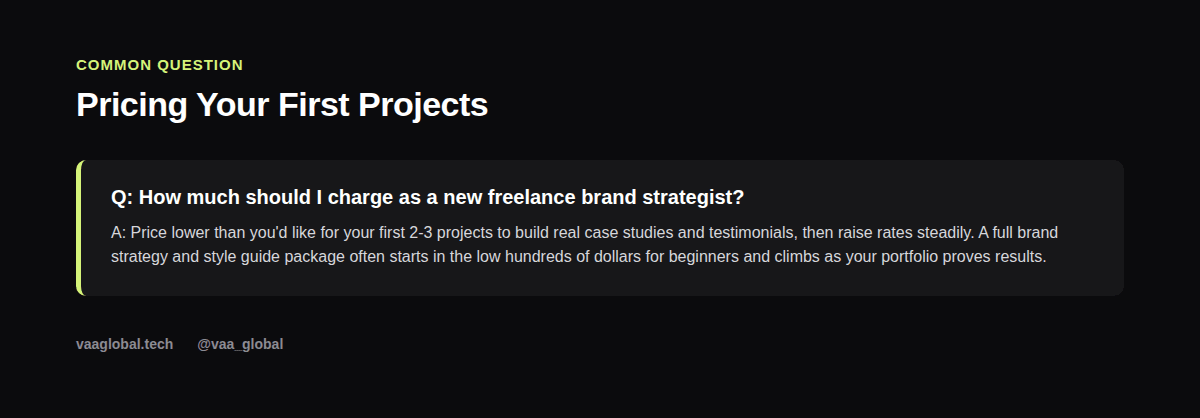
Your first few clients matter more for the case study and testimonial they generate than for the income itself. Price modestly, but not so low that clients don't take the engagement seriously, and always ask for a testimonial and permission to showcase the work once it's done. This is how your rates climb over time: real proof, not just claims.
Step 5: Find Clients Through Referrals and Platforms
Freelance brand strategy clients come from a mix of sources: word-of-mouth referrals, LinkedIn outreach to small business owners, and general freelance platforms. Our guide on what is freelancing on Upwork and how do you get started covers one of the more common entry points, even though it's written generally rather than branding-specific.
Step 6: Raise Your Rates as Proof Accumulates
Once you have two or three strong case studies with real results or testimonials, raise your rates. Many freelancers undercharge for far too long out of fear of losing clients, but a portfolio with genuine proof of impact justifies higher pricing, and clients who value strategic thinking will pay for it.
Skills That Make You More Hireable as a Freelancer
Beyond strategy fundamentals, strong freelance brand strategists are good communicators, comfortable presenting ideas to non-marketing business owners, and disciplined about managing their own projects and deadlines without a manager checking in. Our article on corporate branding skills employers actually want covers many of the same skills clients look for, even outside a freelance context.
Common Mistakes New Freelance Strategists Make
New freelancers often undercharge indefinitely, take on clients outside their actual skill level, or skip written contracts entirely. Our guide on what should be in every freelance contract is worth reading before your first paid engagement, since a clear contract protects you from scope creep and payment disputes.
Questions Beginners Ask Before Going Freelance
People new to this path often ask how much should a freelance brand strategist charge when starting out, and the honest answer is: less than you'd like, at first, in exchange for a real testimonial and case study. Another common question is how do I find my first branding client — most beginners land their first project through an existing personal connection rather than a cold platform search, so don't underestimate your own network. Finally, many people ask do I need a degree to be a brand strategist, and the answer is no; clients evaluate your portfolio and your ability to explain your thinking clearly, not your academic credentials.
The Bottom Line
How to become a freelance brand strategist comes down to building real skills, proving them through genuine portfolio work, and being patient about pricing while your case studies accumulate. It's a career that rewards strategic thinking and clear communication more than flashy design skills alone. If you want structured training before you start pitching clients, our 10-week Corporate Branding and Strategy course covers brand fundamentals, brand strategy, brand identity, brand research, brand communication, digital brand management, and rebranding. The U.S. Small Business Administration also offers useful free resources on how small businesses think about branding and marketing budgets, which is helpful context for pricing your services realistically.