An on-page SEO checklist is the fastest way to make sure a piece of content actually has a fair chance of ranking on Google, instead of guessing at what search engines want. On-page SEO refers to everything you control directly on the page itself, as opposed to off-page factors like backlinks from other sites. This checklist walks through the elements that matter most, in the order you should actually tackle them, and works as a solid SEO for beginners reference you can return to on every new post.
What Is On-Page SEO and Why Does It Matter?
What is on-page SEO and why does it matter comes down to this: search engines like Google scan the words, structure, and code of your page to understand what it is about and whether it deserves to rank for a given search. Good on-page SEO makes that job easy for the search engine, while poor structure can bury genuinely useful content simply because it is hard to interpret. As a result, on-page SEO is one of the few ranking factors entirely within your control.
1. Put Your Focus Keyword in the Title and Opening
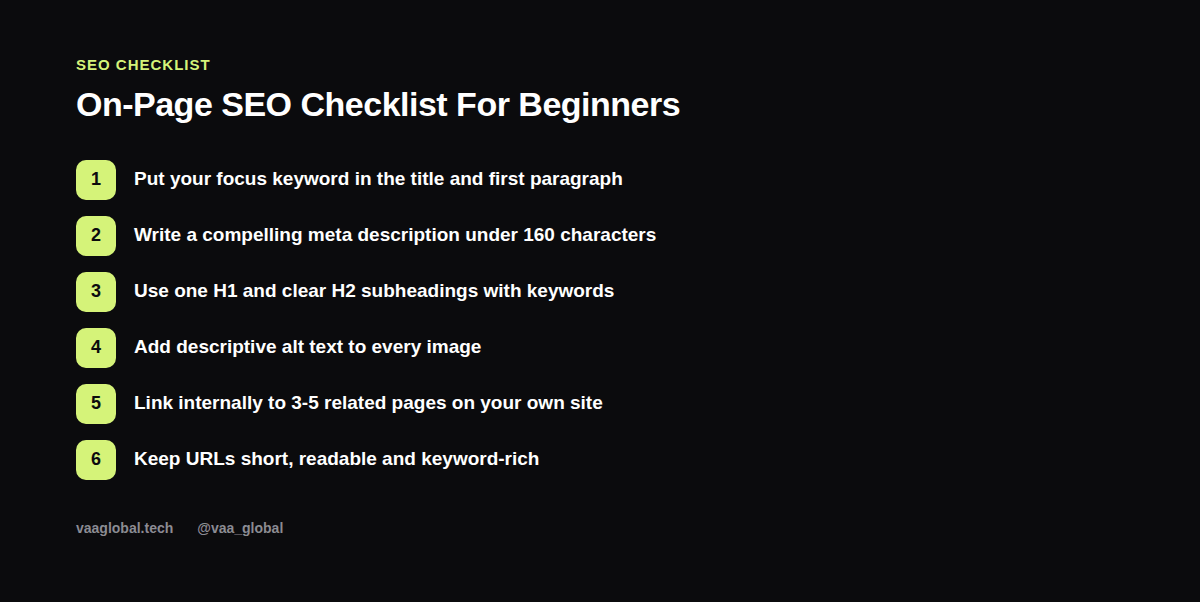
Correct keyword placement is the single highest-leverage habit on this list. Your page title should include the exact phrase people are searching for, placed as close to the front as naturally possible. Then, use that same focus keyword literally in the first one or two sentences of your content, since both search engines and readers scanning quickly use the opening to judge relevance immediately.
2. Write a Meta Description That Earns the Click
Among all the meta description tips worth remembering, the most important is writing for the human reading the search results, not for an algorithm.
What should a good meta description include is a direct answer to the searcher's intent, written in 120 to 160 characters, with the focus keyword worked in naturally rather than forced. Think of it as ad copy for your own content; it does not directly boost rankings much, but it strongly influences whether someone clicks your result over a competitor's in the search listings.
3. Structure Headings With One H1 and Clear H2s
Use exactly one H1 per page, usually your title, and break the body into H2 subheadings that each cover a distinct subtopic. Work secondary keywords and related terms naturally into some of these H2s, because headings help both readers scanning the page and search engines understanding its structure. Avoid cramming every heading with the exact same phrase; natural variation reads better and still signals relevance.
4. Add Descriptive Alt Text to Every Image
Alt text describes an image for screen readers and search engines, since neither can see a picture the way a human can. Write alt text that actually describes what is in the image and, where relevant, naturally includes a keyword, rather than leaving it blank or stuffing it with unrelated phrases. According to Google's own documentation, descriptive alt text also helps your images surface in image search results.
5. Build an Internal Linking Strategy
An internal linking strategy means linking from one page on your site to other relevant pages on the same site, using descriptive anchor text rather than vague phrases like click here. This helps search engines discover and understand the relationship between your pages, and it keeps readers exploring your site longer instead of bouncing away after one article. For instance, a post about remote careers might naturally link to a related piece on content marketing as a career path, or to a guide on how to learn SEO and get remote marketing jobs.
6. Keep URLs Short, Clean, and Keyword-Rich
A URL like yoursite.com/blog/on-page-seo-checklist-for-beginners tells both users and search engines exactly what the page covers, which is far more useful than a URL full of random numbers or unrelated words. Keep slugs lowercase, use hyphens between words, and avoid stuffing in extra keywords that do not reflect the actual topic.
How Do I Optimize a Blog Post for Google Step by Step?
How do I optimize a blog post for Google step by step, once you have written the content, looks roughly like this: confirm your focus keyword appears in the title, URL, and opening paragraph, add alt text to every image, build in three to five internal links to related content, and double-check your meta description reads naturally while staying under the character limit. Doing this consistently on every post compounds over time far more than chasing a single viral piece of content.
Keyword Density Without Keyword Stuffing
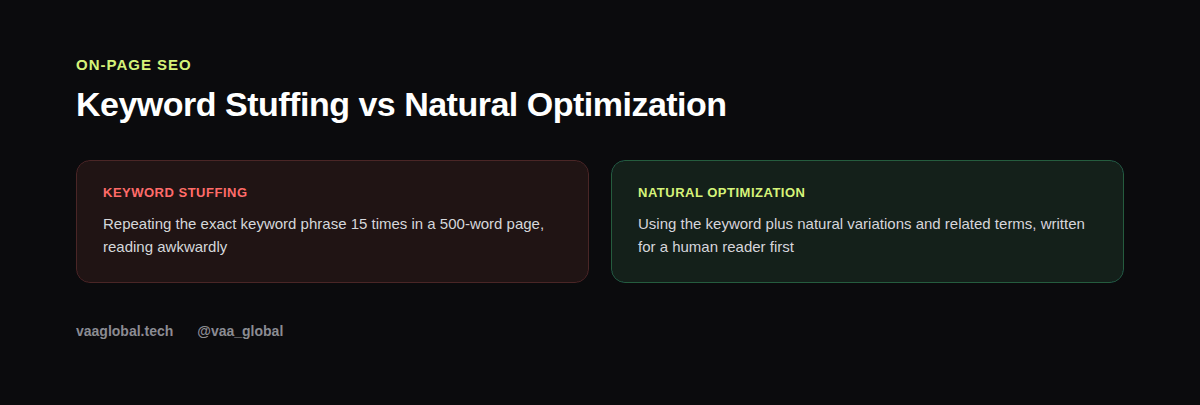
Keyword density matters, but only within reason; repeating your exact phrase unnaturally throughout the text reads poorly to humans and can actually hurt rankings rather than help them. Aim for your focus keyword to appear naturally a handful of times across a 900 to 1200 word article, supported by related terms and synonyms, rather than forcing the identical phrase into every paragraph.
The Bottom Line
An on-page SEO checklist is not complicated once you break it into its parts: a strong title and opening, a compelling meta description, clear heading structure, descriptive alt text, smart internal links, and a clean URL. If you want structured, hands-on training covering keyword research, technical SEO, and content strategy in depth, VAA Global's SEO optimization course is a 10-week, fully remote program built for beginners, and pairs well with learning more broadly about the skills needed to become an SEO specialist.