Frontend vs backend vs fullstack, which should beginners choose, is one of the first real decisions anyone learning to code has to make, and it matters more than it might seem because it shapes what you practice every day for months. Because each path uses a different mix of visual design thinking, logic, and systems thinking, picking the one that matches how you naturally enjoy solving problems will keep you motivated far longer than picking based on salary numbers alone.
What Frontend Development Actually Involves
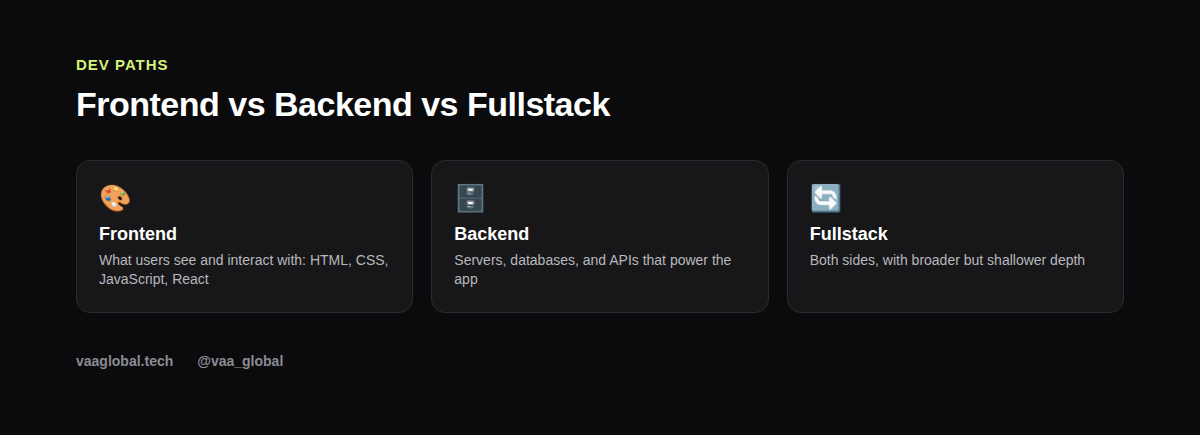
Frontend development is everything a user sees and clicks on: layout, buttons, forms, animations, and how the page responds to interaction. It relies on HTML for structure, CSS for styling, and JavaScript for behavior, usually alongside a framework like React. Because changes are visible immediately in the browser, frontend development gives beginners fast, satisfying feedback loops, which is a big part of why many new coders find it motivating to start with.
What Backend Development Actually Involves
Backend development handles everything happening behind the scenes: storing data in a database, processing requests through an API, handling authentication, and making sure the right information reaches the right place securely. Backend work tends to involve more abstract problem-solving since there is often no visual result to look at directly, just logs, test results, and data flowing correctly (or not) between systems. If you enjoy puzzles and systems thinking more than visual design, this is usually the more satisfying side to start on.
What Fullstack Development Actually Involves
A fullstack developer works across both frontend and backend, which means broader exposure but often less initial depth on either side compared to a specialist. Fullstack is appealing for beginners who are not sure which side they prefer yet, or who want to understand the entire system end to end, which is especially useful if you eventually want to build and ship your own products independently rather than specializing on a team.
Learning Curve: Which Is Actually Easier To Start
Frontend has a famously shorter path to a visible first result; you can build and style a basic webpage within days of starting. Backend typically takes a bit longer before beginners feel the same sense of "I built something," because setting up a database and API correctly involves more invisible plumbing before anything is usable. Is fullstack development harder than frontend specifically? In terms of raw volume of concepts, yes, since you are learning both sides at once, but many beginners find that the backend half becomes easier once the frontend half gives them a tangible interface to connect it to.
Job Market Demand For Each Path
Which coding path has more job opportunities depends heavily on your target market and the size of company you're aiming for. Startups and small companies frequently prefer fullstack developers who can move between tasks without needing a second hire. Larger companies with bigger engineering teams often hire frontend and backend specialists separately, since depth matters more once a codebase and team reach a certain size. For a broader look at how this choice fits into data-adjacent careers too, what skills do you need for a fullstack data career is a useful companion read.
A Simple Way To Decide: Try Before You Commit
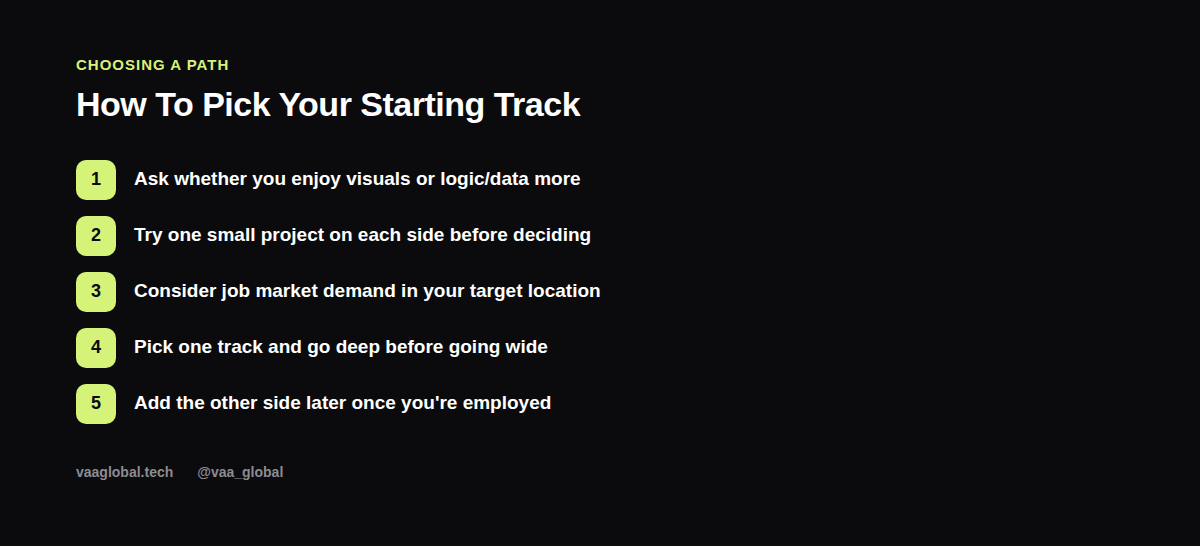
Rather than deciding purely from a written description, build one small project on each side before committing. A simple static webpage with some JavaScript interactivity tests the frontend side; a basic API that returns data from a small database tests the backend side. Free resources from MDN Web Docs cover both halves clearly enough for a weekend experiment, and that hands-on test will usually tell you more about your preference than any amount of reading about frontend versus backend development in the abstract.
Should I Learn Frontend Or Backend First If I'm Still Unsure
If you remain genuinely torn, start with frontend. The fast feedback loop keeps beginners motivated through the early, often frustrating weeks of learning to code, and frontend concepts like working with data from an API give you a natural, curiosity-driven bridge into backend topics later. For a more detailed side-by-side specifically on this question, see frontend vs backend, which should beginners learn first.
Learning This Properly With Structure
Self-teaching is possible but inconsistent, especially when it comes to connecting frontend and backend concepts into one coherent mental model. A structured programming and software development course covering HTML, CSS, JavaScript, React, Node.js, databases, and APIs, with frontend, backend, and fullstack tracks, gives beginners a guided path through exactly this decision, with real projects to build along the way rather than guessing which tutorial to follow next.
Quick Recap Of The Core Difference
If someone asks you cold what is the difference between frontend and backend development, the short version is this: frontend is what a user directly sees and touches, while backend is the invisible machinery that stores data, runs logic, and serves it to the frontend on request. Keeping that one-sentence distinction clear in your head makes every deeper topic, APIs, databases, React components, click into place much faster, whichever path you end up choosing first.
The Bottom Line
Frontend vs backend vs fullstack, which should beginners choose, does not have one universally correct answer; it depends on what kind of problem-solving energizes you and how much ambiguity you're comfortable with early on. Because all three paths lead to real, employable skills, the better question is not which path is objectively best, but which one you'll actually stick with long enough to get good at.