Entry level cybersecurity jobs that don't require a degree exist in much greater numbers than most beginners assume, mainly because the field has grown faster than universities can produce graduates. Employers increasingly care more about demonstrable skills, certifications, and hands-on practice than a four-year degree, especially for the first rung of the ladder. If you've been holding off on cybersecurity because you don't have a computer science degree, it's worth knowing exactly which roles are realistically open to you right now.
Why the Degree Requirement Is Loosening in Cybersecurity
Cybersecurity has a well-documented talent shortage, and employers have responded by relaxing degree requirements in favor of skills-based hiring. Because the field moves quickly and much of the practical knowledge comes from hands-on practice and certifications rather than classroom theory, many hiring managers now explicitly list certifications or demonstrated skills as acceptable substitutes for a formal degree.
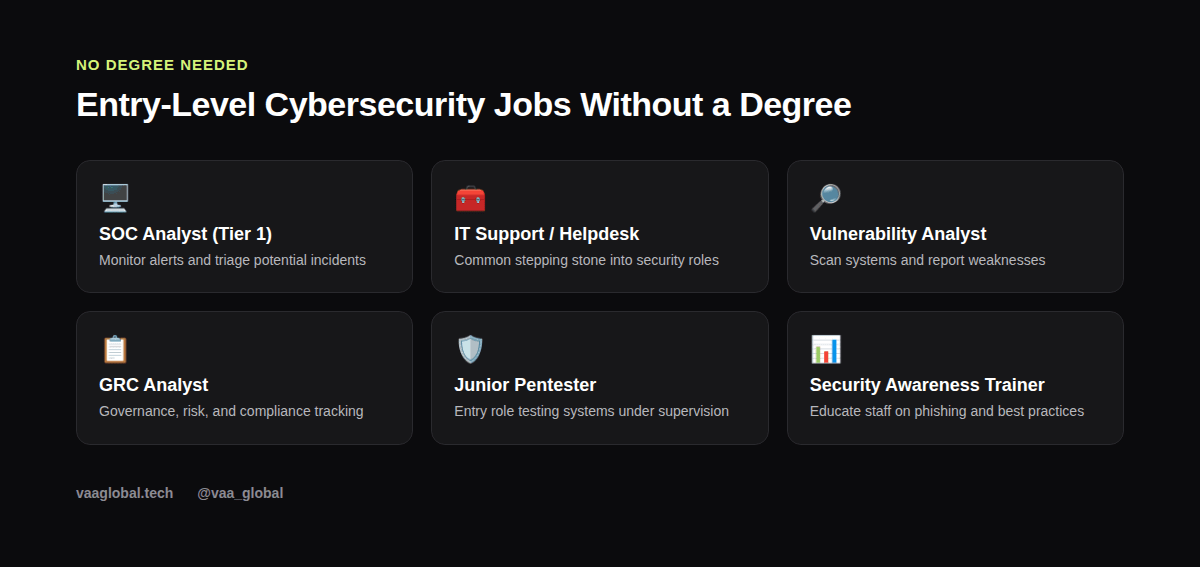
SOC Analyst (Tier 1)
A Tier 1 Security Operations Center analyst monitors security alerts, triages potential incidents, and escalates anything serious to more senior analysts. This is one of the most common entry points into cybersecurity, and many companies hire for it based on certifications and lab experience rather than a degree. Our guide on cybersecurity interview questions for beginners covers exactly how these interviews tend to go.
IT Support or Helpdesk Roles
IT support might not sound like cybersecurity at first glance, but it's one of the most reliable bridges into the field. These roles build networking and systems knowledge that transfers directly into security work, and many security professionals started exactly here before moving laterally. If a direct security role feels out of reach right now, this path is worth seriously considering.
Vulnerability Analyst
Vulnerability analysts scan systems and applications for known weaknesses, then document and prioritize findings for the team to fix. This role leans heavily on tool familiarity (scanners, reporting) rather than deep theoretical knowledge, making it accessible to beginners who've built real hands-on practice. Our piece on common cybersecurity tools beginners should learn covers several tools used in this exact role.
GRC (Governance, Risk, and Compliance) Analyst
GRC roles focus on policy, risk assessment, and regulatory compliance rather than hands-on technical defense. This path suits people with strong attention to detail and documentation skills, even if their technical background is lighter, and it's often less competitive than more technical entry points.
Junior Penetration Tester
Some junior penetration testing roles exist for candidates without a degree, provided they have strong hands-on lab experience and at least one relevant certification. These roles are more competitive than SOC analyst positions, so a well-documented home lab becomes especially important here. Our guide on how to set up a home lab for cybersecurity practice is the right starting point if this path interests you.
Security Awareness Trainer
This role focuses on educating staff about phishing, password hygiene, and safe practices rather than deep technical defense. It's a good fit for people with strong communication skills and foundational security knowledge, and it's often overlooked by beginners who assume every security job requires deep technical expertise.
How to Actually Land One of These Roles
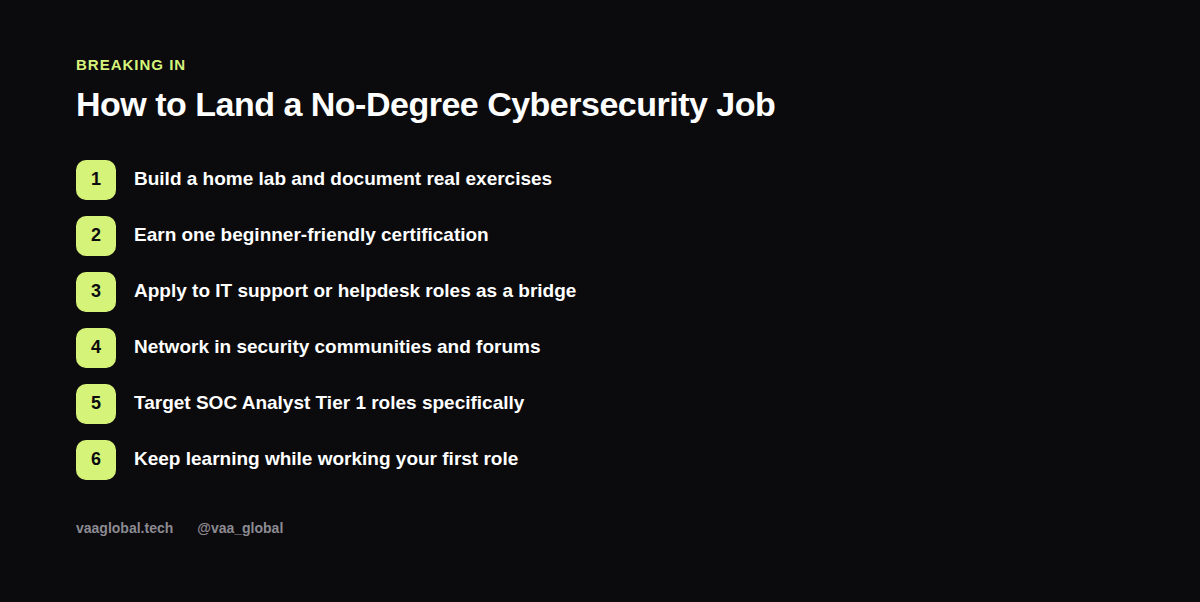
Build a home lab and document real exercises, earn one beginner-friendly certification to signal commitment, and consider applying to IT support roles as a bridge if direct entry proves difficult. Networking in security communities and forums also matters more than most beginners expect, since many entry-level roles get filled through referrals before they're even posted publicly. Our guide on cybersecurity certifications for beginners in Nigeria breaks down which certifications are worth prioritizing for exactly this purpose.
Quick Answers to Common Degree Questions
So, can I get a cybersecurity job without a college degree in practice, not just in theory? Yes, and the roles above prove it happens regularly. People often ask what certifications replace a cybersecurity degree, and while no single certification works as a universal substitute, a combination of certifications instead of degree requirements plus a real home lab carries genuine weight with many hiring managers. Is IT support a good path into cybersecurity if you're starting from zero? Absolutely, since IT support to cybersecurity path transitions are extremely common and well understood by hiring teams. Beyond SOC analyst no degree roles, cybersecurity jobs without a degree also show up in smaller companies that simply can't afford to be as selective as large enterprises, so don't overlook smaller employers while job hunting.
What Employers Actually Look For Instead of a Degree
Employers hiring without degree requirements typically look for certifications, a documented home lab or portfolio, relevant IT experience, and strong communication skills for explaining technical issues to non-technical colleagues. The Cybersecurity and Infrastructure Security Agency (CISA) publishes useful public resources on foundational security skills that align with what many employers screen for.
The Bottom Line
Entry level cybersecurity jobs that don't require a degree are genuinely available, especially in SOC analyst, vulnerability analyst, GRC, and IT support roles. Build real hands-on skills, earn a beginner certification, and don't be afraid to use an adjacent IT role as your bridge in. If you want structured training to build the exact foundation these roles expect, our 10-week Cybersecurity course covers networking, ethical hacking, vulnerability management, web application security, and incident response. For more on getting started, see how to start a career in cybersecurity from scratch.