Common cybersecurity tools beginners should learn tend to come up in almost every job posting, interview, and home lab tutorial, which is exactly why it's worth learning them in a sensible order instead of randomly. Because the field is broad, beginners often feel pressure to learn everything at once, but a handful of core tools cover the vast majority of entry-level work. Getting comfortable with these six tools gives you a genuinely strong foundation before specializing further.
Why Tool Familiarity Matters So Much in Cybersecurity
Unlike some fields where theory alone gets you far, cybersecurity rewards hands-on fluency. Interviewers routinely ask about specific tools because day-to-day work involves using them constantly, whether you're scanning a network, analyzing suspicious traffic, or investigating an alert in a SIEM. As a result, tool practice isn't optional extra credit; it's core to actually being job-ready.
Nmap: Network Scanning and Host Discovery
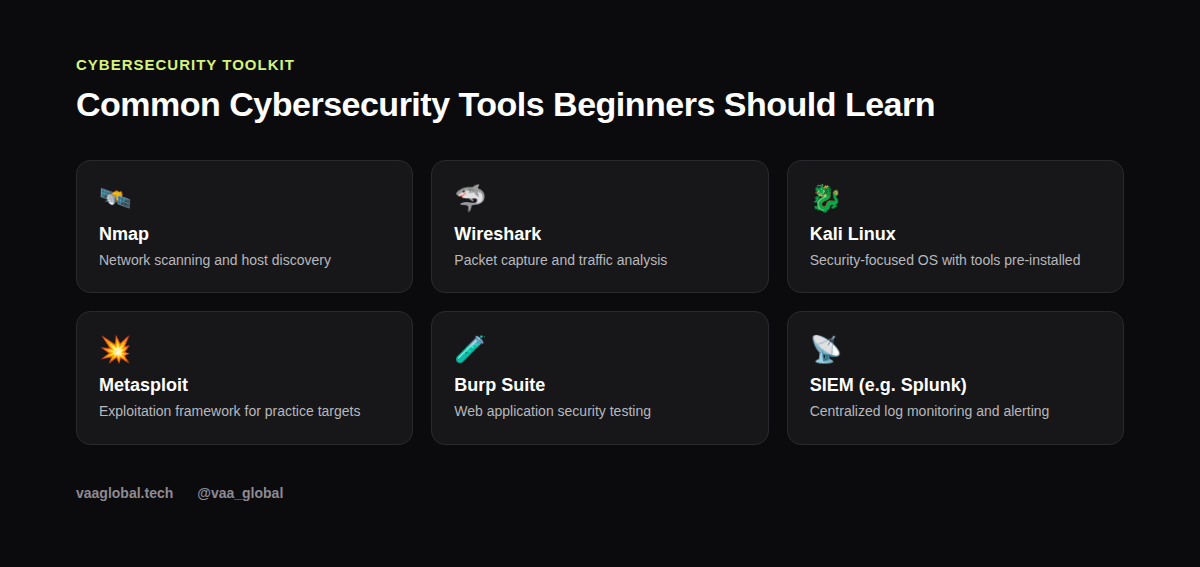
Nmap is usually the first real tool beginners learn, and for good reason: it teaches you how to see a network the way an attacker or defender would. You'll learn to discover live hosts, identify open ports, and fingerprint running services, all foundational skills for almost every later security task. The official Nmap documentation is thorough and a good reference as you practice.
Wireshark: Packet Capture and Traffic Analysis
Wireshark lets you see exactly what's happening on a network at the packet level, which is invaluable for understanding both normal traffic and attacks. Beginners often find Wireshark intimidating at first because of the sheer volume of data, but starting with simple filters (like isolating traffic from a single IP) makes it manageable quickly.
Kali Linux: Your Practice Environment
Kali Linux is a security-focused operating system that comes pre-loaded with most of the tools on this list, which is why it's such a common starting point for home labs. Rather than installing each tool individually, Kali gives you a ready-made environment to practice in. Our guide on how to set up a home lab for cybersecurity practice walks through exactly how to get Kali running alongside a safe practice target.
Metasploit: Exploitation Practice Framework
Metasploit lets you practice exploiting known vulnerabilities against intentionally vulnerable targets like Metasploitable, in a safe and legal context. It's one of the most commonly referenced tools in beginner cybersecurity content, and learning its basics (searching for an exploit, configuring it, and running it) builds real intuition for how vulnerabilities actually get exploited.
Burp Suite: Web Application Security Testing
As web applications remain one of the most common attack surfaces, Burp Suite is essential for anyone leaning toward web application security. It lets you intercept and manipulate web traffic between your browser and a target application, which is exactly how many real-world vulnerabilities, like those in the OWASP Top 10, get discovered and tested.
SIEM Platforms: Centralized Log Monitoring
A SIEM (Security Information and Event Management) platform like Splunk centralizes logs from across an organization so analysts can detect and investigate suspicious activity. Entry-level SOC analyst roles depend heavily on SIEM familiarity, so even a basic understanding of how alerts and dashboards work gives you a real edge in interviews. Our guide on entry-level cybersecurity jobs that don't require a degree covers roles where this exact skill matters most.
How to Learn These Tools Without Getting Overwhelmed
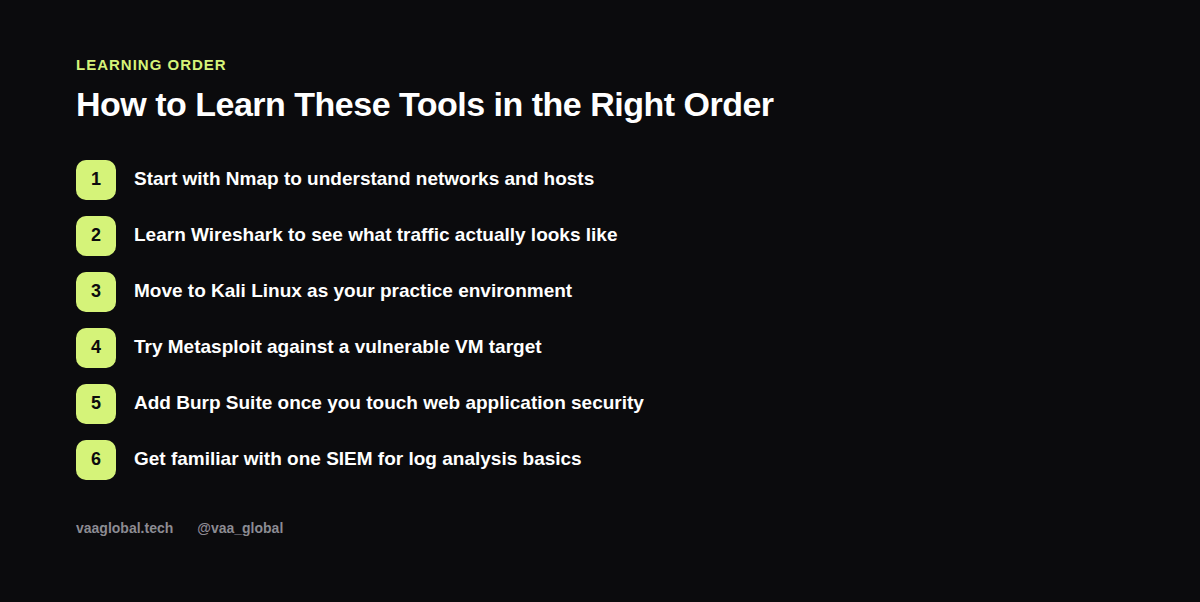
Don't try to master all six simultaneously. Learn Nmap and Wireshark first, since they build your foundational understanding of networks and traffic. Then move to Kali Linux as your practice base, add Metasploit once you're comfortable with a vulnerable target VM, and bring in Burp Suite and a SIEM as you start leaning toward a specific specialization.
Quick Answers Beginners Ask About These Tools
Which cybersecurity tools should I learn first, exactly, if you only have a weekend? Nmap and Wireshark cover the most ground for the least time invested, so start there before anything else. Is Kali Linux good for beginners who've never touched Linux at all? Yes, though expect a short learning curve with the command line itself before the security tools start feeling intuitive. Finally, what tool do SOC analysts use most once they're actually working? In practice, it's usually a SIEM dashboard open all day, with Wireshark pulled up occasionally to dig into something the SIEM flagged but didn't fully explain. Because these tools build on each other, patience with the basics pays off faster than rushing toward the advanced ones.
Practicing These Tools Safely
Always practice against systems you own or that are explicitly designed for this purpose, like Metasploitable or DVWA, never against real systems without permission. Our guide on how to start a career in cybersecurity from scratch covers the broader learning path these tools fit into.
The Bottom Line
Common cybersecurity tools beginners should learn aren't exotic or expensive; they're mostly free, well-documented, and designed to be learned through hands-on practice. Start with Nmap and Wireshark, build toward Metasploit and Burp Suite, and add SIEM familiarity as you get closer to applying for roles. If you want structured, guided practice with all of this, our 10-week Cybersecurity course covers networking, ethical hacking, vulnerability management, web application security, and incident response.