Cybersecurity interview questions for beginners tend to follow a predictable pattern once you've seen a few rounds, but that doesn't make them less nerve-wracking the first time. Interviewers for entry-level security roles usually test fundamentals knowledge, hands-on tool familiarity, and how you think through a live incident scenario. Because cybersecurity covers such a wide field, from networking to ethical hacking to incident response, beginners often feel unsure which topics to prioritize before an interview.
Why Cybersecurity Interviews Feel Broad and Unpredictable
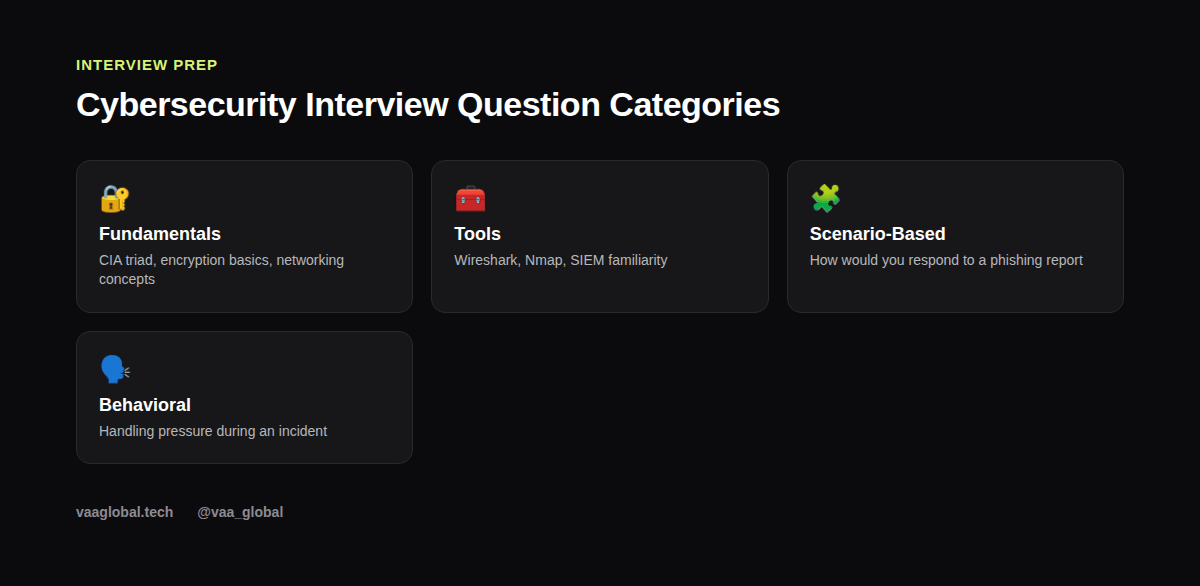
Unlike some tech interviews with a narrow focus, cybersecurity interviews often sample from a wide range of subfields: networking, systems, application security, and incident response. This happens because entry-level security roles themselves are broad, and employers want to see that you have a solid general foundation before specializing. As a result, you can't memorize your way through a cybersecurity interview; you need working knowledge you can apply on the spot.
Fundamentals Questions You Should Expect
Nearly every entry-level interview opens with fundamentals. Common examples include:
- "What is the CIA triad, and why does it matter?"
- "Explain the difference between symmetric and asymmetric encryption."
- "What is the difference between a vulnerability and an exploit?"
- "What's the difference between IDS and IPS?"
- "Explain how a firewall works."
If these terms feel unfamiliar, our guide on common cybersecurity tools beginners should learn covers much of this foundational vocabulary alongside the tools themselves.
Sample Answer: A Phishing Incident Scenario
Scenario questions are where many beginners stumble, not because the content is advanced, but because they haven't practiced structuring an answer under pressure. Here's a worked example:
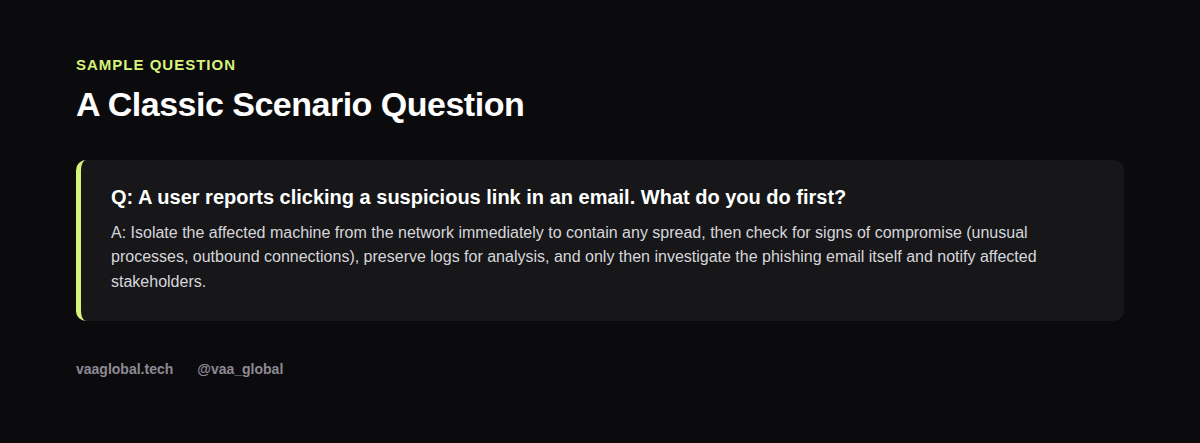
Notice that the answer prioritizes containment first, then investigation, then communication — in that order. Interviewers are listening for this sequencing as much as for the correct terminology, because real incidents reward calm, structured responses over panicked guessing.
Tool-Based Questions You Should Expect
Because hands-on familiarity matters so much in security roles, expect questions like "which tools have you used for network scanning?" or "how would you investigate suspicious traffic?" Even without professional experience, you should be comfortable naming and describing basic use of tools like Nmap, Wireshark, and a SIEM platform. Building a home lab is the fastest way to gain this familiarity before interviewing; our guide on how to set up a home lab for cybersecurity practice walks through exactly how to build this experience from scratch.
Behavioral Questions in Security Interviews
Behavioral questions test how you handle pressure and ambiguity, since real security incidents rarely come with complete information upfront. Expect prompts like "tell me about a time you had to learn something technical quickly" or "describe how you'd communicate a security issue to a non-technical manager." Use the STAR method (Situation, Task, Action, Result) to structure these answers, even if your example comes from a home lab exercise or a coursework project rather than a paid job.
Questions About Certifications and Continued Learning
Interviewers often ask what certifications you're pursuing or planning to pursue, since the field changes quickly and employers want to see ongoing learning. Our guide on cybersecurity certifications for beginners in Nigeria breaks down which ones are worth prioritizing early in your career.
Questions You Should Ask the Interviewer
Asking thoughtful questions shows genuine interest and helps you evaluate the role too. Consider: "What does the incident response process look like on this team?", "What tools does the security team rely on day to day?", or "How does the team stay current on new threats?"
How to Prepare in the Week Before Your Interview
Review core terminology daily rather than cramming, practice explaining concepts out loud as if teaching someone else, and if you haven't already, spend time in a home lab environment working through at least one real scenario end to end. The OWASP Top 10 is also worth reviewing, since application security questions commonly reference it even in general security interviews.
Entry Level Cybersecurity Interview Prep: What Actually Helps
Solid entry level cybersecurity interview prep isn't about memorizing every possible term; it's about depth on the basics. A great cybersecurity scenario question like the CIA triad interview question can trip up even prepared candidates if they only memorized the acronym without understanding why confidentiality, integrity, and availability sometimes conflict with each other in real decisions. One of the most useful security interview tips is to practice explaining a concept to someone with zero technical background, since that forces real understanding rather than surface-level recall. People often ask what questions are asked in a cybersecurity interview beyond fundamentals, and the honest answer is: it depends heavily on the specific role, so research the company's industry and likely threat landscape beforehand. Likewise, how do I prepare for a security analyst interview comes down to building a small home lab and being ready to talk through at least one real exercise in detail.
The Bottom Line
Cybersecurity interview questions for beginners reward structured thinking and genuine hands-on practice over memorized definitions. Fundamentals establish your baseline knowledge, tool questions test real familiarity, and scenario questions test judgment under pressure. If you want a structured path into the field before interviewing, our 10-week Cybersecurity course covers networking, ethical hacking, vulnerability management, web application security, and incident response. For more on the field's entry points, see entry-level cybersecurity jobs that don't require a degree and how to start a career in cybersecurity from scratch.