
Content marketing is the strategic practice of creating and distributing content, blog posts, videos, social posts, emails, that attracts a specific audience and moves them toward becoming a customer, without directly advertising to them. Instead of interrupting people with ads, content marketing earns attention by being genuinely useful, informative, or entertaining first. If you've ever found a company through a helpful blog post, a YouTube tutorial, or a well-timed email newsletter, you've experienced content marketing working exactly as intended. The reason it works is simple: people trust content that informs or entertains them far more than they trust an ad, and that trust compounds into brand loyalty over time.
Content Marketing vs. Content Writing vs. Content Creation
These terms get used interchangeably, but they're different jobs. Content writing is the craft of producing words: articles, scripts, captions. Content creation is broader and includes visual and video formats, not just text. Content marketing sits above both of these: it's the strategy that decides what content gets made, who it's for, where it lives, and how success is measured.
A content marketer might not write a single article themselves. Their job is to research the audience, map content to each stage of the buying journey, brief writers or designers, choose distribution channels, and track whether the content is actually driving traffic, leads, or sales. That planning and measurement work is what makes the role strategic rather than purely creative, and it's why companies hire content marketers separately from writers as their content operations mature.
The Core Skills a Content Marketer Needs
Strong content marketers combine several skills: audience research (understanding who you're writing for and what they're searching for), basic SEO so content actually gets found, storytelling and brand voice, editorial planning so content ships consistently rather than sporadically, and analytics literacy so you can tell what's working.
Distribution is the piece beginners most often skip. Producing great content that nobody sees isn't content marketing, it's just writing. Knowing how to push content through email, social, SEO, and partnerships is what separates a content marketer from a content writer.
What a Content Marketing Career Path Looks Like
Most people start as a content marketing associate or coordinator, handling execution under a strategist's direction: writing briefs, scheduling posts, pulling basic analytics. From there, the path usually moves toward content strategist or content marketing manager, where you own the editorial calendar and measure content against business goals, and eventually toward head of content or marketing roles that oversee a full team. Salaries and titles vary by company size, but the underlying progression from execution to strategy to leadership stays fairly consistent across the industry.
Freelance and remote-contract content marketing is also a well-worn path, especially for people building experience across multiple brands rather than climbing one company's ladder.
How VAA Global's Content Marketing Course Builds Job-Ready Skills
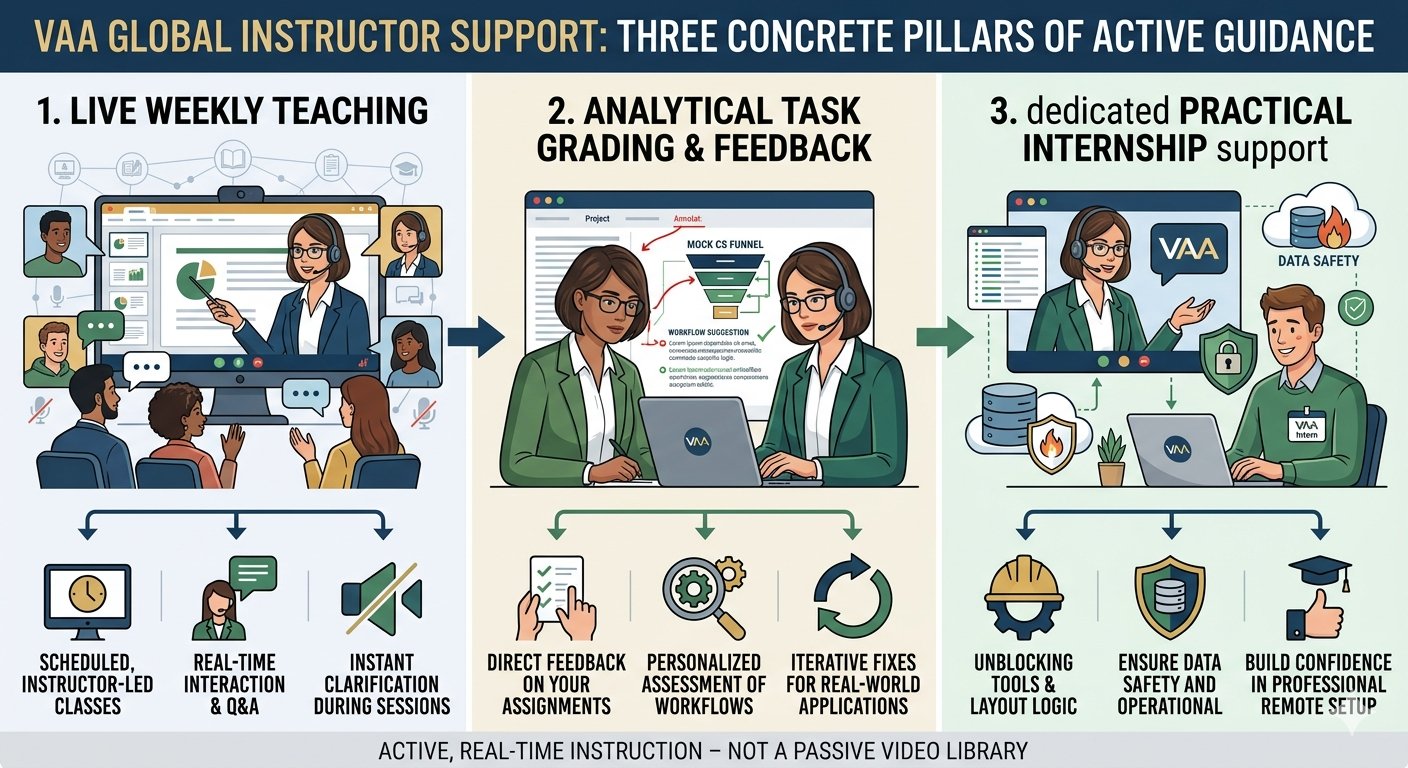
VAA Global's Content Marketing course is built around the actual workflow employers expect: audience and keyword research, content strategy and editorial calendars, writing for conversion, distribution across channels, and reading analytics to prove content is working. It's live and instructor-led, which matters for a discipline like this where feedback on your strategic thinking, not just your writing, is what improves you fastest.
Students get the full VAA Global support package: certificate, job placement assistance and interview coaching, access to remote job opportunities, job matching through VAA Global Talent, a 2-month internship, mentorship from industry experts, portfolio building, and LinkedIn and personal branding support.
Building a Portfolio That Actually Gets You Hired
In content marketing, your portfolio needs to show strategic thinking, not just polished writing. A strong portfolio piece explains who the content was for, what problem it solved, and what happened after it published (traffic, engagement, leads), not just the finished piece itself. Case-study style samples like this tell a hiring manager you understand the marketing part, not just the content part.
Once you've built a few of these through coursework or the VAA Global internship, the portfolio builder tool helps students package that work into something client-ready.
Where the Remote Jobs Are
Content marketing roles are common at SaaS companies, e-commerce brands, agencies, and media companies, most of which have gone fully or partially remote. Because so much of the discipline is research, planning, and writing, it translates naturally to distributed teams, and international employers regularly recruit content marketers from Nigeria and across Africa for both cost and quality of work. Organizations like the Content Marketing Institute are a useful ongoing resource once you're working in the field, for staying current on trends and benchmarks.
Content marketing rewards people who can think strategically and write clearly, and it's one of the more flexible remote careers available today. If that combination sounds like you, check out VAA Global's full course catalogue or apply directly to start building the skills employers are actively hiring for.