
What Corporate Branding Actually Involves
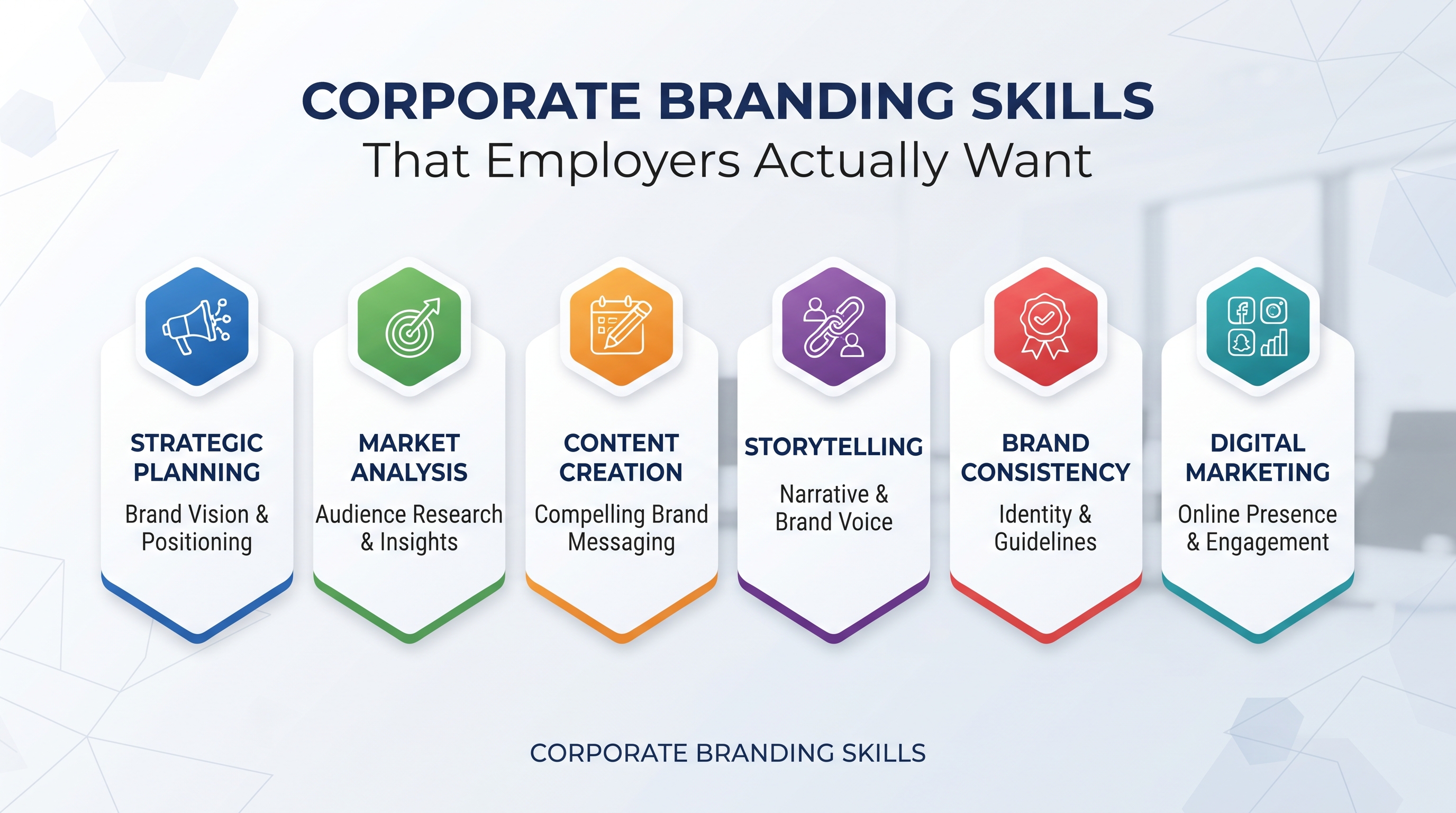
Branding work is strategic before it's visual: deciding what a company stands for, how it should be positioned against competitors, and what tone and messaging will consistently reinforce that identity across everything the company puts out. The visual identity, logo, colours, typography, comes after the strategy is clear, not before.
This is why strong branding professionals think more like strategists than designers, even when they're not doing the visual execution themselves. Understanding the business goal behind the brand is what makes the eventual visual and messaging choices actually work.
The Skills That Actually Matter
Brand identity development is foundational, defining the core elements that make a brand recognisable and consistent. Messaging frameworks teach you to define how a brand talks, its tone, its key phrases, consistently across every channel.
Market positioning is where strategic thinking really shows, understanding exactly where a brand sits relative to competitors and what makes it genuinely different. Brand audits round out the skill set, evaluating whether an existing brand is actually working and where it's falling short.
How VAA Global's Corporate Branding Course Builds This
VAA Global's Corporate Branding and Strategy course runs 10 weeks, covering brand identity development, messaging frameworks, visual brand guidelines, market positioning, and brand audits, using tools like Canva, Figma, and Google Slides.
You'll work through real brand strategy exercises, not just admire finished examples, building the kind of practical thinking employers actually screen for. Every VAA Global course includes a 2-month internship, 2 certificates, and job placement assistance.
Why Strategic Branding Skills Are Valued
Interbrand's annual Best Global Brands research consistently demonstrates that companies with strong, consistently managed brand strategy outperform competitors on customer trust and long-term valuation, reinforcing why businesses invest seriously in people who can manage this deliberately, not accidentally.
If you want to pair this with visual execution skills, Graphics Design is a strong complement, or take the free Career Compass quiz to explore.
Common Mistakes Beginners Make in This Field
A common beginner mistake is defaulting to generic positioning language, "innovative," "customer-focused", that could describe almost any company, rather than digging into what genuinely differentiates this specific brand. Strong positioning is specific enough that it wouldn't fit a direct competitor.
A second mistake is inconsistency across channels, a brand that sounds one way on its website and completely different on social media undermines the trust consistent branding is supposed to build. Discipline across every touchpoint matters as much as the initial strategy.
A third mistake is skipping competitive analysis, assuming you already know how a brand compares to alternatives without actually researching it. Real competitive positioning requires genuinely understanding what else is available to the customer, not just assuming.
What Your First Few Weeks Actually Look Like
Early weeks in VAA Global's Corporate Branding course focus on brand identity fundamentals and messaging frameworks, the strategic core the rest of the work builds from.
The middle weeks bring in competitive analysis and positioning work. The final weeks cover brand audits on a real case study, before the 2-month internship.
It's also worth understanding that branding work often involves influencing people who aren't directly on your team, getting buy-in from leadership or other departments for a positioning decision, which makes clear, persuasive communication just as important to this role as the strategic thinking itself.
This same discipline, clear, persuasive internal communication, is exactly the kind of skill that structured practice with real feedback builds far more reliably than simply absorbing branding theory without ever having to actually pitch and defend a positioning decision.
Beyond the strategic frameworks, this field also rewards a certain comfort with subjectivity, brand decisions rarely have one objectively correct answer, and learning to make a well-reasoned recommendation and defend it clearly, even amid disagreement, is a genuine skill that develops through repeated, structured practice.
VAA Global Talent at talent.vaaglobal.tech exists specifically to close this gap, connecting graduates directly with employers who are actively hiring.
Before you start applying, it's worth running your CV through VAA Global's free review tool at vaaglobal.tech/cv-review to make sure it actually reflects what you've built.
Research from GitLab Remote Work Report backs this up, consistently finding that this pattern holds across the wider remote job market, not just as an isolated trend.
This isn't just anecdotal either, Upwork Freelance Forward Research has published findings that point in exactly the same direction.
Starting Your Branding Career
Corporate branding rewards strategic, big-picture thinkers who also care about consistency in the details. If that sounds like you, you can apply to VAA Global's Corporate Branding course.