
Corporate branding and strategy is the discipline of defining how a company is perceived, its identity, values, positioning, voice, and reputation, so that everything from its logo to its customer service reflects a consistent, credible story. It's the strategic layer behind why some companies feel instantly trustworthy or distinctive while others blend into the background despite having similar products. This field sits above day-to-day marketing tactics, setting the foundation that campaigns, content, and even hiring decisions build on top of. Companies that skip this strategic step often end up with a nice-looking logo attached to a confusing, inconsistent message, which undermines the branding rather than strengthening it.
What Corporate Branding Actually Covers
Corporate branding spans several connected areas: brand identity (name, logo, visual system, tone of voice), brand positioning (how the company differentiates itself from competitors in the customer's mind), messaging architecture (the consistent language used across all communications), and reputation management (how the brand is perceived over time, including during a crisis).
Strategy ties all of this together by connecting brand decisions back to business goals. A brand strategist doesn't just decide a company should 'feel more premium,' they define what that means concretely, how it shows up in pricing language, customer service tone, partnerships, and visual choices, and why it serves the business. Getting this right requires constant collaboration with leadership, since brand decisions often touch pricing, hiring, and product decisions well beyond what a marketing team controls alone.
Brand Strategy vs. Visual Branding vs. Marketing
Visual branding (logos, color palettes, design systems) is the most visible output of branding work, but it's downstream of strategy, not the strategy itself. Brand strategy defines the thinking; visual identity expresses it. Marketing then uses that identity and positioning to run specific campaigns and drive specific business outcomes like sales or awareness.
This distinction matters for career direction. If you're drawn to research, positioning, and strategic writing, brand strategy is the stronger fit. If you're drawn to visual design and identity systems, that's a more design-focused branding career, often overlapping with graphic design roles.
The Skills That Define a Strong Brand Strategist
Brand strategists need strong research skills (understanding market perception, competitor positioning, and customer sentiment), clear strategic writing (turning abstract brand ideas into concrete guidelines), and the ability to present and defend ideas to leadership, since brand decisions often require buy-in from people who aren't naturally strategic thinkers.
Consistency and long-term thinking matter more in this field than in fast-moving marketing tactics. A brand strategist is building something meant to hold up over years, not a single campaign cycle, which requires a different kind of discipline. It also means being comfortable pushing back on short-term marketing requests that would undercut the longer-term brand positioning, even when that's an uncomfortable conversation to have.
How VAA Global's Corporate Branding and Strategy Course Prepares You
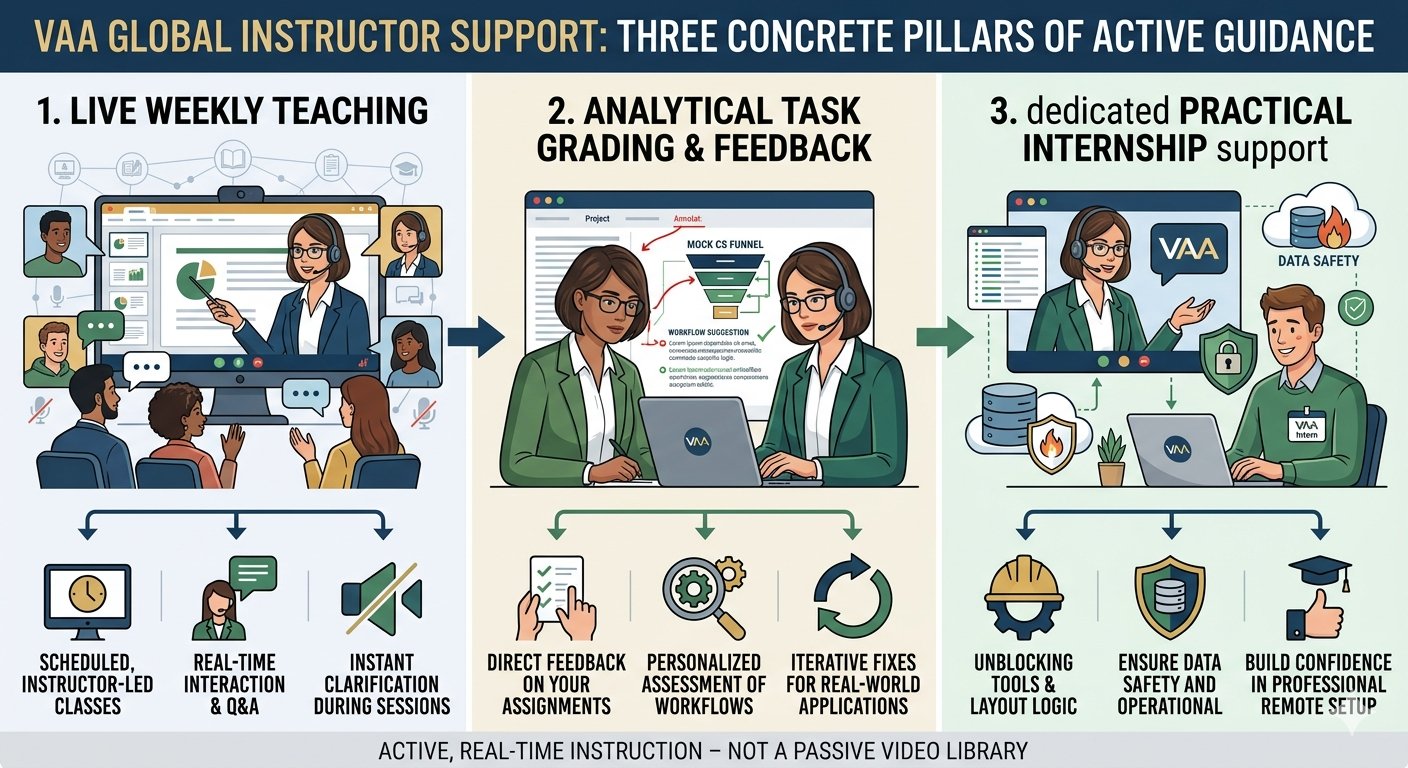
VAA Global's Corporate Branding and Strategy course covers brand identity development, positioning frameworks, messaging architecture, and reputation management, giving students the strategic toolkit that agencies and in-house brand teams expect. The course is delivered live by instructors, since brand strategy is judgment-heavy work that benefits enormously from real critique and discussion rather than passive video learning.
Every VAA Global student, regardless of course, gets the same core support: a certificate, job placement assistance and interview coaching, access to remote job opportunities, job matching through VAA Global Talent, a 2-month internship, mentorship from industry experts, portfolio building, and LinkedIn and personal branding support.
Building Brand Strategy Work Without Client Experience
Since brand strategy work is normally attached to real companies and confidential projects, beginners often struggle to show proof of skill. The solution is building rebrand case studies: picking an existing company, analyzing its current positioning, and proposing a clearer strategy with reasoning. This demonstrates the strategic thinking employers actually screen for, even without a paying client behind it.
The VAA Global portfolio builder helps students turn coursework and internship projects like this into a presentable portfolio once they've completed their certificate.
Where Remote Branding Jobs Come From
Branding agencies are the most obvious source of roles, but a growing number of in-house brand strategist positions exist at startups and scaling companies that need to define or refine their identity as they grow. Consulting firms also hire brand strategists for client engagements. Because this work is primarily research, writing, and strategic presentation, it fits naturally into remote and hybrid work arrangements, and Harvard Business Review's branding coverage is a solid ongoing resource once you're working in the field.
Corporate branding and strategy is a fit for people who enjoy connecting research and reasoning to how a company presents itself to the world. Explore VAA Global's Corporate Branding and Strategy course or apply now to start building this in-demand strategic skill set.