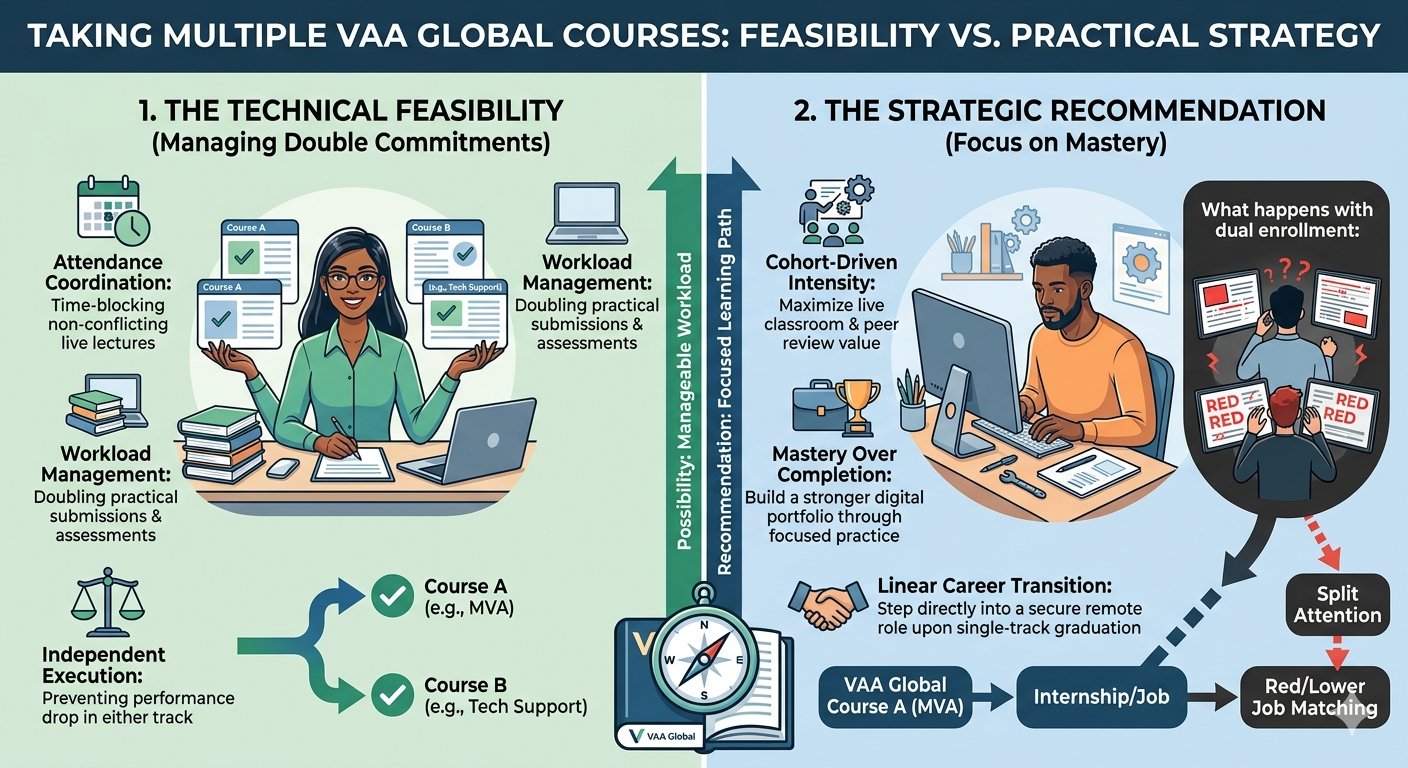
Yes, it's technically possible to enroll in more than one VAA Global course at the same time, as long as you can genuinely handle both live class schedules and both workloads without one dragging the other down. But the practical advice from VAA Global is to focus on one course at a time, because the training is live and cohort-based, and that structure works best when your attention isn't split between two schedules at once.
Why This Question Comes Up So Often
Prospective students often browse the full course catalogue and find more than one track that interests them, whether that's virtual assistance alongside digital marketing, or data analysis alongside another skill area. The instinct to grab both at once is understandable when you're eager to build a broad skill set quickly.
The honest answer, though, is that speed isn't the same as depth, and taking two courses in parallel usually costs you depth in both without necessarily saving you much time overall.
What Makes This Different From Self-Paced Learning
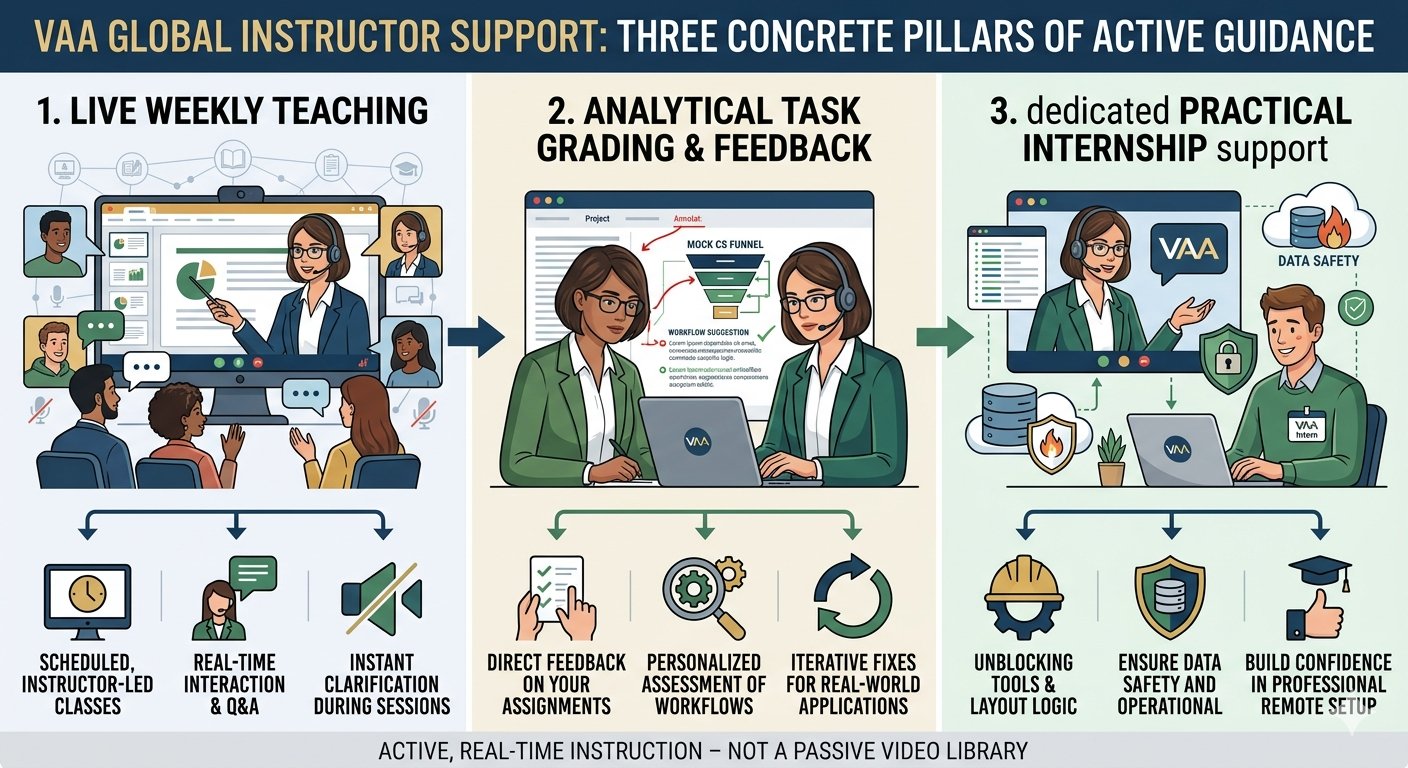
If VAA Global courses were entirely self-paced video content, doubling up would be a simpler math problem: more hours in, more content covered. But because classes are live and instructor-led, each course comes with fixed weekly time slots you have to actually show up for, plus assignment and internship work tied to a cohort schedule you don't fully control.
Two live schedules running in parallel means real scheduling conflicts are likely at some point, not just a hypothetical risk. Even when the class times themselves don't clash, the assignment load from both courses landing in the same week can.
What You Actually Lose by Splitting Focus
The cohort-based structure exists for a reason: you're learning alongside other students, getting live feedback from instructors, and building momentum on one specific skill set. When you're mentally switching between two different courses' material each week, you tend to absorb less from each session and retain less of what you covered.
This shows up later too. During your internship, you're expected to apply what you learned with some confidence, and confidence usually comes from focused, uninterrupted practice rather than divided attention across two different subjects.
There's also a mentorship dimension to consider. Mentors and instructors get to know students better over a sustained, focused period, and that relationship tends to be shallower when your energy and attention are being pulled toward a second course running in parallel.
A Better Way to Build Multiple Skills
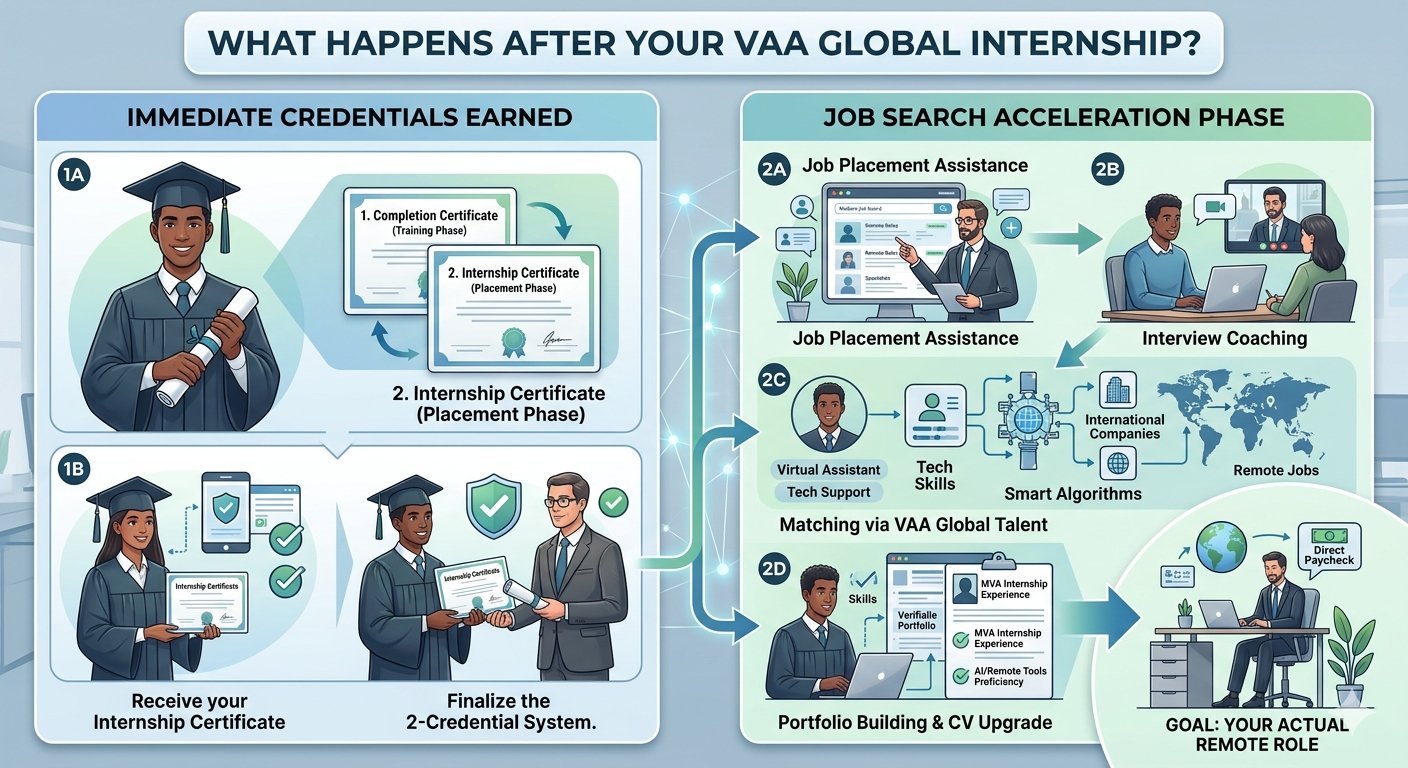
If your real goal is to end up with more than one credential and skill set, sequencing gets you there without the downside. Finish one course, complete its two-month internship, get your certificates, and then start the next course once you have real bandwidth again.
This also means each course benefits from your full attention: the certificate, job assistance and interview coaching, access to remote job opportunities, job matching through VAA Global Talent, the internship, mentorship, portfolio building, and LinkedIn support all land better when you're not splitting focus.
When Taking Two Courses Might Actually Work
There are situations where two courses at once is genuinely manageable: for example, if your work and personal schedule is unusually light, or if the two courses you're considering have class times that don't overlap and a workload you've realistically tested before. This is the exception, not the default expectation.
If you're considering it, be specific with yourself about the actual weekly hours involved for both courses combined, not just the class time but the assignment and internship time too, before you commit to both.
How to Decide Which Course Comes First
If you're torn between two interesting courses, use the Career Compass quiz to figure out which one aligns best with your actual career goals right now, and start there. You can always add the second skill set later with a fresh cohort and full attention.
This approach isn't about limiting you, it's about making sure the time and money you put into training actually converts into a strong finish, a real internship experience, and certificates you can speak to confidently in interviews.
If you're unsure, it can also help to talk to a VAA Global advisor directly about your specific situation before enrolling in two courses at once. A short conversation upfront can save you from a workload mismatch discovered weeks into both cohorts.
Pick the course that matters most to you right now and give it your full attention. Apply to VAA Global and start with one strong course before adding a second