Operations manager interview questions and answers tend to follow a predictable pattern once you know what interviewers are actually testing for: can you spot inefficiency, fix it with limited resources, and keep a team moving while you do it. Because the role touches process, people, and numbers all at once, a single interview often jumps between a technical question about KPIs and a behavioral one about handling conflict within the same five minutes. Knowing the categories in advance makes the whole conversation far less stressful.
Why Operations Interviews Feel Different From Other Roles
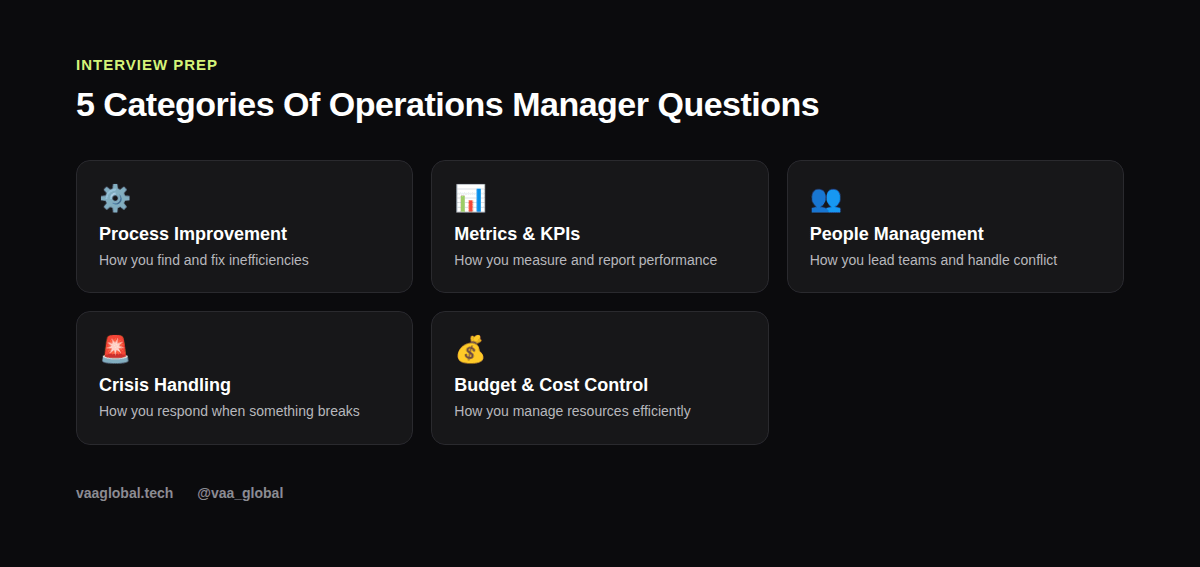
Unlike a narrowly technical interview, an operations management interview tests range. You might get a process improvement interview question right after a question about a vendor dispute, because operations managers genuinely do move between those worlds daily. As a result, interviewers are not just checking whether you know a framework; they are checking whether you can switch contexts quickly and still make a sound decision. If you only prepare for one type of question, a mixed panel interview will expose that gap fast.
Process Improvement Questions And How To Answer Them
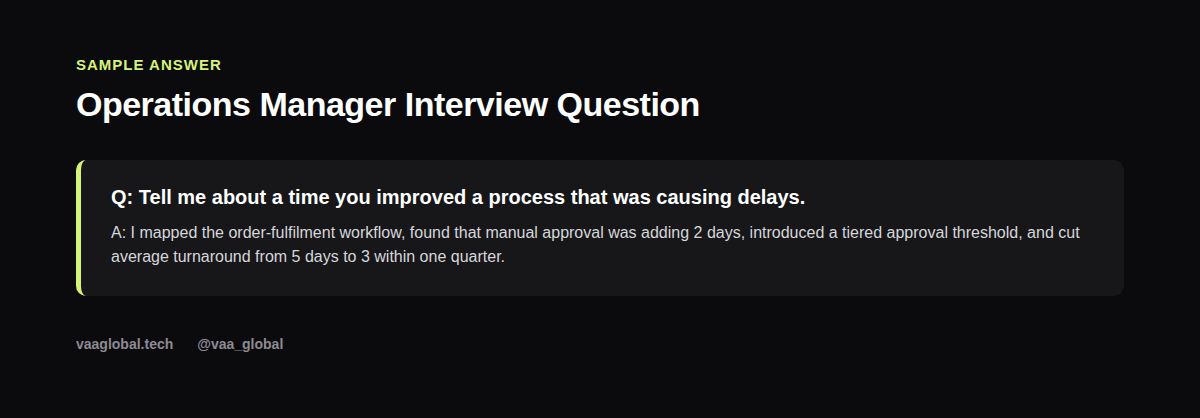
A classic prompt is: "Tell me about a time you improved a process that was causing delays." The strongest answers name a specific bottleneck, the fix you implemented, and a measurable result. For example: "I mapped the order-fulfilment workflow, found manual approval was adding two days, introduced a tiered approval threshold, and cut turnaround from five days to three within one quarter." Avoid vague claims like "I made things more efficient" since interviewers will almost always ask a follow-up question for specifics, and a vague answer under pressure reads as inexperience.
Metrics And KPI Interview Questions
Expect at least one KPI interview question, such as "Which metrics would you track in your first 30 days in this role?" A strong answer names 3-4 metrics relevant to the specific function, for example on-time delivery rate, cost per unit, cycle time, and first-pass yield, and briefly explains why each matters. If you are unsure which metrics apply to a given industry, reviewing a guide like key metrics every operations manager should track before the interview will give you concrete, defensible answers instead of generic buzzwords.
Team Leadership And People Management Questions
Interviewers want to know how you handle underperformance, conflict between departments, and motivating a team through a difficult period. A useful structure is: describe the situation briefly, explain the specific action you took, and close with the outcome and what you learned. For instance, if asked about a team member missing deadlines, describe how you diagnosed the root cause (unclear priorities versus a skills gap) before jumping to a fix, since interviewers notice when candidates skip diagnosis and go straight to punishment.
Crisis And Problem-Solving Questions
Operations roles involve things breaking, whether that is a supplier delay, a system outage, or a staffing shortfall. A common question is: "Walk me through how you would handle a major process failure during peak demand." Strong answers cover immediate triage (stop the bleeding), short-term workaround, root-cause analysis, and a permanent fix, roughly mirroring recognized continuous improvement approaches referenced by standards bodies such as the American Society for Quality's PDCA cycle. Naming a structured approach, even briefly, signals that you do not just react, you troubleshoot methodically.
Budget And Resource Allocation Questions
Because operations managers are often judged on cost efficiency, expect a question like "How would you cut costs without hurting quality?" The weakest answers jump straight to layoffs; stronger ones talk about waste reduction, renegotiating supplier terms, or automating a manual task first. If you have never managed a formal budget, it is fine to say so honestly while describing how you have tracked spend informally, since interviewers mainly want evidence of cost-consciousness, not a finance degree.
Questions To Ask The Interviewer
Toward the end, you will likely be asked if you have questions. Avoid asking only about salary or vacation at this stage. Instead, ask about the team's current biggest operational bottleneck, how success is measured in the first 90 days, or what tools and software the team currently relies on, which doubles as useful intel; see operations management tools and software beginners should know for context on what to expect. Thoughtful questions here often matter as much as your earlier answers.
How This Differs From A Project Manager Interview
Some candidates confuse operations manager interview questions with project manager ones, but the emphasis is different. Operations roles focus on ongoing, repeatable processes, while project management centers on time-bound deliverables. If you are unsure which path fits your experience better, this comparison of operations manager versus project manager is worth reading before you walk into either interview, since using the wrong framing in your answers can cost you credibility with an attentive panel.
Preparing When You're New To The Field
If you are transitioning into operations management from another field, lean on transferable examples: managing a budget for a personal project, coordinating a team event, or streamlining a process at a previous unrelated job all count. A structured operations management course covering process design and improvement, supply chain management, quality management, financial operations, and technology in operations can also give you a shared vocabulary that makes your answers sound rehearsed in the good sense, not memorized.
Operations Management Interview Tips For Final Preparation
A few operations management interview tips make a measurable difference on the day. Practice your stories out loud rather than just in your head, since spoken answers often reveal awkward phrasing that reading silently hides. Research what interviewers look for in operations managers at that specific company by checking their recent news or operational challenges, because a generic answer about "improving efficiency" lands differently once you reference their actual context. Finally, prepare for how to prepare for an operations manager interview logistically too: confirm the format, who is on the panel, and whether there is a case-study component, so nothing on interview day is a surprise.
The Bottom Line
Operations manager interview questions and answers reward specificity over polish. Interviewers would rather hear a messy but true story with real numbers than a smooth, generic one. Because every category above tests a different facet of the job, preparing one solid example per category, written down and practiced out loud, is the single most effective thing you can do before walking into the room.