Operations vs project manager confuses a lot of career switchers. Job titles overlap. Both roles involve planning and people. However, once you see the core difference in scope, the choice gets much easier. This guide breaks down the difference between operations and project management clearly, step by step, so you can decide with confidence instead of guessing.
The Core Difference in One Sentence
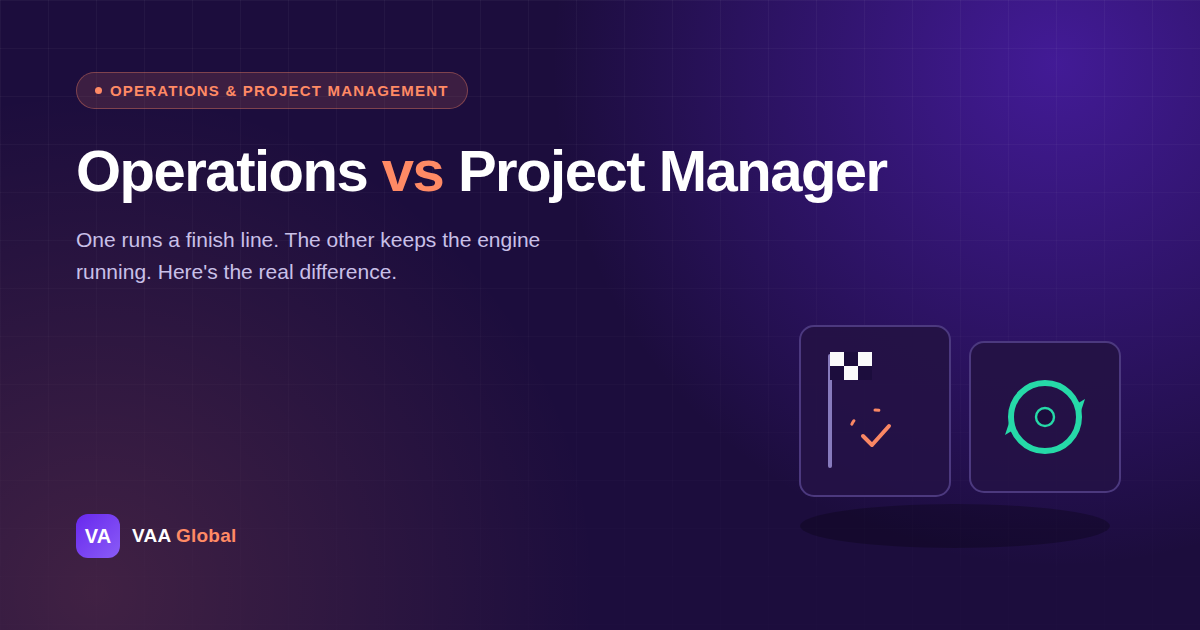
A project manager runs temporary work with a clear end date. An operations manager runs work that never really stops. That one line explains almost every other difference below.
What a Project Manager Actually Does
Project managers lead work with a start, a middle, and an end. Think of a new product launch, or a software rollout. They fully own the project timeline. They also own the full budget. They own the outcome. Once the project fully wraps up, so does their direct job on it. As a result, they move on to the next one soon after.
What an Operations Manager Actually Does
Operations managers keep the business running, day after day, long after any one project ends. Instead, they focus on process improvement. They focus on efficiency. They also focus on consistency across teams. For example, once a project manager rolls out new software, the operations manager takes over. They train staff. Then, week after week, they refine how the team actually uses the tool.
What Is a Project Lifecycle, and Why Does It Matter Here?
A project lifecycle is simply the stages a project moves through: start, planning, execution, and close. Project managers live inside this cycle constantly. Operations managers, by contrast, work outside any single lifecycle. Their job continues long after one project's lifecycle ends, and it continues just as steadily once the next one begins.
Which Skills Matter Most for Each Role?
Project managers lean on planning and risk management. Because of this, they also need strong stakeholder management, since they coordinate people toward one fixed deadline. Operations managers lean more on process optimization and data analysis. In addition, many use Lean Six Sigma, since their job is steady improvement, not a single delivery.
Is Operations Management a Good Career Path?
Yes, especially if you like steady, evolving work over constant deadline pressure. Operations roles exist in nearly every industry, from retail to logistics to tech. As a result, the skill set is easy to transfer between industries. According to comparisons of the two roles, operations managers sustain long-term efficiency, while project managers drive short-term, defined outcomes.
Which Path Is Better for You?
Neither one is objectively better. It depends on your temperament. If you enjoy a clear finish line and a new challenge each time, try project management. If you prefer building something that keeps improving over months and years, try operations instead.
How to Start Building Either Career
Both careers reward real training over guesswork. Each one has its own tools, vocabulary, and certifications to learn. If operations appeals to you, explore VAA Global's Operations Management training program. If project work sounds more like you, look at VAA Global's Project and Program Management training instead. You can also take VAA Global's free Career Compass quiz to see which path fits your strengths, or browse the full list of 33 VAA Global courses if you are still deciding.
Can You Switch Between the Two Careers Later?
Yes, and many people do. For example, some project managers move into operations once they want steadier, less deadline-driven work. Others move the opposite way, since project skills like planning and stakeholder management transfer easily. Either direction is realistic, so your first choice does not have to be permanent. In short, trying one path first will not lock you out of the other later.
The Bottom Line
Operations manager vs project manager is not a real competition. Real businesses need both roles to function well. Pick project work if you like clear deadlines and fresh challenges. Pick operations work if you prefer steady, improving systems. Either path pays well over time, and neither one truly needs a business degree to get started right away.