Learning how to transition into operations management from another field usually starts with a realization: you have been doing operations work all along, just under a different job title. Whether you managed a hotel front desk, ran a retail floor, or kept a customer support queue moving, you already practiced process thinking. Because operations management rewards that kind of practical problem-solving more than any specific credential, a career change into this field is more achievable than most people assume.
Start By Auditing What You Already Do
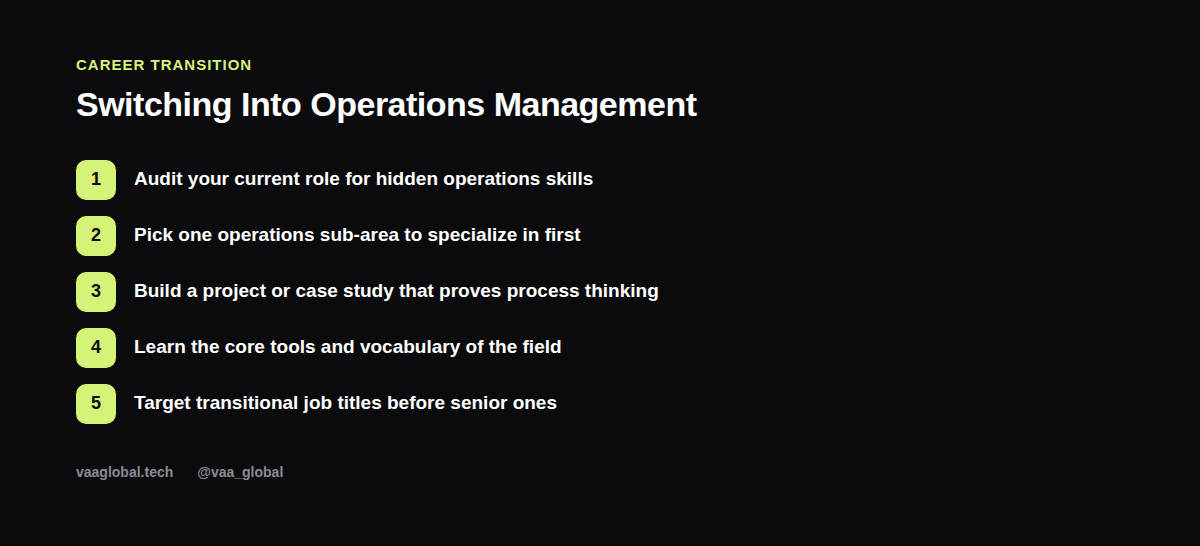
Most career changers underestimate how much operational experience they already have. If you have ever scheduled staff, tracked inventory, managed a budget, resolved a customer complaint by fixing the process behind it, or documented a procedure so someone else could follow it, you have done operations work. Write these examples down in plain language before you touch your resume, because this list becomes the raw material for everything else in your transition.
Fields That Transfer Especially Well
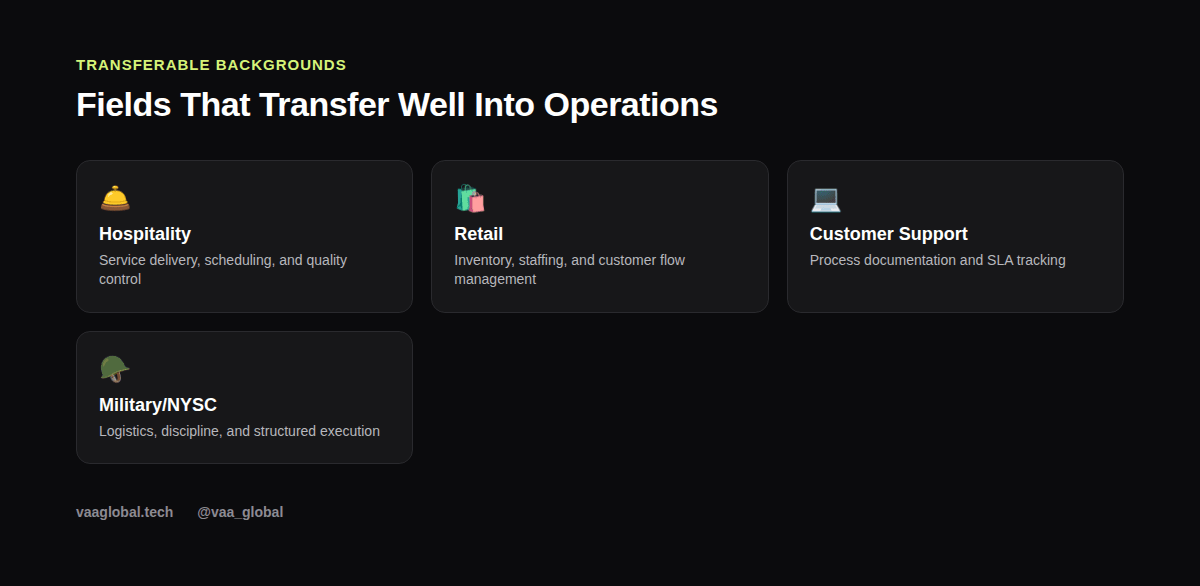
Some backgrounds map onto operations management more directly than others. Hospitality teaches service delivery under time pressure and quality control, retail teaches inventory and staffing coordination, customer support teaches process documentation and SLA tracking, and structured environments like the military or NYSC teach disciplined execution and logistics. If you came from hospitality specifically, front office operations: the backbone of hotels is a useful bridge article that shows how closely the two fields already overlap.
Pick One Sub-Area Before You Try To Learn Everything
Operations management for beginners can feel enormous because it spans process design, supply chain, quality management, and financial operations all at once. Rather than trying to master every area simultaneously, pick one that matches your existing strengths. If you are detail-oriented and enjoy numbers, start with quality or financial operations. If you enjoy coordinating people and materials, supply chain and logistics might fit better; supply chain vs procurement vs logistics difference is a helpful primer for sorting out which lane appeals to you.
Build A Small Project To Prove Process Thinking
Because you likely lack a formal operations job title, a small project does the convincing for you. Document a real process from your current or past job, map out where time or quality is lost, and propose a specific fix with an estimated impact. This does not need to be implemented to count; even a well-reasoned case study demonstrates the exact skill hiring managers are screening for. Keep it concrete: name the process, the bottleneck, and the fix, rather than writing in abstractions.
Learn The Vocabulary And Tools Of The Field
Every field has its own shorthand, and operations is no exception. Terms like cycle time, throughput, SLA, and root-cause analysis come up constantly in interviews and on the job. Reviewing operations management tools and software beginners should know alongside a structured operations management course covering process design, supply chain management, quality management, and financial operations gives you both the language and the practical grounding in one place, rather than learning piecemeal from job postings.
Target The Right Entry Point, Not The Top Title
An operations manager entry level role rarely means "operations manager" as the literal title. Transitional titles like operations coordinator, operations analyst, or process improvement associate are easier to land and still build directly relevant experience. Applying only for senior-sounding titles when you have a non-traditional background usually means competing against candidates with five years of direct experience, which is a hard match to win early on.
Reframing Your Resume And Interview Answers
Once you have your project and your target entry point, rewrite your resume around operations language rather than your old job title. A line like "managed front desk during peak season" becomes "coordinated staffing and service delivery during high-demand periods, maintaining service quality with limited headcount." In interviews, lean on the same specific stories; frameworks referenced by the Project Management Institute around process and continuous improvement can help you structure answers even if your formal title was never "manager."
Common Mistakes People Make During This Transition
The biggest mistake is waiting to feel "ready" before applying anywhere. A close second is applying with a resume that still reads like your old field, using its jargon instead of translating it. A third is skipping the project-building step entirely and hoping an interview alone will convince someone; it rarely does, because operations roles are evaluated on evidence of process thinking, not charisma. If you are also wondering how this compares to a related path, operations management vs project management difference is worth reading so you apply to the right roles from the start.
Quick Answers For People Just Starting To Plan This Move
How do I switch careers into operations management without wasting months on the wrong prep? Start with the audit above, because it is the fastest way to see what skills transfer into operations management from your current role. What is the first step to becoming an operations manager if you have zero formal background? It is almost always the small process-improvement project, since it gives you concrete proof instead of just a stated interest. Because a career change to operations rewards demonstrated thinking over job titles, momentum matters more than a perfect resume on day one, and even a rough first project is better than an endlessly polished plan that never ships.
The Bottom Line
You do not need a business degree to transition into operations management from another field; you need evidence that you already think in processes, metrics, and people-coordination, plus a resume and a project that make that evidence visible. Because so much of operations work is transferable by nature, the career change is less about starting over and more about relabeling and sharpening what you already know how to do.