
Medical virtual assistant referral coordination is the quiet, behind-the-scenes work that keeps a patient from falling through the cracks between their primary doctor and a specialist, and it's a task that rewards someone organized, patient, and comfortable following up persistently without being pushy. Referrals that get sent but never tracked to completion are one of the most common gaps in patient care, and closing that gap is exactly what this role is about.
What Does a Referral Coordinator Do in Healthcare?
In most practices, referral coordination involves generating a referral order once a provider decides a patient needs specialist care, gathering and sending the relevant chart notes and recent results, confirming insurance coverage for the specialist (sometimes requiring prior authorization first), scheduling or confirming the patient's appointment, and following up to make sure the loop actually closes with results coming back to the referring provider. A medical VA handling this role becomes the connective tissue between two offices that otherwise might never directly communicate about the same patient.
What Documents Are Needed for a Specialist Referral?
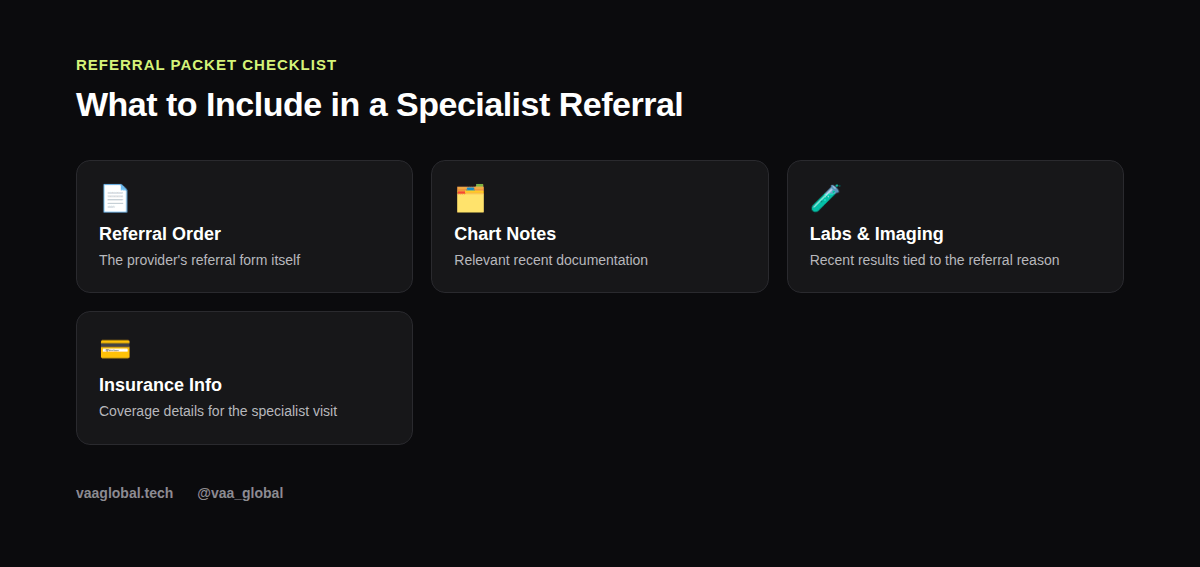
A typical referral package includes the referral order or form itself, relevant recent chart notes (often pulled from the same SOAP note documentation covered elsewhere), recent lab or imaging results relevant to the referral reason, current medication list, and insurance information. Sending an incomplete package is one of the most common reasons a specialist's office bounces a referral back or delays scheduling, so double-checking the packet before sending saves real time later.
How Do You Track a Patient Referral? A Step-by-Step Approach
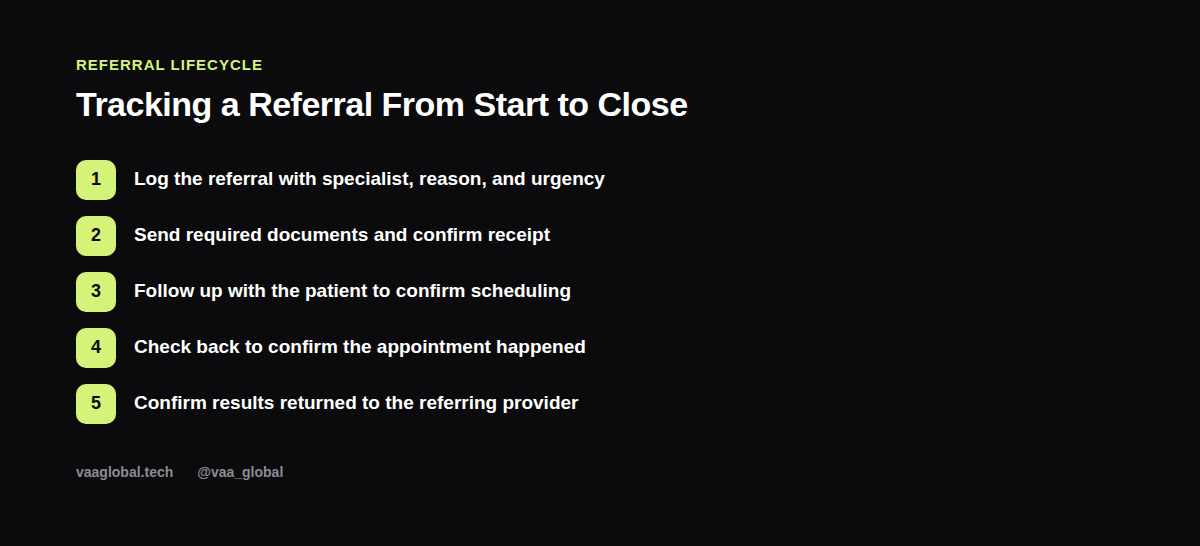
A reliable tracking process looks like this: first, log the referral the moment it's generated, including the specialist, reason, and urgency level; second, send the required documents and confirm receipt with the specialist's office within a few business days; third, follow up with the patient to confirm they scheduled their appointment; fourth, check back after the appointment date to confirm the visit happened; and fifth, confirm the results or consult notes were actually sent back to the referring provider. Skipping that last step is incredibly common and is exactly where most referrals quietly go unfinished.
Why "Closing the Loop" Matters So Much
A referral that's sent but never followed up on is worse than useless, because the referring provider may assume the issue was handled when it wasn't. Closing the referral loop means confirming the consult actually happened and the findings made their way back into the patient's chart, where the original provider can act on them. Without that confirmation step, patients can slip through a gap that looks, on paper, like it was already addressed. The Agency for Healthcare Research and Quality (AHRQ) has published extensively on referral loop failures as a known patient safety issue, which is part of why practices now take closed-loop tracking so seriously.
Handling Urgent vs. Routine Referrals Differently
Not every referral has the same timeline. An urgent referral, such as a suspicious finding that needs specialist evaluation quickly, needs same-day or next-day follow-up and should never sit in a general queue alongside a routine annual specialist check-in. Flagging urgency clearly when logging the referral, and following up more aggressively on urgent cases, is one of the simplest ways a medical VA protects patient safety within an administrative role.
Common Referral Coordination Mistakes
New coordinators often make a few predictable errors: sending a referral without confirming the specialist is in-network for the patient's insurance, failing to follow up if the patient doesn't call to schedule within a week or two, and not confirming that records actually made it back to the referring provider. Each of these is fixable with a consistent checklist and calendar reminders, which is why many practices build referral tracking into a spreadsheet or their EHR's task module rather than relying on memory.
How This Connects to Other Medical VA Skills
Referral coordination overlaps heavily with phone etiquette on patient calls and general task prioritization, since you're often juggling dozens of referrals at different stages while also handling other front-desk work. VA Global's Medical Virtual Assistant Training course covers healthcare administration and EHR basics across its six modules, giving beginners the groundwork needed to take on a referral-focused role with confidence.
The Bottom Line
Medical virtual assistant referral coordination is really a tracking and persistence skill more than a clinical one. Log everything, follow up relentlessly but politely, and never consider a referral finished until the results have actually made their way back to the referring provider's chart.
A Simple Referral Log Template
Because spreadsheets are often the first tool a new medical VA sets up for this work, here's a simple column structure that covers the essentials: patient name, specialist name, referral date, urgency level, document send date, patient scheduled date, visit completed date, and results received date. For example, a row might read: "J. Okoro, Dr. Bello (Cardiology), referred 10/01, routine, docs sent 10/02, patient scheduled 10/15, visit completed 10/15, results received 10/22." Any row missing a date in the last two columns after a reasonable window is exactly what needs your next follow-up call. This kind of patient records transfer habit, done consistently, is what separates a referral coordination process that actually works from one that just generates paperwork.



